
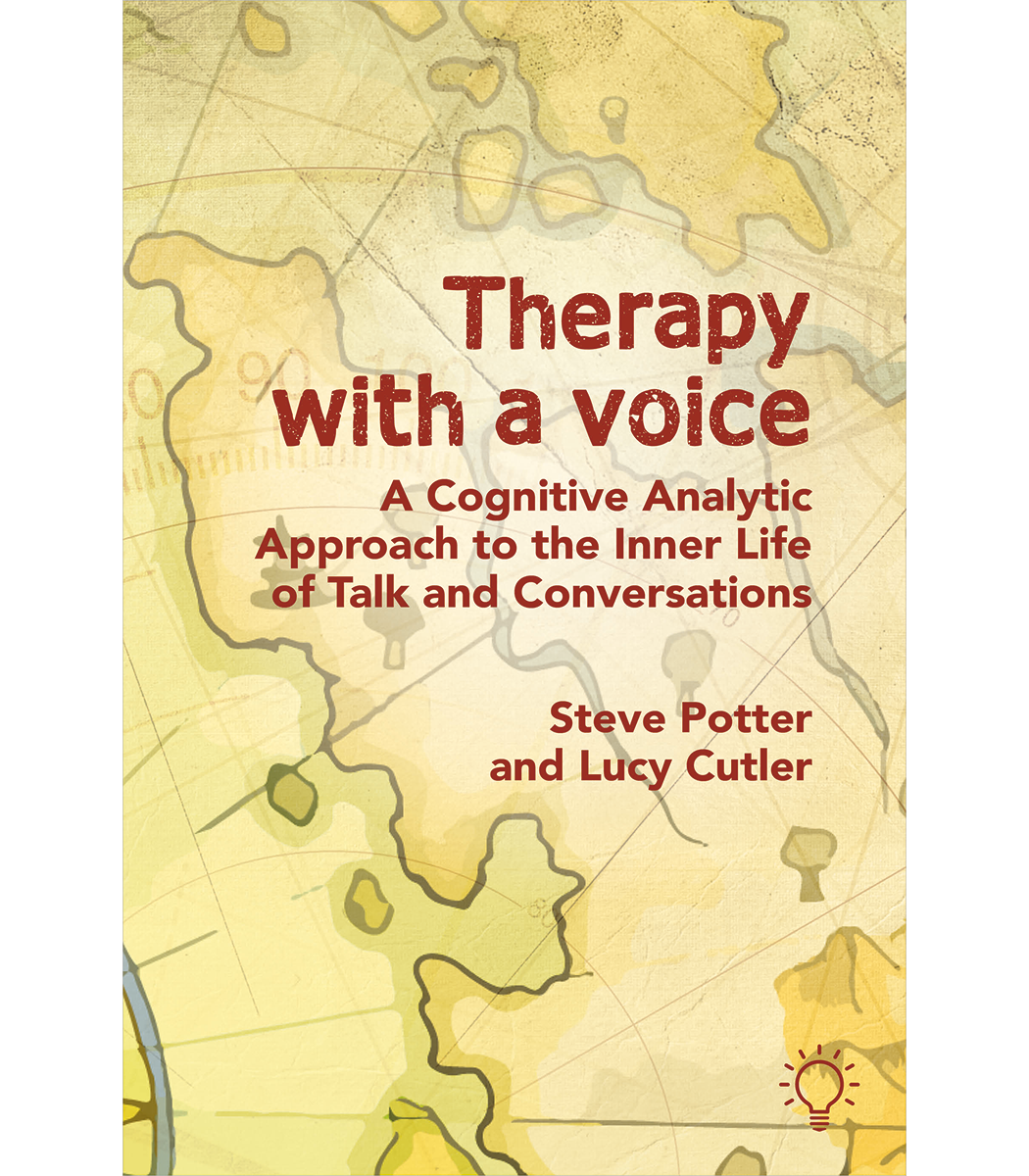
Therapy with a Voice: A Cognitive Analytic Approach to the Inner Life of Talk and Conversations

Therapy with a Voice cover

Therapy with a Voice explores the ordinary dialogue between the visible and hidden life of conversation. We have never had more ways to communicate. Messages move constantly through phones, social media, email, and now AI. Yet many of us still leave conversations feeling unheard, misunderstood, or strangely alone. The book asks why do some conversations leave us lighter, while others echo in our minds for days? Why do we replay what was said — hearing it again through the sharper, more critical voice inside us? Why do certain patterns of explaining, withdrawing, arguing, or pleasing seem to repeat across our relationships?

Whether you are a therapist looking to extend your practice, or simply curious about the conversations that shape your life, Therapy with a Voice offers a fresh way of understanding everyday dialogue. Through vivid case studies, conversational mapping, reflective writing, and practical exercises, this book is accessible yet profound, and rich not only in theory but also in tools for everyday practice whether for professionals or more generally.

Drawing on the relational tradition of Cognitive Analytic Therapy (CAT), the authors invite us to look beneath the surface of everyday words and dialogue. We rarely speak with just one voice. Within us is a chorus shaped by our relationships — voices that invite, assert, defend, withdraw, reassure, criticise, or care.

From bestselling author of Therapy with a Map, Steve Potter, in collaboration with clinical psychologist Lucy Cutler, comes a striking new addition to the series.

Further titles by Steve Potter:

Therapy with a Map – A Cognitive Analytic Approach to Helping Relationships

Talking with a Map: A Cognitive Analytic Approach to Everyday Conversational Awareness
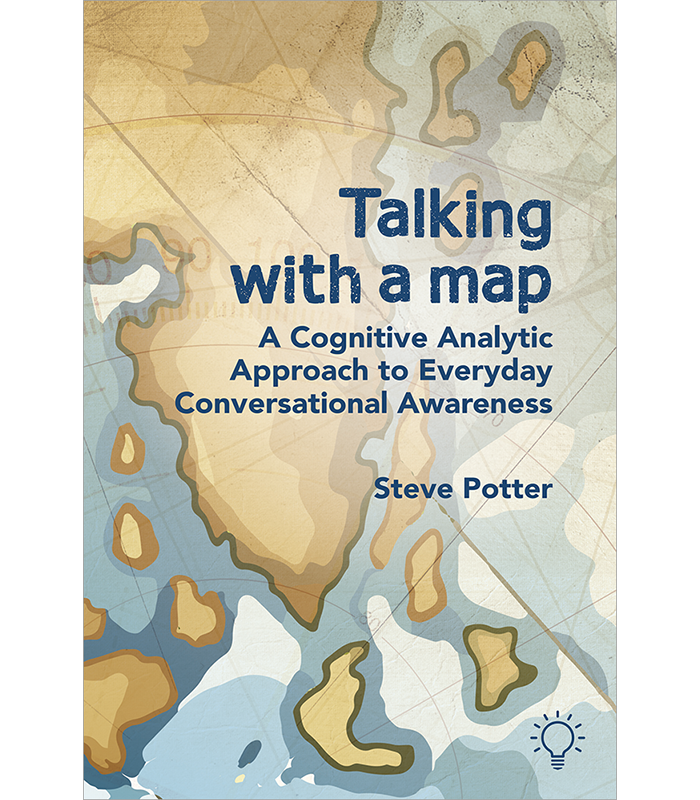
Talking with a Map: A Cognitive Analytic Approach to Everyday Conversational Awareness

Talking with a map

Talking with a Map explores the interplay between how we talk and how we relate. We learn to relate before we learn to talk, and every conversation depends on making sense of our interactions as much as our language. Conversation has the potential to bring us a deeper and clearer perspective, but we are also capable of getting lost or into a mess.

Tackling this and offering a means to improve conversational skill for those who depend on it (e.g. teachers, nurses, managers) as well as anyone seeking the courage, compassion and curiosity to have better conversations and relationships, Talking with a Map presents a series of simple steps for making word maps of discussions as they develop.

These maps track the hidden patterns in what we say and how we relate to each other while speaking, making visible the links and gaps in our discussions and helping us to achieve a shared understanding of conversations.

Also checkout: Therapy with a Map, blending cognitive analytic techniques with real-time visual mapping, enhances understanding of relational dynamics.

Therapy with a Map

Therapy with a Map

Therapy with a Map – A Cognitive Analytic Approach to Helping Relationships

Explore how Therapy with a Map, blending cognitive analytic techniques with real-time visual mapping, enhances understanding of relational dynamics.

A therapeutic relationship is a web of interactions, tasks and processes in space and time. It is not easy to stay aware of the relationship in the thick of talking and trying to help someone, but doing so boosts flexibility and enables deeper formulation.

A therapist who can be attentive not only to a specific therapeutic model, but also to relational factors underlying all therapy, has a far greater chance of enabling change. Building on thirty years of theory and practice in the field of Cognitive Analytic Therapy (CAT), yet speaking directly to practitioners across all schools of thought, Therapy with a Map sets out a therapeutic process of talking accompanied by visual conversation maps set down in real time on paper. By mapping these patterns of thinking and relating, therapists can help clients to develop self-understanding and solve problems, and to take away a freer, more self-aware relationship with themselves in the world.