The Neurodiversity Reader

cover of the book The NeuroDiversity Reader

The Neurodiversity Reader collection brings together work from pioneering figures within and beyond the neurodiversity movement to critically explore its associated concepts and how they might be translated into practice. The concept of neurodiversity can be traced to the late 1990s and the work of the autistic Australian sociologist Judy Singer (1998), with its origins within the autistic rights movement that had begun in earnest some years prior to that. In the 20 years since the inception of the concept, a strong international movement championing the civil rights of those deemed ‘neurodivergent’ from idealised norms has grown, rallying behind the slogan ‘Nothing about us without us’. Alongside this political movement has been an increasing academic interest in the concept of neurodiversity and how such ideas can relate to practice and service provision.

This collection will explore the history of the movement, the concepts that have shaped it, and where the future might lead to. Through a variety of accounts, the relevance and criticisms of these concepts in understanding ourselves and one another will be examined, as well as implications for practice.
Supporting People with Learning Disabilities and Dementia Self-study Guide

Cover of the book - Supporting People with Learning Disabilities and Dementia - A self-study guide for support staff (based on the Supporting Derek film and guide)

Each section in this self-study guide Supporting People with Learning Disabilities and Dementia is structured around one of ten topic areas, ranging from background information about learning disability and dementia to end-of-life planning. Each topic area will prompt thinking about practice and development of skills, promoting changes to support which are focused around each individual, rather than expecting the person to fit the service.

As people who have a learning disability grow older, we need to ensure that support and services are geared towards meeting changing physical and mental health needs. The main objective of the guide is to promote holistic support that will maintain the abilities of the person with a learning disability and dementia and provide services that meet their individual needs. It is important that people with a learning disability and dementia:

  • have choice and control over the support and services they receive, now and in the future
  • maintain meaningful and supportive relationships with family, friends and the wider community
  • remain in their own accommodation, if appropriate and desired.

Tools are included as part of each topic. They may be copied as handouts, or used as part of staff discussions. Some can also be displayed or available in a designated staff area for staff to read.

A link is provided to Supporting Derek: a short two-part film featuring actors with a learning disability. This will provide practical examples of some of the issues discussed in this guide and is an essential resource when completing some of the activities.

This guide can be used for your continuing professional development. If you are a manager, you might like to ask your staff members or students to work through it section-by-section, completing the activities each contains. Their responses can be discussed as part of on-going reflection and supervision or discussed at a staff handover meeting. The guide can help staff to prepare for quality checks and inspections and can contribute towards meeting national care standards.

There is also a copy of this guide included in the Supporting People with Learning Disabilities and Dementia Training Pack as background for those facilitating training programmes.


Successful International Communication

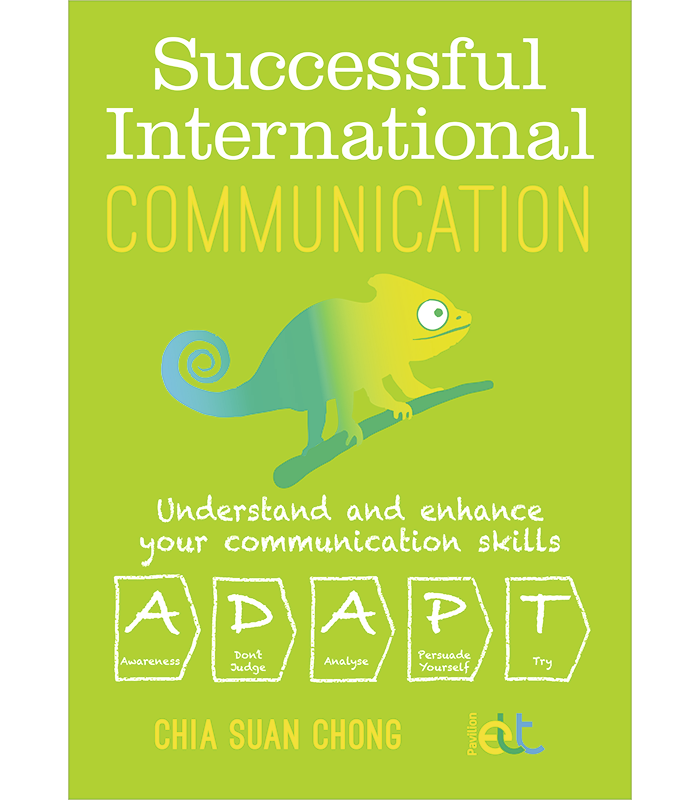
Cover of the book - Successful International Communication - Understand and enhance your communication skills

Have you ever felt frustrated talking to someone? Have you ever been puzzled by the way someone communicates? Perhaps you have struggled to understand what people really mean? If so, Successful International Communication ADAPT is the book for you.

Communication issues can be amplified when communicating internationally with people who have different practices to our own. If left unresolved, these difficulties can escalate.

Successful International Communication is for anyone communicating across cultures, whether socially or for work. You might be using English to play your part in an international team. Perhaps you are communicating virtually, or maybe you are a globe-trotter. Or you might be a language teacher or communications trainer, supporting your learners to become international communicators.

This handy guide is filled with relatable anecdotes and discussions on the use of English as a global language as well as the key issues of intercultural communication. Combining theory and practice, it explores different interpersonal skills- for example, relationship building and conflict management skills. Throughout the book, there are a number of critical incidents, discussion questions and other such tasks for you to complete. These will encourage you to reflect on your own opinions, thoughts, experiences, and possible prejudices, whilst promoting self-awareness. Useful tip sections throughout the book summarise key points from the practical units, as a reminder of the steps to follow for successful international communication.

Successful International Communication is the first title in Pavilion ELT‘s Communication Skills series.

Reviews

“The author displays an acute sensitivity to cultural differences and approaches them in a non-judgmental, productive manner…. a great tool for anyone in the ELT industry interested in honing their communication skills or embedding the fundamentals of successful international communication into the lives of students.” Virginia Mawer, English Australia Journal, Vol 35, 2019.

“This 176-page book provides a wealth of helpful information for anyone involved in international communication… The book includes refreshingly personal anecdotes and is punctuated by reflective tasks and critical incidents.” Pete Sharma, EL Gazette, September 2019. 

Non-violent Resistance Innovations in Practice

Cover of the book - Non-violent Resistance Innovations in Practice

Uncover the key elements of Non-violent Resistance through the experiences & practices shared by experts in this insightful book. This multi-contributor, multi-faceted book takes a comprehensive look at Non-violent Resistance (NVR) and New Authority techniques from theory through to practice. The views and experiences of academics and front-line practitioners are interlinked throughout to provide professionals with an in-depth look into the past, present and future of NVR and its related approaches. The book will benefit professionals who wish to develop their knowledge and practice, academics and students in related fields — NVR training.

Connection, participation, collaboration and reflecting on practice are all key elements of the NVR approach. This is mirrored in the wide range of specialist contributors; included are established authors, scholars from around the world, key academics, as well as parents, practitioners and first-time writers. Many voices that offer alternative views are brought together to generate creative practices, learning and development.

‘[Non-violent Resistance Innovations in Practice] is full of condensed information, of operating and hands-on-experiences written by specialists. Some of them belong to the first generation of experts who in close cooperation with the founder helped bringing the new concepts to life in so many practical fields. You, as a reader, can accompany the authors in the trips down memory lane that they went with their clients, the journeys of change that they initiated and experienced, and you can reflect on the different fields of action. Retracing all these stories will help you to find your very own way of applying the basic ideas of non-violence to your particular field of practice… I wish you a challenging and enriching experience in reading this valuable book.’Arist Von Schlippe

Body Language

Cover of the DVD - The Mine Factory Presents the Body Language

Featuring internationally acclaimed mime artist, Richard Jones, THE MIME FACTORY presents the Body Language DVD.

A creative resource showing short story sequences to develop awareness of body language, feelings and emotions without the distraction of speech. This unique dramatic DVD uses the universal language of mime to develop social awareness and an understanding of feelings, emotions and empathy.

The viewer is challenged to decide:

  • What is happening?
  • How is he feeling?
  • Why is he feeling this way?

Demonstrating different emotions the film allows the viewer to interpret and predict events.

Film length: 20 minutes

Supporting People in their Own Homes Workbook

Cover of the book - Supporting people in their own homes

The Supporting People in their Own Homes workbook can be used for underpinning knowledge for frontline workers in adult social care.

All newly appointed domiciliary care workers undergo a period of induction. This is set by the government and monitored by the Commission for Social Care Inspection (CSCI).This must be completed within the first 12 weeks of employment and it must be based on the Skills for Care Common Induction Standards (2005) and the General Social Care Council Code of Practice (2002).

The manual is divided into chapters based on The Skills for Care Common Induction Standards (2005) and comprises a series of simple learning activities and knowledge tests. The chapters are cross-referenced to the Level 2 NVQ in Health and Social Care.

The pack also includes a short guidelines for managers outlining how they can best support the induction process.

Feeling Better

Cover of the book - Feeling Better - A manual for carers working with people who have intellectual disabilities and chronic pain

Chronic pain is pain that lasts for more than three months and is a significant health problem, affecting one in every five people. This treatment manual “Feeling Better” is designed to provide practical guidance for health workers who work with people who have intellectual disabilities and chronic pain. Containing evidence-based cognitive behavioural principles, it provides carers and health professionals with a range of tools for teaching service users how to manage their chronic pain more effectively.

The manual gives clear, practical instructions with each treatment module, including: key learning objectives; rationale for the technique in relation to pain management; the time commitment involved; practical guidance on how to conduct the session; tips for making the intervention more effective; a case example; handouts and a DVD.

This manual will help professionals to work with service users to manage their own pain. The skills in each session are built upon in other sessions so that service users become more independent in using the skills whenever they need to. The treatment manual also provides a detailed description of chronic pain and the ways in which health professionals working in pain management now think about chronic pain. In addition, the manual provides a comprehensive description of psychological approaches to pain management and points the readers towards other useful resources.

Professionals within the social care sector are required to undertake Continuous Professional Development (CPD). Those who use this resource will be able to gain CPD points.

Finding Your Vocation

Cover of the book - Finding Your Vocation - A coaching programme to help young people and adults find their ideal work

This vocational coaching manual will provide you with methods that will empower your client or students to find out who they are, what they are good at and how to apply this to the world of work. In addition, the tools you use with them form a core curriculum of life skills, such as strategic planning, reflection, decision-making and project management, all of which will serve then well in their future.

Career or vocational coaching can add real value to the experience of using a careers advisor service and it is this gap that this resource seeks to address. Moving towards a coaching approach, rather than an advice driven on, enables practitioners to focus on the individual, their desires, and provide information that fits this purpose – thereby meeting the crucial ‘impartiality’ requirement.

The manual contains a step-by-step programme broken down into three two-hour sessions for groups of up to two participants. It includes session plans, background information and handouts that can be photocopied, along with audit forms. This resource can be used with the following participants; young people leaving school, young people leaving care, recent graduates, adults returning to work after illness or rehabilitation, long-term unemployed and people leaving prison.

Person-centred Lifestyles for People with Intellectual Disabilities

Cover of the book - Person-centred Lifestyles for People with Intellectual Disabilities

Person-centred Lifestyles, this simple but powerful staff and service development exercise provides a vital stimulus to exploring and evaluating attitudes, services and practice in relation to people with intellectual disability and the quality of lives they are enabled to lead. It can be used with any group of stakeholders, in any kind of service – whether public, private or voluntary – and in any country of the world.

Whatever the nature of the organisation and the cultural context, the exercise offers a way of holding existing attitudes, practices, systems and structures ‘up to the light’, in order to ensure that they meet the values we would espouse for our own lives and those of our families and loved ones.

The aim is not only to guard against the violation of human rights and to meet minimum standards imposed by regulatory bodies, but also to make genuine progress towards creating consistent person-centred responses – individualised, flexible, and self-directed, and clearly based on human values of dignity, respect and equality. The exercises can be used for a wide range of purposes, including developing a vision for a new service and/or values statement, designing or changing services, including environments, systems and staffing, changing problematic cultures, preparing for inspection, introducing more person-centred ways of thinking and planning, meeting and monitoring quality standards and codes of practice, staff induction and development.

This pack contains an A4 manual with full instructions and examples for running the exercises; DVD containing slides and clips of filmed training sessions and slides, 132 discussion cards and 12 header cards.

Find out more about the historical background to the exercise by watching the video clip below, which is an excerpt from the training pack.

Postcards from Aspie World

Understanding Autism Aspies World - Postcards

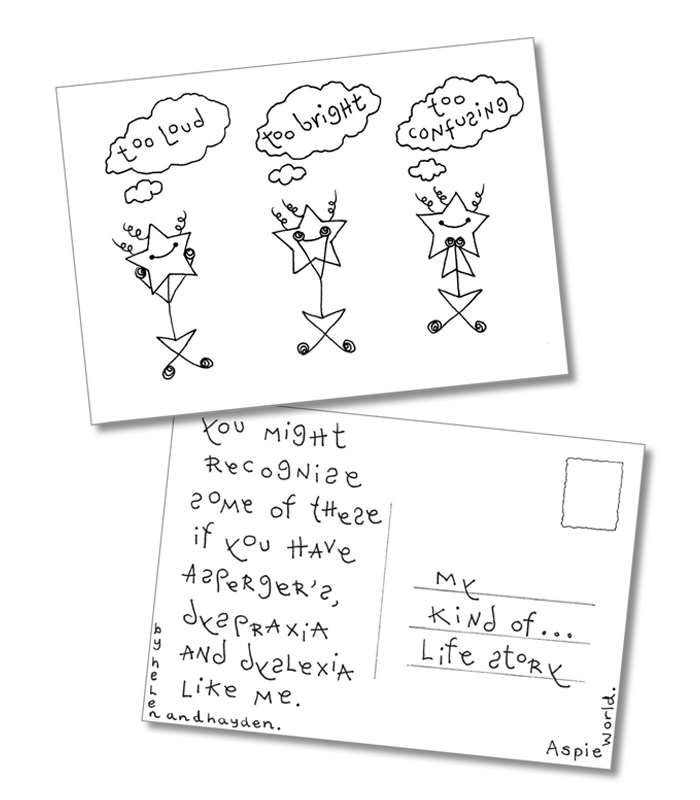
Postcards from Aspie World are a delightful set of postcards that can be used to prompt and aid discussions around Asperger Syndrome, and how it effects individuals on a daily basis.

For example, this set can be used by a group of people with autism to explore what having autism means to their lives and how they would like to be supported.

On the other side of the coin, they can also be used by professionals working alongside a person with autism on a person-centred plan for support.

There are also accompanying booklets to the postcard set: explaining the postcards fully, and then going on to suggest how they could be used within day-to-day life to support an individual with Asperger Syndrome, as well as a further booklet entitled “Life Stories”.