Moss-PAS (Diag ID) Clinical Interview Score Forms

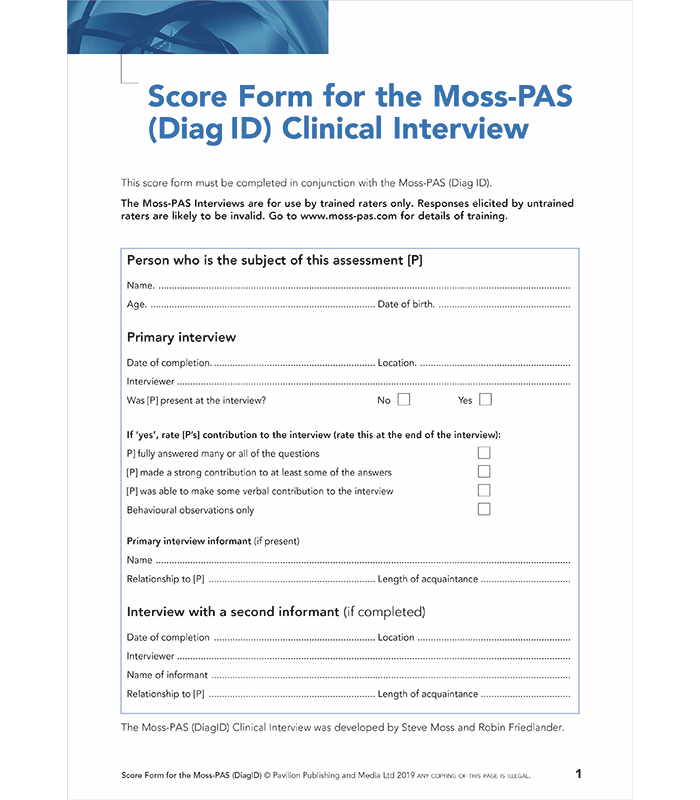
Moss PAS DiagID - Score Form

The Moss-PAS-(Diag ID) has been designed to meet the particular problems of assessment in people with intellectual disabilities, but is equally valid for use with the general population. It provides full diagnoses under both the ICD-11 and DSM-5 (TR), and also provides a framework for producing a wider case formulation using other assessment frameworks (behavioural, ecological, psychodynamic etc).

The interview is designed to maximise the possibility of conducting a clinical interview, even if the client’s level of language is poor. Questions are also provided for informants so that the interviews can be conducted with a client and informant, or just with an informant if the client is non-verbal. Information can be collected not just on current mental state, but also on a second representative episode.

The Moss-PAS (Diag ID) uses a scoring system that is transparent to the user, making it very clear to see not just the criteria that have been fulfilled but also those that are close to fulfilment. This makes the process of clinical interpretation easier and based on clear evidence.

The score forms are for recording the ratings, determining which diagnostic criteria have been met, and bringing together other relevant information to make a comprehensive case formulation.
PAS-ADD Clinical Interview handbook

Cover of the book - PAS-ADD Clinical Interview

About the PAS-ADD Clinical Interview

The PAS-ADD Clinical Interview has been designed to meet the particular problems of assessment in people with intellectual disabilities, but is equally valid for use with the general population. It provides full diagnoses under both the ICD-10 and DSM-IV (TR), and also provides a framework for producing a wider case formulation using other assessment frameworks (behavioural, ecological, psychodynamic etc).

The interview is designed to maximise the possibility of conducting a clinical interview, even if the client’s level of language is poor. Questions are also provided for informants so that the interviews can be conducted with a client and informant, or just with an informant if the client is non-verbal. Information can be collected not just on current mental state, but also on a second representative episode.

The PAS-ADD Clinical Interview uses a scoring system that is transparent to the user, making it very clear to see not just the criteria that have been fulfilled but also those that are close to fulfilment. This makes the process of clinical interpretation easier and based on clear evidence.

There are two parts to the PAS-ADD Clinical Interview:

  1. The handbook, which includes guidance to the user, notes on the diagnostic algorithms, and the semi-structured interview
  2. The score forms, available separately for recording the ratings, determining which diagnostic criteria have been met, and bringing together other relevant information to make a comprehensive case formulation

The Moss Psychiatric Assessment Schedules (Moss-PAS) are the successors to this well-known PAS-ADD system. Click here to purchase the updated system.

Moss-PAS (ID) Interview Score Forms

Moss-PAS (ID) Interview Score Forms

Moss-PAS (ID) Interview Score Forms are intended to be used for recording the ratings and other details of The Moss-PAS (ID).

The Moss-PAS (ID) Interview Score Form enables two different clinical episodes to be rated on the same form. This is important if the person has a fluctuating mood disorder, or if it is otherwise suspected that the individual has changed significantly from one time period to another.

This score form must be completed in conjunction with the Moss-PAS (ID), and the accompanying glossary.

The Moss-PAS (ID) and Score Forms (Formerly known as Mini PAS_ADD) have both been fully revised and are now compliant with both

ICD-11 and DSM-5.

Psychosis Revisited 2nd edition

Cover of the book - Psychosis Revisited 2nd edition - A recovery-based workshop for mental health workers, service users and carers

Psychosis Revisited 2nd edition is a revised and updated version of Psychosis Revisited. It encourages participants to take a fresh look at psychosis and examine practical ways in which they can work effectively with people who have psychotic experiences. The materials build on innovative work by The British Psychological Society (BPS).

The training pack is designed to help trainers facilitate a two-day workshop, exploring psychotic experiences from a broad range of perspectives. Particular emphasis is given to the perspectives and understanding of the individual in distress. The training also considers psychological, social and cultural understandings of psychotic experiences and enables participants to consider ways of offering help and support with associated difficulties.

Professionals within the social care sector are required to undertake Continuous Professional Development (CPD) by the Health and Care Professions Council (HCPC). Those who use this resource will be able to gain CPD points.

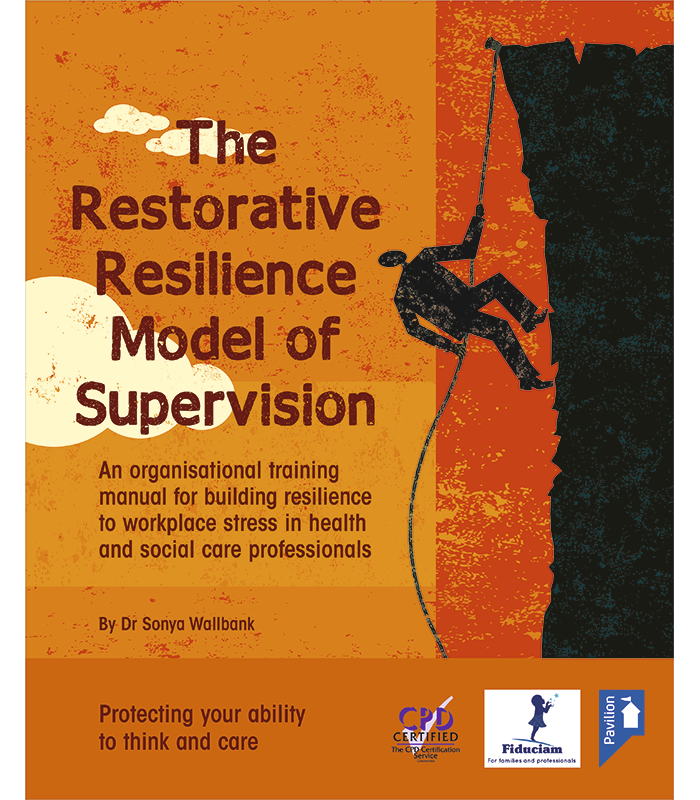
The Restorative Resilience Model of Supervision Training Pack

Cover of the book - The Restorative Resilience Model of Supervision - Protecting your ability to think and care

The Restorative Resilience Model of Supervision: An organisational training manual for building resilience to workplace stress in health and social care professionals is a training pack and accompanying reader that is based on the model of restorative resilience supervision.

Restorative resilience supervision was first developed in response to the emotional demands of midwives, doctors and nurses caring for families who had experienced miscarriage and stillbirth.

The programme was designed to support professionals to process their workplace experiences and support them to build resilience levels to ensure they had future coping strategies beyond the initial life of the supervision sessions.

This resource allows an organisation to cascade the restorative resilience approach throughout their staff, initially ‘training a trainer’, who can then pass the knowledge on to any number of supervisors.

It includes full step-by-step instructions for both phases of this training, and a CD-ROM supplying all the handouts and PowerPoints needed to run the training. It also includes several video clips of Restorative Resilience in action, modelled by the author, Sonya Wallbank, to demonstrate what good practice should look like.

The reader gives an in-depth understanding of the theoretical principles and research background to the approach, and explores how to put the approach into action on an individual level. In combination with the training pack, this can be used to further the knowledge of all those learning about the approach, both the trainers and the eventual supervisors.

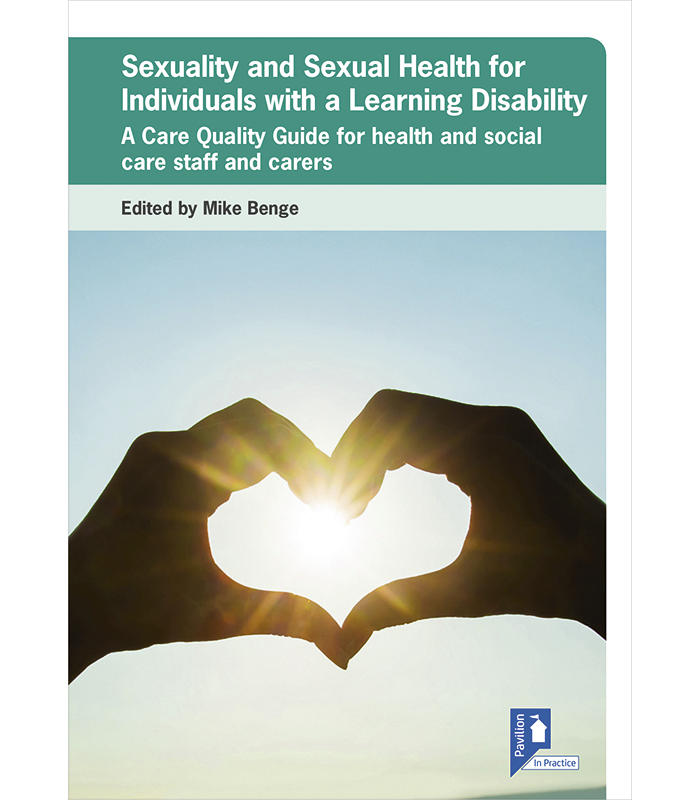
Sexuality and Sexual Health for Individuals with a Learning Disability

Cover of the book - Sexuality and Sexual Health for Individuals with a Learning Disability - A Care Quality Guide for health and social care staff and carers

Refresh and develop your skills in sexuality and sexual health care for learning disabilities with this engaging, certificate-backed training resource. This Learning Disability care quality guide aims to help health and social care staff and carers refresh, develop or extend their learning in this key area of learning disability practice. Covering the core elements of the QCF unit LD307 Principles of Supporting Individuals with a Learning Disability Regarding Sexuality and Sexual Health, this convenient practice guide offers an engaging, value for money, accessible and flexible way of self-learning about sexuality and sexual health for individuals with a learning disability.

The guide also contains a certificate of achievement and is CPD accredited.

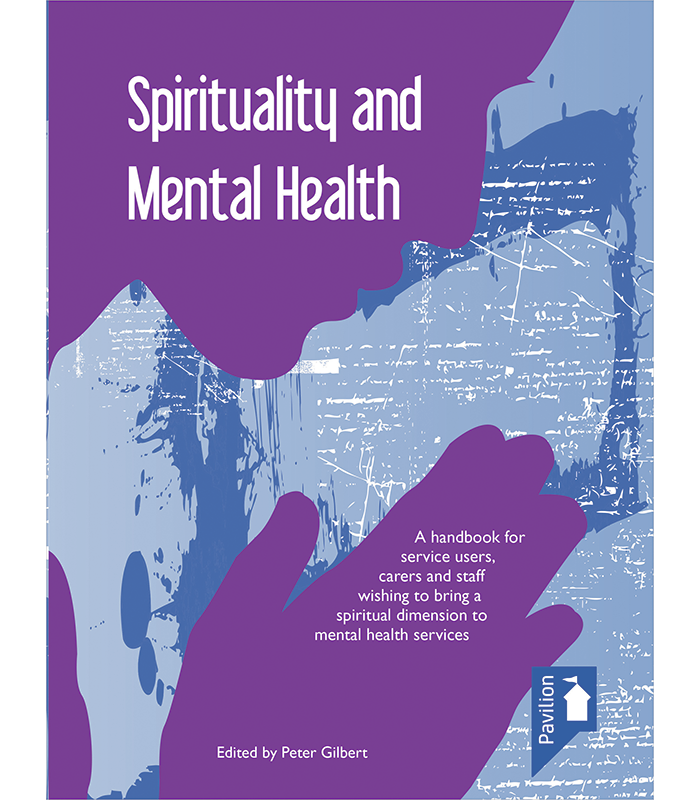
Spirituality and Mental Health

Cover of the book - Spirituality and Mental Health - A handbook for service users, carers and staff wishing to bring a spiritual dimension to mental health services

Spirituality and Mental Health is a handbook for service users, carers and staff wishing to bring a spiritual dimension to mental health services.

This handbook contains 23 chapters on aspects of spirituality and mental health written by experts in the field. It promotes an understanding of people’s belief systems rather than a mechanistic approach to mental health services and proves the increasing importance of spirituality in health and social care.

She’ll Be Alright

Cover of the book - She’ll Be Alright - A story-based approach to exploring issues of hidden neglect in care homes

She’ll Be Alright is a series of short episodes showing neglect in an English nursing home. Explore how dementia care standards, legislation & ethical codes identify neglect and improve end-of-life support, gain valuable insights!

These are the stories of people who can no longer speak for themselves which invite the reader to access the world of care as it unfolds behind closed doors. The characters’ real names have been changed and the events have been slightly altered in order to create works of fiction, but the stories presented here are true in essence and have not been exaggerated in any respect.

She’ll be Alright has been written so that people can use this guide in order to gain valuable insights into a world that is usually only visible to those involved with neglect cases. The case studies in She’ll Be Alright give readers access to material specially designed for learning and self-development, cross-referenced to the relevant legislation, and complemented with reflection and discussion questions.

This training and self-study guide explores the following topics:

  • Safeguarding residents in nursing and care homes, in particular dementia service users
  • Supporting nursing and care home staff and dementia workers
  • Improving management and supervision within residential settings
  • End of life care and palliative care for dementia.
  • How to apply the Fundamental Care Standards and the Code of Conduct for Healthcare Support Workers and Adult Social Care Workers in England in order to identify hidden neglect and make a disclosure.

Personalisation and Learning Disabilities

Cover of the book - Personalisation and Learning Disabilities - A handbook

This handbook: Personalisation and Learning Disabilities on personalisation is specifically for those working with people with learning disabilities. The 16 chapters, written by various contributors, give readers an insight into what personalisation means in practice.

Divided into three sections, Part one focuses on leaders by experience, Part two explores creating the conditions and Part three examines the broader picture and what’s next for personalisation. Together, the three sections consider the experiences and reflections of individuals and groups who are directing their own support, and how self-directed support changes the responsibilities, roles and relationships of people surrounding the person. They also consider the changing system and what needs to happen for personalised services to succeed.

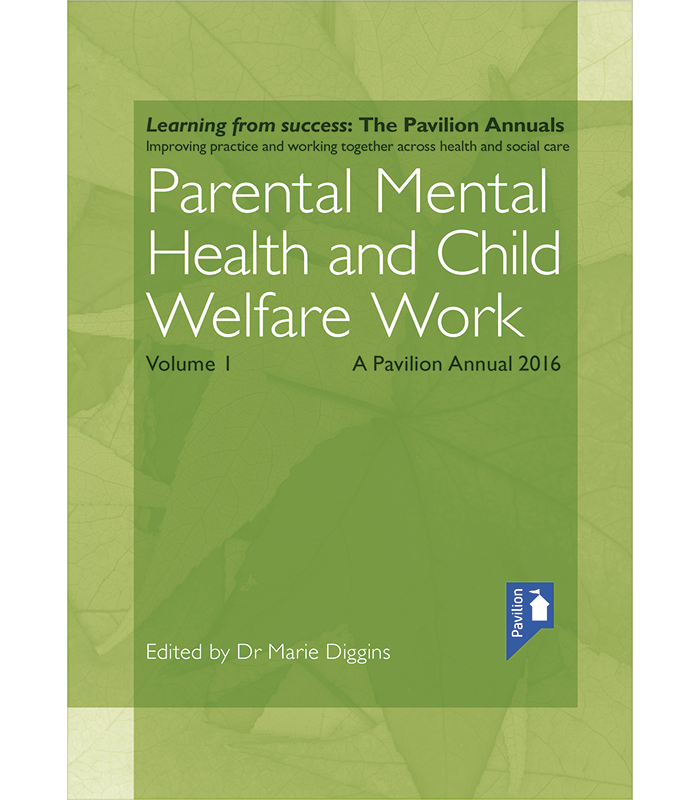
Parental Mental Health and Child Welfare Work Volume 1

Cover of the book - Parental Mental Health and Child Welfare Work Volume 1 - A pavilion Annual 2016

Parental Mental Health and Child Welfare Work Volume 1 forms the first volume of Pavilion’s new Annual series, which act as a yearly update on key research, policy developments and practice innovations, in the UK and elsewhere.

Research has established the potential direct and indirect impacts of mental illness on parenting, the parent-child relationship, and the child, and the extent to which this poses a public health challenge. Problems with how adult and children’s services understand and deliver support to parents with mental health problems and their children have also been identified. In contrast, far less is known about how parents with mental health difficulties and their children can be supported successfully.

The primary aim of Parental Mental Health and Child Welfare Work Volume 1: A Pavilion Annual 2016 is to begin to address this gap in research by capturing different perspectives (policy, research, professional and family) about what constitutes success and the contributions that lead to success. The annual will, share this information, tools and resources, in ways that are accessible, useful, and usable by, the broad range of professional groups involved in this complex area of practice.

Learning from success series
Improving practice and working together across health and social care