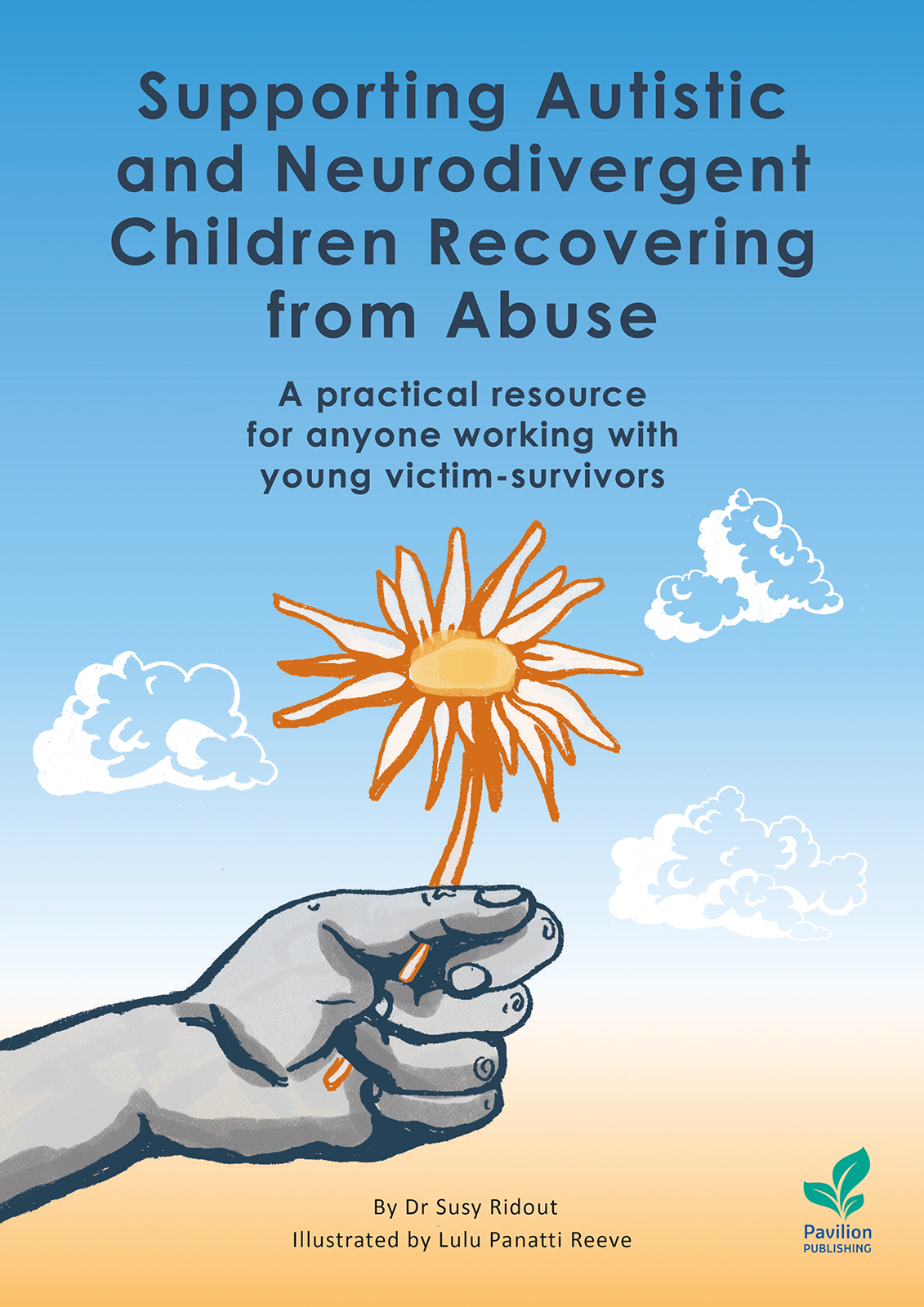
Supporting Autistic and Neurodivergent Children Recovering from Abuse: A practical resource for anyone working with young victim-survivors

Supporting Autistic and Neurodivergent Children and Young People

This specialist, practical guide to supporting autistic and neurodivergent children through recovery from sexual abuse, with strategies tailored to their unique needs. Provides a clear framework to explore the full range of issues arising from sexual abuse when working with autistic and neurodivergent children and young people. Recovery following sexual abuse is unique to the individual. In addition to this, neurodivergent and autistic children are more likely to have a wide range of different communication needs, meaning that they may struggle to verbally express what has happened to them, and have more difficulty processing and understanding the trauma they have experienced.

Supporting Autistic and Neurodivergent Children Recovering from Abuse has been written by a leading expert with lived experience – Dr Susy Ridout. Chapters focus on the key areas for support workers to consider, including how to re-build trust, understanding safety, and managing sensory and emotional overwhelm. The book is aimed at anyone supporting children who have experienced abuse. The book includes tips, strategies and adaptable activities to be completed with the child, to support the child’s recovery journey.

“An indispensable resource featuring contemporary and neuro-affirming knowledge, this book will help ensure that autistic children, who are disproportionately affected by sexual violence are finally seen, heard and given the chance to heal.”

Alexis Quinn, Best-selling author, Trainer, Key Note Speaker & Psychotherapist

Read more endorsements on the reviews tab. View sample below.

Neurodiversity, Autism and Recovery from Sexual Violence

Cover of the book - Neurodiversity, Autism and Recovery from Sexual Violence

Explore essential strategies supporting neurodiversity, autism and recovery for survivors of sexual violence. A valuable resource for educators and clinicians. Recovery and survival following sexual violence are unique to each individual, and this invaluable book provides a resource for those supporting autistic and neurodivergent women to take steps towards regaining control of their life. This resource provides a clear framework to explore the full range of issues arising from sexual violence, including identity, goal-setting, safety, mental and physical well-being, managing emotions, friendships, relationships and disclosure, memory, concentration and sensory experiences. It includes printable resource sheets and details of available supports to introduce to individuals or groups.

Whilst targeting neurodivergent/autistic women survivors, it can be adapted by others to suit their requirements. Above all, it encourages practitioners to work respectfully with clients in the context of their experiences and evolving situations. Written from the author’s lived experience and expertise, there is a wealth of accessible guidance and practical activities that focus on making sense of events and taking time to do so.

The level of sexual violence in our society remains at shockingly high levels. Every survivor’s story is unique, but neurodivergent persons often carry extra, unwanted baggage with them as they try to achieve recovery. This includes trained compliance, low self-esteem, and the impact of societal choices that isolate and marginalise neurodiverse children and adults through institutionalisation, impoverishment, lack of care, and enforced lack of choice over such important topics as who touches them, who they live with, where they live and what they do. Support workers need to understand how these factors impact recovery. They also need to understand and adapt to communication preferences and sensory needs – A practical resource for all those working to support victim-survivors.

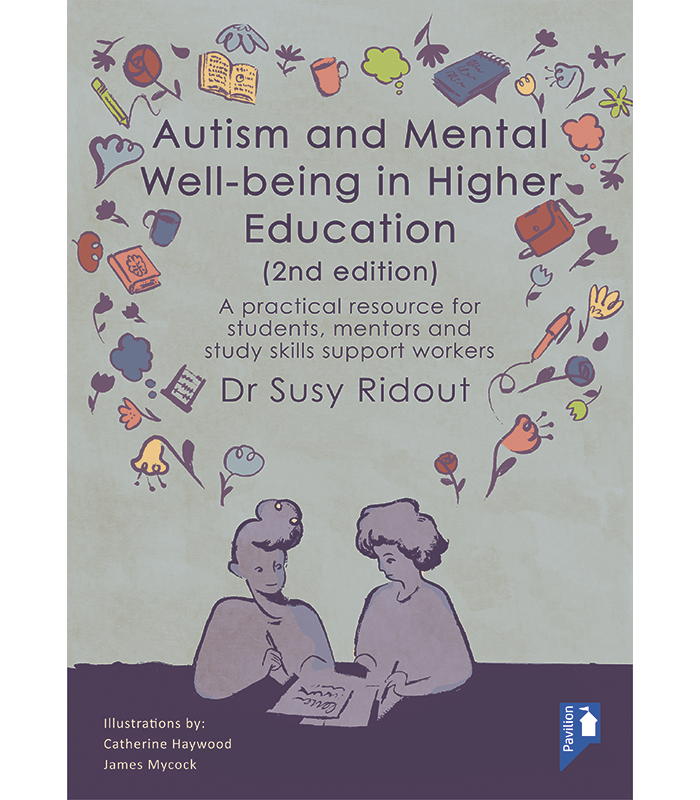
Autism and Mental Well-being in Higher Education 2nd edition

Cover of the book - Autism and Mental Well Being in Higher Education

Autism and Mental Well-being in Higher Education 2nd edition looks into the fact that, too often, autistic students and those with mental health needs struggle with higher education, often dropping out of courses because they do not receive the informed support that would help them to succeed. Explore effective mentoring strategies in higher education to support autistic students and those with mental health needs, enhancing their success and giving them confidence to enable them to take control of their lives.

Beautifully illustrated, this unique publication is written for those with a neurodivergent perspective, and brings together ideas and activities tried and tested among an array of students. It encourages students to take control of mentoring and study skills sessions by signposting them to topics which they wish to address, while also providing a useful framework and resources for mentors and tutors in higher education. It includes clear information about what constitutes mentoring, as well as coverage of academic study skills, highlighting key points for attention and discussion.

In particular, the manual addresses specific issues raised by many autistic individuals and those with mental health needs, and through its activities and resources, it provides a toolkit of coping strategies that can be tailored to individuals. Finally, it covers elements of independent living with which many individuals struggle, and which have been raised in various forms by students with whom the author has worked.

Following the success of the first edition of this book it was apparent that new chapters needed to be added to better reflect diversity and to acknowledge the prevalence of sexual violence on campus. With this in mind, Chapter 13 is on gender and explores such issues as identity, disclosure, pronouns, name change and transitioning. The second new chapter, Chapter 14, addresses issues experienced by many individuals from BAME communities, such as acceptance within their own culture, language barriers, obtaining a diagnosis, tokenism and inclusion of BAME voices within higher education. The third additional chapter (15) addresses sexual violence, whether it has happened prior to university or during studies and on or off campus. This chapter discusses processing and communicating what has happened and support options available.

If you already own the 1st edition of this title, you can download the accompanying PDF here.