
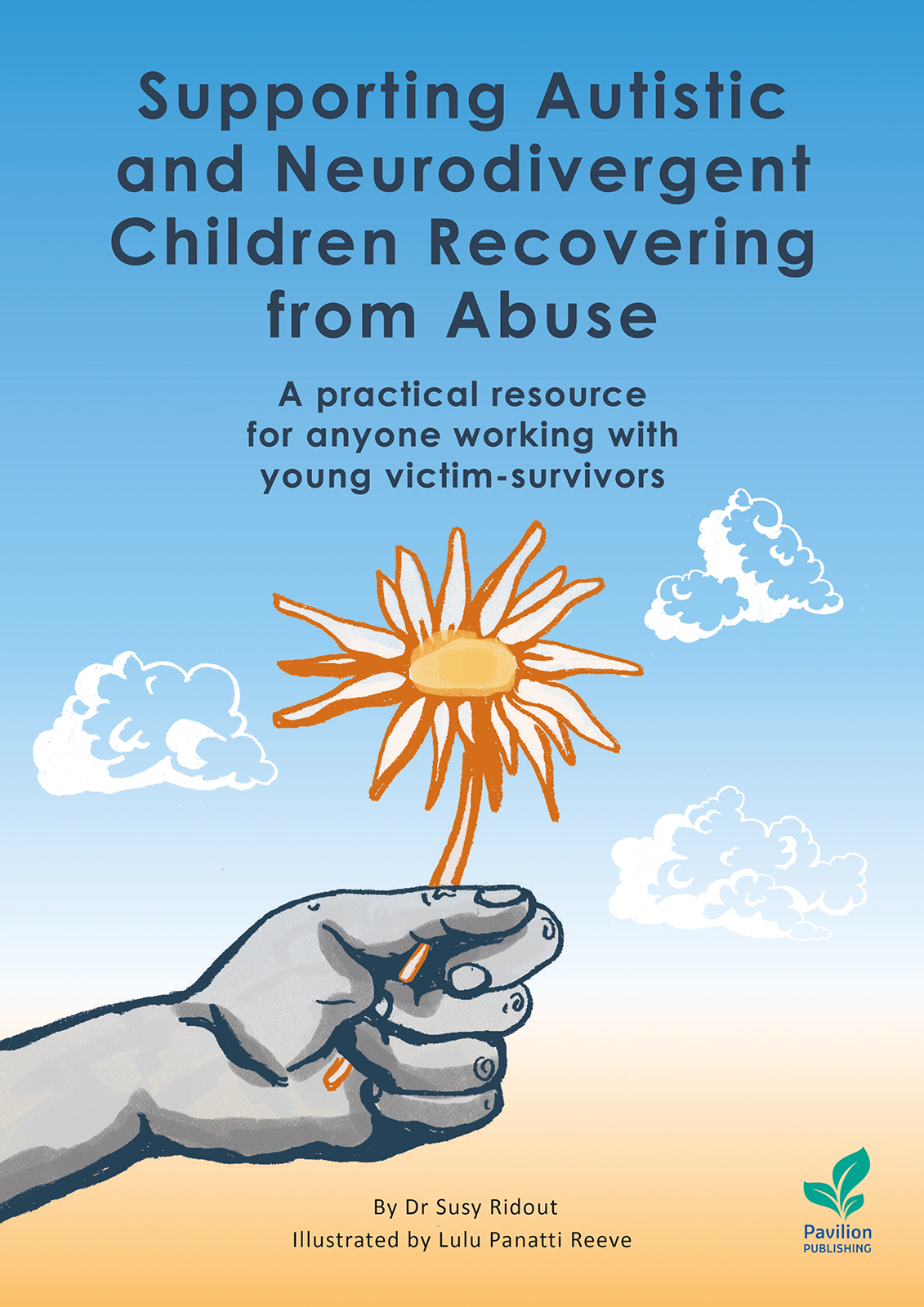
Description
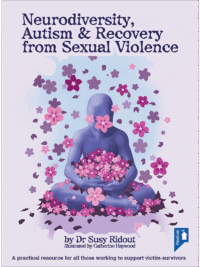
This specialist, practical guide to supporting autistic and neurodivergent children through recovery from sexual abuse, with strategies tailored to their unique needs. Provides a clear framework to explore the full range of issues arising from sexual abuse when working with autistic and neurodivergent children and young people. Recovery following sexual abuse is unique to the individual. In addition to this, neurodivergent and autistic children are more likely to have a wide range of different communication needs, meaning that they may struggle to verbally express what has happened to them, and have more difficulty processing and understanding the trauma they have experienced.
Supporting Autistic and Neurodivergent Children Recovering from Abuse has been written by a leading expert with lived experience – Dr Susy Ridout. Chapters focus on the key areas for support workers to consider, including how to re-build trust, understanding safety, and managing sensory and emotional overwhelm. The book is aimed at anyone supporting children who have experienced abuse. The book includes tips, strategies and adaptable activities to be completed with the child, to support the child’s recovery journey.
“An indispensable resource featuring contemporary and neuro-affirming knowledge, this book will help ensure that autistic children, who are disproportionately affected by sexual violence are finally seen, heard and given the chance to heal.”
Alexis Quinn, Best-selling author, Trainer, Key Note Speaker & Psychotherapist
Read more endorsements on the reviews tab. View sample below.

Sonny Hallett, Neurodivergent Counsellor and Supervisor –
This book looks to be an extremely useful and comprehensive resource, with ample practical ideas and activities. I particularly like the section on emotions and alexithymia, which I think will be particularly valuable for many practitioners, especially as it’s an area that I think is still rarely adequately covered elsewhere.
Dave Adams, Director, Lotus Collaborations UK CIC –
An invaluable resource for those working in this field. Susy provides clear analysis and helpful practical tools, all supported by understanding and empathy.
Prof Wenn B. Lawson, Autistic Researcher and Psychologist, Curtin University, Western Australia –
Susy’s wonderfully resourceful book will accompany us as we ‘support’ an Autistic child victim-survivor of sexual abuse. It gives conversation tools and navigation for a healing journey to rebuild trust and self-respect. It wasn’t my fault! Walk with me through this valley. Together, you offer me a second chance at life.
Noah Kay, Director, Lotus Collaborations UK CIC –
Susy Ridout’s latest book “Supporting Autistic and Neurodivergent Children Recovering from Abuse” is a must-read for practitioners working with abused children, or anyone interested in the unique effects of trauma on neurodivergent children. As someone with experience in this field, it really captured my interest and resonated with me.
This book provides vital information and practical solutions for anyone working with children but especially those supporting autistic children who are victims of sexual abuse. It outlines tools to understand and cope with what happened to them with step-by-step guidance in an easily digestible format.
Emma Reardon, Director, Autism Wellbeing CIC –
This is a wonderfully neuro-affirming resource, packed full of strategies and activities that practitioners can use with the children they are supporting. It offers trauma-informed and strengths-based approaches that could make a real difference to those young people who are so often not heard or listened to.
Dr Anna Stenning, Postdoctoral Research Associate, Durham University and author of ‘Narrating the Many Autisms’ (Routledge, 2024) –
Susy Ridout’s new book is an essential guide to providing timely, appropriate support for neurodivergent children who have survived sexual abuse – children too often left unheard, even within services created to help them. Combining carefully structured activities with reflective tasks, susy Ridout offers practical strategies for using storytelling and shared sense-making to support recovery, including with nonspeaking autistic children.
Grounded in an affirming, non-pathologising view of neurodivergence, the book explores how abuse can uniquely affect neurodivergent children and maps out distinctive pathways to long-term healing. Drawing on her own experiences of neurodivergence and parenthood, susy Ridout highlights the importance of recognising and supporting sensory differences and monotropism in every aspect of a child’s life – from sleep and dreams to masking, from home environments to schools and clubs, and from identifying triggers to navigating friendships. This definitive resource is rich with creative, tried-and-tested approaches, all presented in clear, accessible language to encourage understanding, empathy, and practical action.
Dr Carly Jones MBE British Autism Advocate and Global Accessibility and Safeguarding Consultant –
This book is a gift — not just to professionals supporting autistic child survivors of abuse, but to every person who believes children deserve to be truly seen, heard, and understood. As someone with both personal and professional lived experience in this area, I know how vital it is to find a resource that speaks with accuracy, empathy, and practical wisdom. Written with deep compassion and insider expertise, it bridges the gap between lived experience and practical guidance in a way that feels both urgent and empowering.
What makes it exceptional is the richness of its practical activities — like the ‘People Who Look After Me’ Tree, which helps autistic children visualise their trusted support network in a safe, creative way. This simple exercise is a structured tool for building trust, reducing anxiety, and fostering security. And this is just one of many adaptable, evidence-informed strategies that the book shares. Every page carries a fierce advocacy for autistic voices and a toolkit of real-world, flexible approaches that honour each child’s individuality.
It does more than teach — it challenges us to reflect, to adapt, and to act with empathy and clarity. I am deeply grateful this book exists, because I know first hand that with the right understanding and support, autistic children can not only recover from trauma but grow into lives where they feel safe, valued, and free to thrive. We know that 91% of autistic women will experience abuse, so this is not just a resource; it’s a lifeline.
Paula Dower, Head of Fundraising and Partnerships, Rape and Sexual Violence Project (RSVP) –
I am also on my own journey of recovery from the trauma of rape and sexual abuse. Silence became one of my tools for survival, both in childhood and as an adult after sexual abuse and so the introduction to this book resonated with me deeply. It captures with compassion the painful reality of silence for autistic children, and the need to create spaces where their voices can finally be heard. This book is about restoring confidence, creating safety, and valuing children’s words and feelings. Susy provides a rucksack of practical, compassionate tools to support recovery. I especially loved the idea of the tree, which speaks not only to children’s healing but also inspired me to create my own tree of support recovery.
This book is both powerful and practical. Drawing from deep lived experience, it shines a light on the unique challenges autistic children face when recovering from abuse, challenges that are often overlooked in mainstream safeguarding approaches. What makes this book exceptional is its blend of personal insight, research, and accessible activities that can be used immediately by professionals, parents, and carers. It does not shy away from the difficult realities, but it consistently offers hope and practical strategies for building trust, safety, and resilience. I would highly recommend this book to counsellors, ISVAs, social workers, teachers, and anyone committed to supporting autistic children on their journey to recovery.
As a survivor of rape and sexual abuse, I know how silence can feel like safety. This book captures that reality with profound compassion, while offering tools to help autistic children find their voices. Susy’s work is both practical and inspiring — a true resource for healing.