Advanced Writing Skills

Book cover titled Advanced Writing Skills with an orange banner 'Teaching Writing' and a blacksmithing workshop background; author Nigel J. Ross.

‘Oh please, no!’ is the reaction many English language teachers might have when they are asked – or told – to teach writing skills at an advanced level. And often advanced learners also look on the writing element with trepidation. Advanced Writing Skills aims to provide teachers with a thorough understanding of essential writing techniques, alongside practical examples and explanations. In doing so, it demonstrates how teaching writing can be a rewarding, engaging and illuminating experience for both teachers and learners.

Throughout the book, Advanced Writing Skills illustrates the fundamental tools-of-the-trade – and many “tricks-of-the-trade” – needed to upgrade students’ writing, providing workable ideas for teachers to present and practice the various techniques and stratagems analysed. Particular attention is devoted to teaching essential writing techniques such as paragraph formats, formulation of ideas, successful introductions and conclusions, text coherence and reference. At the same time, pertinent language aspects including hedging, highlighting and paraphrasing are examined in detail. And some of the “shrewder” devices, such as hooks and reverse hooks are also put under the microscope.

Aimed at advanced teaching contexts, including higher education, exam preparation and advanced writing courses, the range of ideas and practical examples can help make that vital difference in preparing for both exams and wider communication. It’s not just what students write about, it’s very much how they write it, and this book provides the teaching resources to ensure students’ writing has maximum effect.

Advanced Writing Skills is part of the Teaching Writing series.

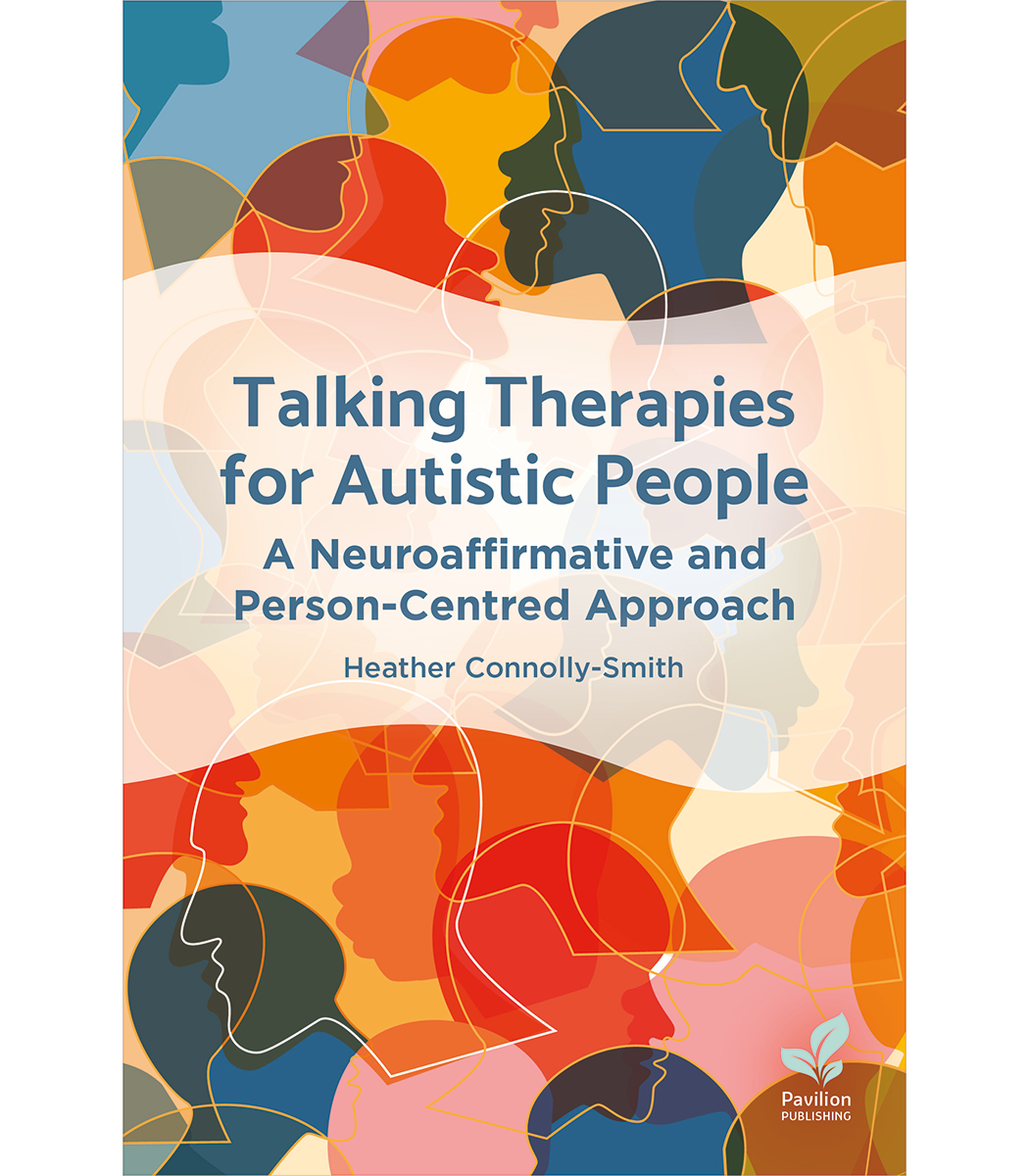
Talking Therapies for Autistic People: A Neuroaffirmative and Person-Centred Approach

Book cover for 'Talking Therapies for Autistic People' by Heather Connolly-Smith, with abstract overlapping colorful profiles in the background.

Talking Therapies for Autistic People is a compassionate guide designed to transform how professionals understand and work with autistic clients. Written from the author’s dual perspective as an autistic person and a mental health practitioner, it presents a neuroaffirmative, person-centred and trauma-informed framework that exposes longstanding assumptions about autism and the harm they can produce. Rather than seeing autism as a deficit, Heather Connolly-Smith book positions autistic processing as a natural variation in human experience, emphasising that distress arises not from autism itself but from structural ableism – neuronormative expectations, inaccessible environments and repeated interpersonal misattunements.

Drawing on social models of disability and the neurodiversity paradigm, she uses three running case studies to explore simple ways in which therapists can support autistic clients to live more authentically and in ways which work with, rather than against, their neurotypes.

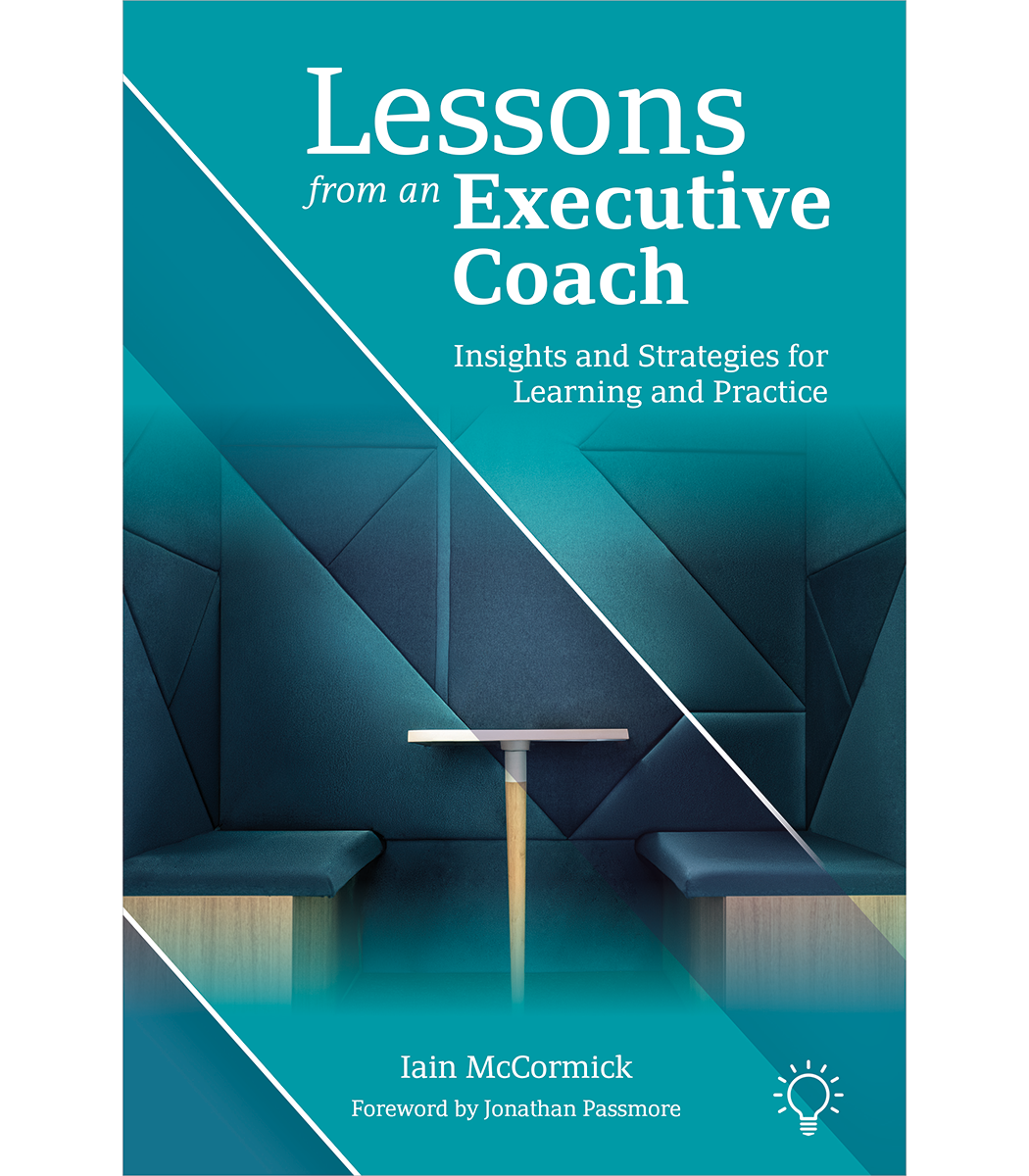
Lessons from an Executive Coach: Insights and Strategies for Learning and Practice

Lessons From an Executive Coach

Lessons from an Executive Coach is designed to help coaches, at any stage in their careers, to understand the realities of executive coaching. That is, to gain an insight into what it is like to sit down with a range of very different clients and work with each of them as their coaching journey unfolds and evolves.

Drawing on his own extensive experience, master coach Iain McCormick helps readers learn not by setting out the dry theories and processes of coaching, but by presenting a series of engaging, fictionalized case stories in a way that is designed to reveal the challenges, successes, failures and insights inherent in each. From Adam, a middle manager whose story reveals the enduring positivity at the heart of the coaching mindset, to Amanda, a young accountant whose story reveals how learning can still take place even if goals are not met.  Lessons from an Executive Coach offers a colourful and accessible account of coaching in action from both the client’s and the coach’s perspective.

See sample below.

AI in ELT

AI in ELT front cover image
AI in ELT is the second title in the Action on Issues series, and aims to provide a practical exploration of responsible, research-based Artificial Intelligence use.

Discussions around Artificial Intelligence (AI) are everywhere, and are therefore inevitably on the minds of teachers and materials alike. But as many of us will freely admit, it’s easy to feel confused, overwhelmed, and even exasperated by the hype, the rapid new developments and the explosion of information that we face. Integrating AI in the classroom offers both significant opportunities and complex challenges, alongside nuanced ethical considerations.

AI in ELT offers a comprehensive, critical and practical guide for teachers navigating the complex world of generative AI in education, especially in the context of English language teaching. Whether you are new to AI or looking to deepen your practice, this book equips you to make informed decisions that centre pedagogy, equity and the learner’s agency. It aims to ensure AI becomes a thoughtful addition to your teaching that genuinely enhances, rather than undermines, the quality and inclusivity of education.

In the first part of the book, the authors explain the concept of AI and what it is and what it can refer to. They aim to provide a clear and balanced view of the serious moral and ethical considerations in the use of AI, as well as an overview of the implications of and potential for AI in the ELT classroom.

In part two, they give examples of real and practical uses for AI in English teaching and learning, placing the emphasis on establishing ethical guidelines, codes of conduct and having principled reasons for the incorporation of AI into our teaching. Whether you are tech-savvy or not, this book offers step-by-step plans to help you confidently bring AI into your teaching practice, with no advanced technical knowledge required.

Action on Issues Series

The Action on Issues series aims to bring to the fore the important issues of the time in our field, to look in-depth and critically at these issues, as well as to equip our profession with practical tools and information to take ethical action in the classroom, and in the industry as a whole. Explore titles in the series here.

CareKnowledge Live: Thinking Allowed

Event logo

Taking time to think and reflect is often seen as a luxury, but the positive impact on our development and wellbeing is increasingly recognised. Each of these interactive sessions uses a different philosophical approach or central question to spark reflection on our practice – and ourselves. Whether you attend all of these sessions, or just choose one or two that pique your curiosity, we’re certain you’ll enjoy and benefit from attending.

Upcoming sessions

Socrates: Know Thyself

April 2026

From the ancient philosopher we learn to reflect deeply on what we think we know, and on how our lives can be changed by self-knowledge.

Living in and with Contradictions

May 2026

Why are there so many contradictions in life, and how might we better learn to live with them in our practice?

Connecting Carefully

June, 2026

How many problems might we avoid if we better understood how to connect a little more carefully with the people we work with?

What is Reflective Practice?

July 2026

A different way to think about reflective practice, as a connection with ourselves, with others, and with our work.

Moral injury

August 2026

A brief look at three philosophical responses to the issue of moral injury.

Impact: what is it?

September, 2026

So much of our working lives is measured by ‘impact.’ But what is it? We offer some critical reflections.

Freire: Care, Pedagogy and Social Change

October, 2026

Join us for a reflective half hour exploring Paulo Freire’s radical vision of education as a practice of freedom and what it offers those working in social care.

Learning Freedom: Childhood, Play and the Power of Stories

November, 2026

What it is about playing and stories that actually helps us to grow up? And how does this relate to our ideas about what it means to an adult? 

Caring about Death and Dying

December, 2026

What does it mean to be aware of fallibility and death? This session explores how our thinking about death, our own and that of others, might help us have a deeper and more caring relationship to life.


English Language Teaching in a Neurodiverse World

English Language Teaching in a Neurodiverse World
English Language Teachings in a Neurodiverse World blends theory with neurodiversity-affirming practice to help you create an inclusive, supportive classroom.

As teachers, our intrinsic motivation is to support our students in their learning. Because every student’s learning journey is unique, ELT professionals tend already to be experts at adapting materials, grading our language and planning out individualised learning targets. But even for the most experienced English language teacher, understanding how to anticipate and meet the needs of neurodivergent learners can feel a stretch too far, even if you are already informally incorporating a number of inclusive practices.

In English Language Teaching in a Neurodiverse World, Dr Gemma Williams provides a research-informed and neurodiversity-affirming perspective, that respects and values neurodivergence as simply a different way of processing the world, rather than a collection of pathologised ‘deficits’. From this, she provides clear pathways from theory to practical adjustments and real-world classroom applications.

Section One starts at the beginning, to explore what neurodiversity really means. In Section Two Gemma brings the focus to the classroom to explore meaningful inclusion. Section Three thinks about our neurodivergent learners as unique individuals with different needs. Finally, Section Four moves towards the practicalities of teaching for neurodiversity; not just teaching neurodivergent students but also helping them ready themselves for navigating a neurodiverse world.

By reading this book, our hope is that you finish it not only equipped with a greater understanding of the generalities of a neurodiverse world, but also the encouragement and confidence to support neurodivergent learners. Supporting neurodivergent students doesn’t mean reinventing your practice: just thinking about it in (potentially) new ways. Many of you will already be doing lots of things that support your neurodivergent learners. All that’s needed is a little additional underlying theory and some structure…

Dr Gemma Williams is also the author of Understanding Others in a Neurodiverse World by Pavilion.

Motivational Interviewing (MI): A Transformative Approach to Empowering Change

Motivational Interviewing course logo

Do you want to enhance your ability to make the people you serve feel accepted, understood, and empowered? Motivational Interviewing (MI) is an evidence-based, person-centered approach that helps individuals tap into their own reasons for change, fostering motivation and commitment to personal growth. Rather than imposing solutions, MI guides individuals through their ambivalence, helping them discover what truly matters and how to move forward.

This series of four highly interactive and practice-based workshops offers a comprehensive introduction to MI. Each session provides valuable tools you can immediately apply in your work, but together, they unlock MI’s full potential. Throughout the series, you will engage in real-world exercises, reflective discussions, and skill-building activities that allow you to practice and refine your MI abilities. Whether you are new to MI or looking to strengthen your existing knowledge, this series will equip you with the skills necessary to create more collaborative, empowering, and impactful relationships in your field.

Each workshop will be supported by a blended learning package with filmed lectures, exercises, worksheets and quizzes that in a fun way will help participants enhance their competence.

Session One: The Essence of Helping Relationships – Foundations of Empathy and Client-Centered Support

(2 hours)

This workshop delves into the heart of helping professions, focusing on the importance of meeting clients where they are and using empathy as a key tool for fostering change. Through the core principles of Motivational Interviewing—Acceptance, Empowerment, Compassion, and Collaboration—participants will gain practical insights and tools to build meaningful, trust-based relationships. This session equips professionals to navigate complex client dynamics with empathy, creating a supportive and empowering environment for growth.

Session Two: Acceptance and Empowerment – Building Self-Acceptance and Self-Efficacy through Motivational Interviewing

(2 hours)

This workshop focuses on how to foster client empowerment and self-acceptance using Motivational Interviewing (MI). Participants will learn how to convey acceptance, strengthen clients’ resilience and self-efficacy, and practice complex affirmations that help clients recognize their own strengths and capabilities. Through hands-on exercises, attendees will gain practical tools to support meaningful, strength-based change.

Session Three: Unlocking Motivation with MI – Strengthening Change Talk and Softening Sustain Talk

(2 hours)

This workshop teaches participants how to evoke, recognize and amplify change talk—clients’ own expressions of their motivation for change—while softening sustain talk, which reflects their attachment to the status quo. Through practical strategies and exercises, attendees will learn how to guide clients through ambivalence, reduce resistance, and help them build the momentum needed for lasting change.

Session Four: Creating Collaboration – Turning Struggle into Partnership

(2 hours)

This workshop explores how Motivational Interviewing (MI) can transform difficult interactions with clients into collaborative partnerships. Participants will learn practical strategies to balance power dynamics, respond effectively to dissonance in the working alliance, and reduce stress for both clients and professionals. The session will offer hands-on techniques to foster meaningful cooperation and make client work more constructive and productive.

Non-Violent Resistance and Neurodiversity: Effective relational support for autistic individuals and people with intellectual disability

Non-Violent Resistance and Neurodiversity

This book Non-Violent Resistance and Neurodiversity introduces Non-Violent Resistance (NVR) as a parenting approach for neurodiverse families, where one or more members is autistic or has an intellectual disability. These families often face challenges such as increased levels of distressed behaviour, emotional deregulation, isolation and higher parental stress. NVR is a therapeutic approach that is designed to manage such issues and strengthen relationships through positive authority and without punitive measures. Importantly for neurodiverse families, NVR methods do not depend heavily on the spoken word.

NVR is a relatively new intervention and research is ongoing, but results to date have shown its effectiveness in reducing childhood aggression, increasing parental confidence, improving family relationships and managing stress. Drawing on these studies along with practice-based examples, NVR expert Sophie Doswell shows how the approach can be effectively adapted for any neurodiverse family, and provides a roadmap for restoring balance through safety, trust, empowerment and connection.