Description
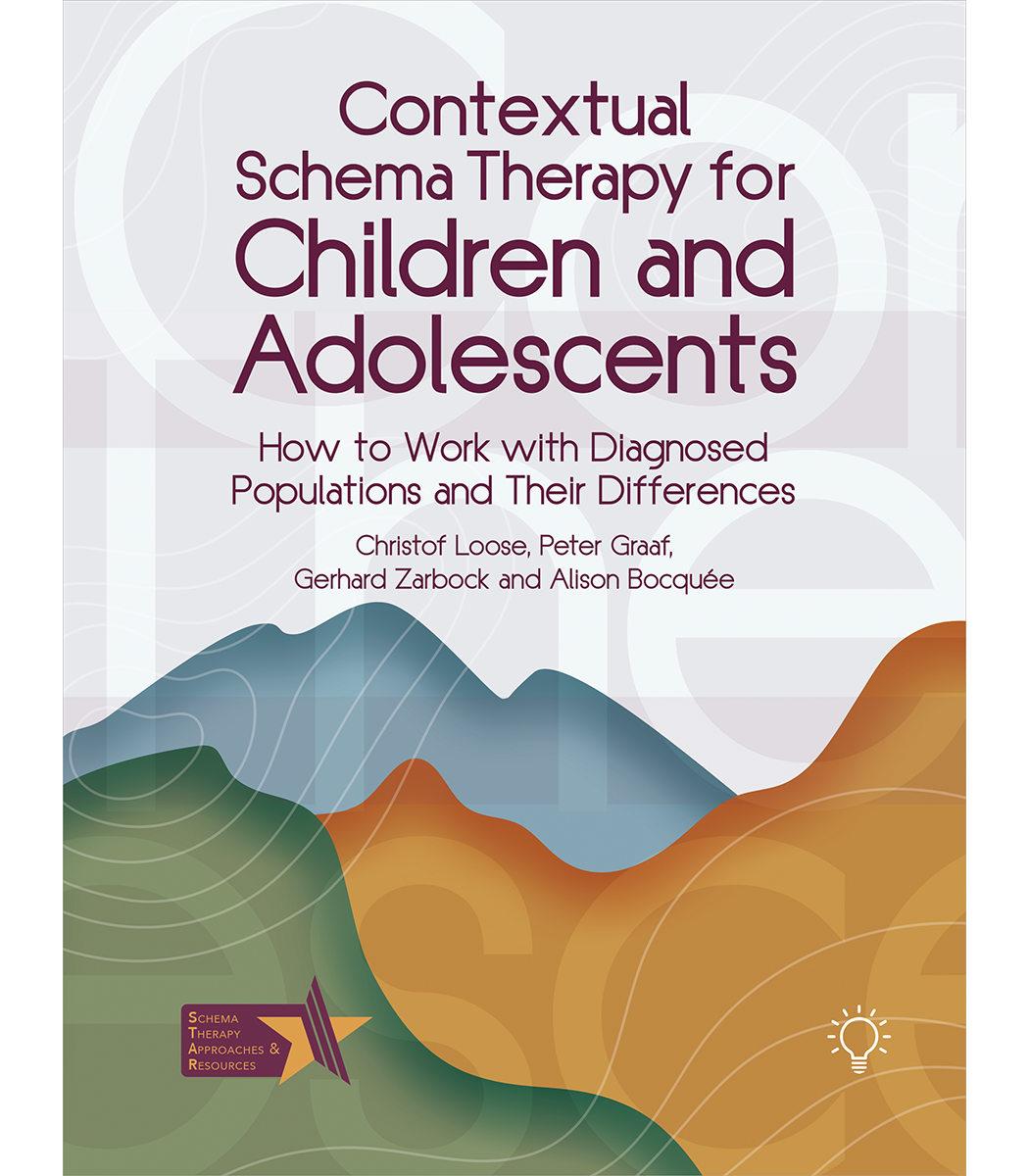
Contextual Schema Therapy for Children and Adolescents describes how to adapt schema therapy approaches to help young people with eight common conditions who experience difficulties in areas such as coping, relating and self-image.
The authors explore the schemas and modes that play a specific role in anxiety, depression, OCD, eating disorders, conduct disorder, borderline personality disorder, ADHD and autism, and show how to engage and help young people by adapting schema therapy techniques into fun mode characterisations and playful treatment games.
The book tackles a wide range of unhelpful behaviour patterns by linking them to unmet needs and then addressing them with age-adapted interventions. Contextual Schema Therapy for Children and Adolescents combines CBT, systemic family work, developmental science and experiential techniques in a unique model for helping troubled young people. Examples illustrate each technique, and further resources are also provided.
Audience
Contextual Schema Therapy for Children and Adolescents is for Schema therapists accredited by the International Society for Schema Therapy (ISST). Professionals working in child and adolescent mental health, including in CAMHS services in the UK. Practitioners at all levels of experience including psychologists, psychiatrists, psychotherapists, counsellors, social workers and creative therapists. Clinical researchers and students of CBT and psychotherapy.
Content
Table of Contents
Foreword by Wendy Behary
Preface
1. Child and Adolescent Psychology and Psychotherapy
2. Schema Therapy for Attention Deficit/Hyperactivity Disorder (ADHD)
3. Schema Therapy for Conduct Disorder
4. Schema Therapy for Depression
5. Schema Therapy for Anxiety Disorders
6. Schema Therapy for Obsessive-Compulsive Disorders
7. Schema Therapy for Eating Disorders
8. Schema Therapy for Autism
9. Schema Therapy for Borderline
Personality Features in Adolescents
Appendix
References
Authors
Christof Loose is a CBT therapist, clinical psychologist and advanced level schema therapist, supervisor and trainer. He sits on the ISST Training and Certification Advisory Board and is Chair of its Child-Adolescent committee. He is widely recognised as the key pioneer in adapting schema therapy for young people.
Peter Graaf is a child and adolescent psychotherapist at the Werner Otto Institute, Hamburg, a family-oriented institution focused on helping children with a range of difficulties.
Gerhard Zarbock is a clinical psychologist, certified CBT-, Schema- and DBT-therapist, and Director of the Institute for Behavioural Therapy Training in Hamburg, Germany.
Alison Bocquee is a Brisbane-based clinical psychologist with extensive experience in working with children, adolescents and adults.
Details
Publisher: Illuminate an imprint of Pavilion Publishing and Media Ltd
ISBN: 9781803883168
Expected Publication Date: Oct 2026








Wendy T Behary, LCSW Founder and Director, The Cognitive Therapy Centre of NJ –
I enthusiastically recommend this stellar book to any professional working with children, adolescents, families and parents – especially those who are interested in terminating the self-destructive generational legacies of child maltreatment in a family, and those interested to further their clinical competence and achieve the rewarding satisfaction of working effectively with this population in their treatment room.
Susan Simpson, Consultant Clinical Psychologist, clinician-researcher, author, and Advanced Schema Therapy Trainer-Supervisor –
Contextual Schema Therapy for Children and Adolescents: How to Work with Diagnosed Populations and Their Differences is a timely, compassionate and highly practical contribution to the growing literature on schema therapy with younger populations. Bringing together experienced clinicians, the volume explores the application of Schema Therapy for Children and Adolescents (ST-CA) across a wide range of presentations, including ADHD, conduct disorder, depression, anxiety, obsessive-compulsive disorder, eating disorders, autism and borderline personality features in adolescence, while also attending more broadly to neurodivergence. Diagnosis is treated as just one among multiple sources of clinically useful information, contributing to a broader developmental and contextual understanding of each young person, including their family relationships, social environment, temperament, strengths, vulnerabilities and unmet emotional needs. This is reflected in the book’s contemporary, trauma-informed and non-pathologising language.
Across the chapters, contributors demonstrate how schemas, modes and coping responses may emerge and operate differently within particular clinical populations, while keeping the individual child or adolescent at the centre of formulation and intervention. The therapeutic stance throughout is warm, protective, validating and appropriately behaviour-guiding, with a strong emphasis on emotional attunement, limited reparenting and helping young people develop a more coherent, resilient sense of self. The chapters offer clear guidance on conceptualisation and translate schema therapy principles into developmentally sensitive interventions that incorporate relational, experiential, behavioural, playful and creative methods. Attention to parental and wider systemic involvement further strengthens the contextual approach.
The clinical examples, structured exercises, worksheets and appendices make this an especially accessible resource, supporting clinicians in moving from theoretical understanding to practical application. A particular strength is the way the volume holds the common foundations of schema therapy alongside the meaningful differences between diagnostic and neurodevelopmental presentations, including the important tensions between clinical terminology, lived experience and identity-affirming practice.
This book will be valuable both to clinicians already practising ST-CA and to those seeking to extend their work with children, adolescents and families. It offers a clinically rich, respectful and hopeful framework for understanding not simply “what is wrong,” but what has happened, what is needed, and how therapy can help a young person flourish.