Description
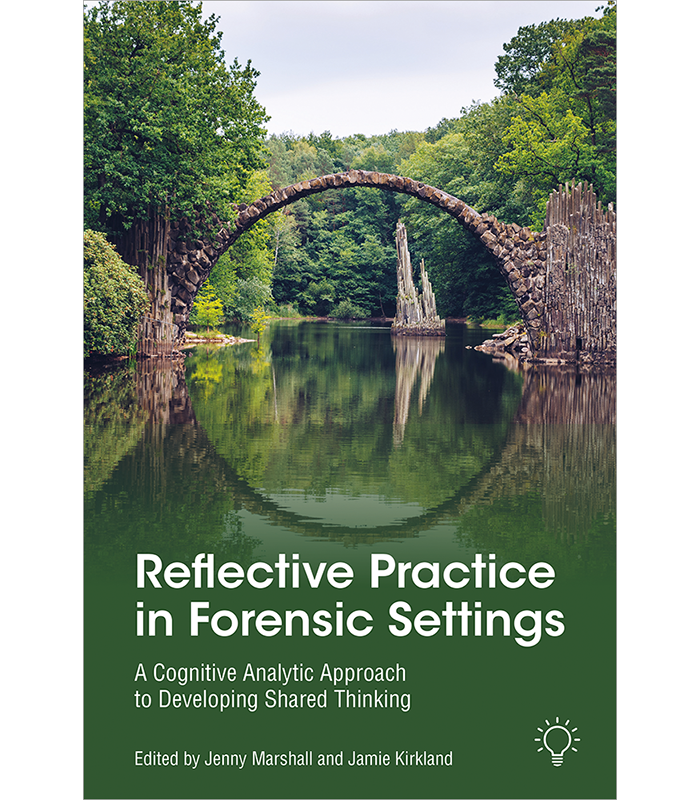
Working in forensic and secure settings with clients who have experienced trauma, damage, and abuse presents a unique professional challenge. Reflective practice in a forensic setting requires more than therapy—it demands connection, reflection, and the ability to think before acting.
Reflective Practice in Forensic Settings explores how to build a compassionate, reflective culture within forensic services. The book emphasizes how practitioners, teams, and entire organizations can develop relational awareness and empathic understanding to better support both clients and colleagues.
Grounded in the principles of Cognitive Analytic Therapy (CAT)—an accessible, integrative model for understanding human relationships—this book provides a common language for reflective practice across multidisciplinary teams.
Featuring contributions from experienced clinicians, therapists, and forensic practitioners, the book offers real-world insights into how CAT principles can be applied to:
-
Foster reflective thinking and emotional awareness in forensic teams
-
Manage complex interpersonal dynamics within secure environments
-
Promote organizational compassion and resilience
-
Build therapeutic relationships rooted in empathy and understanding
-
Develop relationally informed services that go beyond traditional treatment models
An essential resource for forensic psychologists, therapists, psychiatrists, nurses, and organizational leaders, this book provides practical tools and conceptual clarity for anyone working to create safer, more reflective, and humane forensic services.
Authors
JENNY MARSHALL is a Consultant Clinical Psychologist at Ridgway Hospital, Tees, Esk and Wear Valleys NHS Trust, and an accredited CAT Practitioner and Supervisor. She has a long history of working in low and medium secure services with people with mental disorders, and she has a strong interest in the application of the CAT model to reflective practice. She works with Catalyse, a social enterprise offering CAT training, therapy and consultancy through a network of expertise across northern England.
JAMIE KIRKLAND is a Consultant Clinical Psychologist in the Division of Forensic Mental Health and Learning Disabilities with NHS Greater Glasgow and Clyde, where he is the lead for reflective practice. He is a CAT Trainer and Supervisor, and co-Director of CAT Training Scotland. He has applied CAT in secure settings and with community learning disability teams, and has a strong interest creating reflective spaces for multi-disciplinary staff teams.
Content
Table of Contents
PART 1 – Introduction to Forensic Work, Reflective Practice and the Relational Model
The challenge of working in forensic services (Jenny Marshall & Jamie Kirkland); 2. Traditional approaches to reflective practice (Jon Patrick, Katharine Russell & Adam Polnay); 3. The CAT model (Jenny Marshall & Jamie Kirkland); 4. Relational mapping (Steve Potter)
PART 2 – Facilitating Reflective Practice
Core competencies for reflective practice (Jamie Kirkland); 6. Steps to reflective mapping (Steve Potter); 7. Case studies from forensic settings (Various); 8. Crossing and uncrossing the line (Jason Hepple); 9. Helping the helpers (Jamie Kirkland, Heather Tolland, Emma Drysdale & Steve Jefferis); 10. CAT-informed supervision (Alison Bickerdike, Nicola Kemp & Clare Bingham)
PART 3 – Reflective Practice and the Wider Organization
When forensic systems go astray (David Harvey); 12. Leadership and CAT – Part 1 (Jenny Marshall); 13. Leadership and CAT – Part 2 (Jenny Marshall); 14. Concluding thoughts (Jenny Marshall, Jamie Kirkland & Steve Potter)
Details
Publisher: Pavilion Publishing and Media Ltd
Publication Date: 14th September 2021
ISBN: 9781914010842




Dr Rajan Darjee | Senior Lecturer in Forensic Psychiatry –