Description
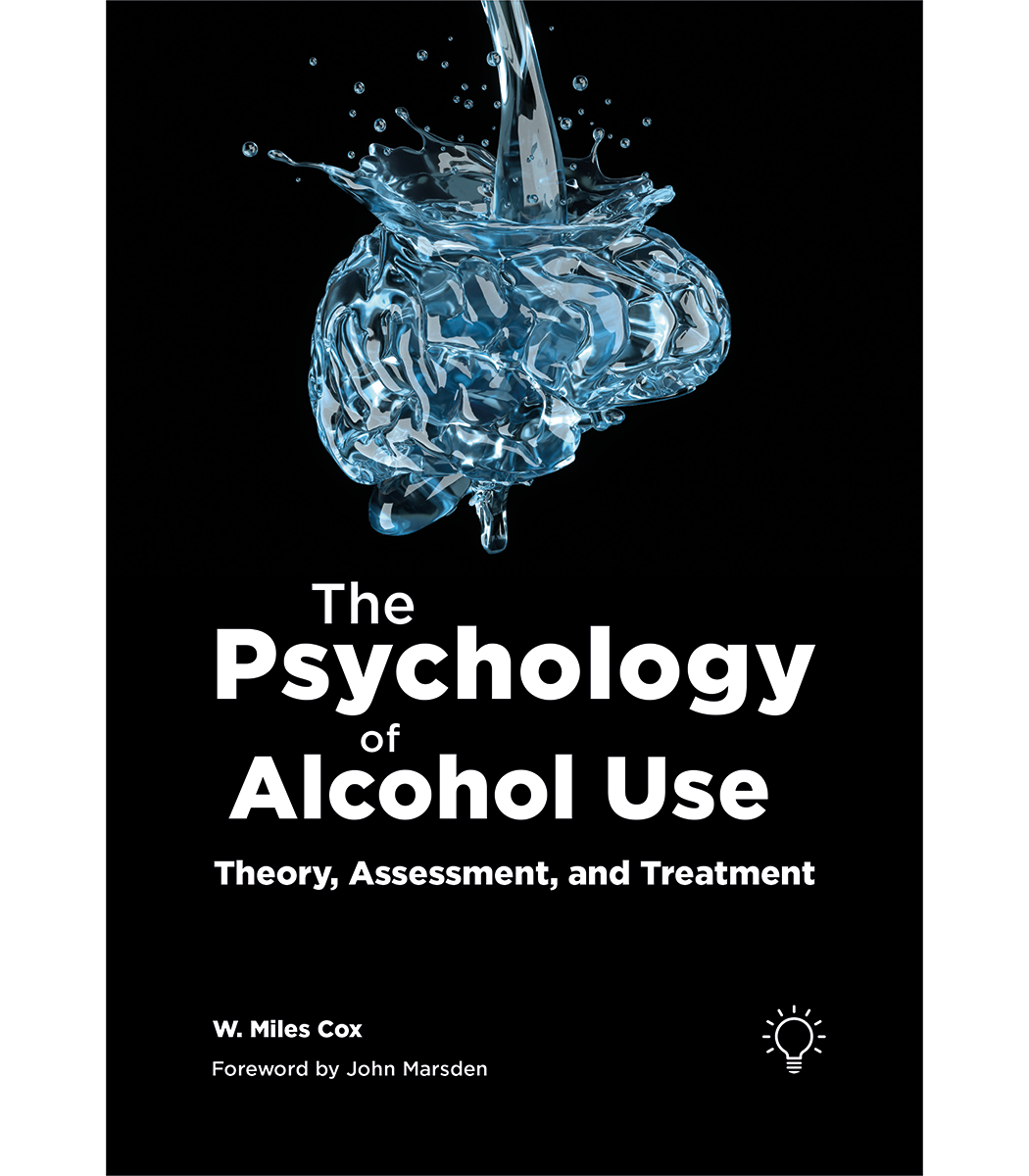
The Psychology of Alcohol Use provides an accessible overview of our contemporary understanding of alcohol use and abuse, gathering knowledge and insights gained over the author’s long career as a teacher and researcher in the field. Readers will find everything they need to know about alcohol and alcoholism – including the nature of alcohol and the various forms in which it is consumed, the long-term risks associated with its use, the history of alcohol through the ages, and the science behind our psychological drivers and motivations for drinking.
The second half of the book explore the various treatments, therapies, support groups and other forms of help that are available to help those who fail victim to alcohol’s dangers. Built on a lifetime of making this topic accessible to all, and ideal for students, professionals and families alike, this is the perfect, up-to-date introduction to a fascinating field.
Author
Miles Cox is Emeritus Professor of the Psychology of Addictive Behaviours in the School of Psychology at Bangor University. His career has been a very active one, academically and professionally. His postdoctoral career has been spent (a) conducting research on the motivational determinants of alcohol use, (b) supervising students’ research projects, and (c) teaching university courses in the psychology of addictive behaviours.
Miles Cox is a member of the Editorial Board of the Journal of Addictive Diseases and a Senior Editor of Addiction. He is Founding Editor of Psychology of Addictive Behaviors and is a fellow in the British Psychological Society and two of the divisions of the American Psychological Association (the Society of Clinical Psychology and Psychopharmacology and Substance Abuse). Cox is a Charter Fellow in (a) the Association for Psychological Science, and (b) the Division of Addictions of the American Psychological Association. He has received a Commendation from the Society of Psychologists in Addictive Behaviors for his contributions to the psychology of addictive behaviors.
Audience
University instructors who require a textbook for courses in addictive behaviours (especially the psychology of addictive behaviours); academics in relevant disciplines seeking an accessible overview of the psychology of alcohol use; clinicians and therapists who treat those with alcohol problems; interested general readers.
Content
Introduction
1. What is alcohol?
2. The route of alcohol through the body
3. Long-range consequences of unsafe drinking
4. Alcohol use: A historical perspective
5. Generic vulnerability
6. Environmental influences on drinking behaviour
7. Motives for drinking alcohol
8. Assessment of alcohol use and problems
9. Psychological treatments for alcohol use disorders
10. Treatments for alcohol-use disorders: additional considerations
11. Group therapy and mutual aid for alcohol-use problems
12. Natural recovery from an alcohol-use disorder
Details
Publisher: Pavilion Publishing and Media Ltd
ISBN: 9781803885032
Publication Date: April 2026
Pages: 240


Siegfried Gauggel, PhD, Director of the Centre for Psychotherapy, Chemnitz, Germany and Emeritus Professor of Medical Psychology and Medical Sociology, RWTH Aachen University, Germany –
In The Psychology of Alcohol Use: Theory, Assessment, and Treatment, Miles Cox provides a pragmatic synthesis of the psychological mechanisms underlying alcohol consumption. The book provides an essential biological and historical context, but its true strength lies in its focus on the why—moving beyond simple medical models to explore the complex motivational nexus that drives both problematic use and successful recovery. Cox manages to distill decades of rigorous research into a narrative that will be useful for clinicians, researchers, and students as well as interested laypeople. It is a sober, comprehensive resource for understanding one of the most pervasive substances in modern society.
Alan W. Stacy, PhD, Professor, School of Community & Global Health, Claremont Graduate University; Claremont, California. Professor Emeritus, Institute for Prevention Research, Keck School of Medicine, University of Southern California –
The Psychology of Alcohol Use: Theory, Assessment, and Treatment is an enjoyable, informative, and up-to-date, easy read. College students at any level and many others interested in learning more about alcohol, its effects, or the treatment of alcohol abuse will find it invaluable. Family members of alcoholics or problem drinkers, drinkers themselves, researchers beginning to study alcohol abuse, and even policy makers will find chapters of high relevance to them. The author, Professor W. Miles Cox, is a top expert on the treatment of alcohol abuse, has developed important evidence-based treatment options, and skillfully integrates an enormous amount of information in a form that is comprehensive yet succinct and readable for a wide audience.
Ludwig Kraus, Prof. Dr. phil. habil. Centre of Interdisciplinary Addiction Research (ZIS) Department of Psychiatry and Psychotherapy University Medical Centre, Hamburg-Eppendorf, Hamburg, Germany. –
The Psychology of Alcohol Use provides a brilliant overview of the psychological determinants of alcohol use and misuse. The author skilfully summarises the current state of scientific knowledge, ranging from (a) the effects of alcohol on the body and mind to (b) psychological theories explaining alcohol use and misuse to (c) methods for treating alcohol-related problems. Based on his groundbreaking research on the motivational basis for alcohol consumption and misuse, Cox challenges the prevailing model of addiction as a brain disease by highlighting psychological and sociological aspects, as well as recovery without professional help. The book is equally suitable for experts from various disciplines, students, and laypeople interested in the most important topics in the psychology of alcohol use and misuse.
Emmanuel Kuntsche, PhD, Director of the Centre for Alcohol Policy Research (CAPR) and Professor of Public Health, La Trobe University, Melbourne, Australia –
W. Miles Cox’s 1990 book, Why People Drink: Parameters of Alcohol as a Reinforcer, offered a groundbreaking perspective on why individuals choose to drink alcohol, laying the foundation for decades of drinking motive research—including my own work. Building on his extensive experience in both research and the practical applications of his findings in treatment and education, Cox’s latest book, The Psychology of Alcohol Use: Theory, Assessment, and Treatment, addresses broader questions, such as what alcohol is, its effects on drinkers, why people drink, and who may be most at risk. The book also explores ways of measuring, diagnosing, and treating excessive alcohol use and related problems. Written in clear, accessible language, this resource is invaluable for anyone seeking a comprehensive understanding of a substance that, according to the WHO, causes 2.6 million deaths annually and accounts for nearly 5% of the global disease burden.
Reinout Wiers, PhD, Professor of Developmental Psychopathology and Chair of the Addiction Development and Psychopathology (ADAPT) Lab, University of Amsterdam –
The Psychology of Alcohol Use: Theory, Assessment, and Treatment by Miles Cox is an accessible overview of 50 years of alcohol research in psychology, with an emphasis on motivational processes, a topic on which Professor Cox is an internationally renowned expert. The book provides answers to everything you always wanted to know about drinking but never dared to ask. Why do people continue drinking even when they realize that it will harm their health? What can I do myself to curb my drinking or to help someone around me, based on the accumulated knowledge in psychological science?
Professor David Linden, DPhil, PhD, Scientific Director Mental Health and Neuroscience Research Institute (MHeNs) Faculty of Health, Medicine and Life Sciences, Maastricht University, The Netherlands –
In this elegantly written core text, Professor Cox introduces the reader to the full spectrum of biological, psychological, and social aspects of alcohol use. The chapters on motivational models and interventions reflect his extensive experience in the psychology of addictive behaviors. With its critical review of the current evidence, this book is essential reading for anyone interested in risk factors and treatments for problem drinking—students, clinicians and policymakers alike.