
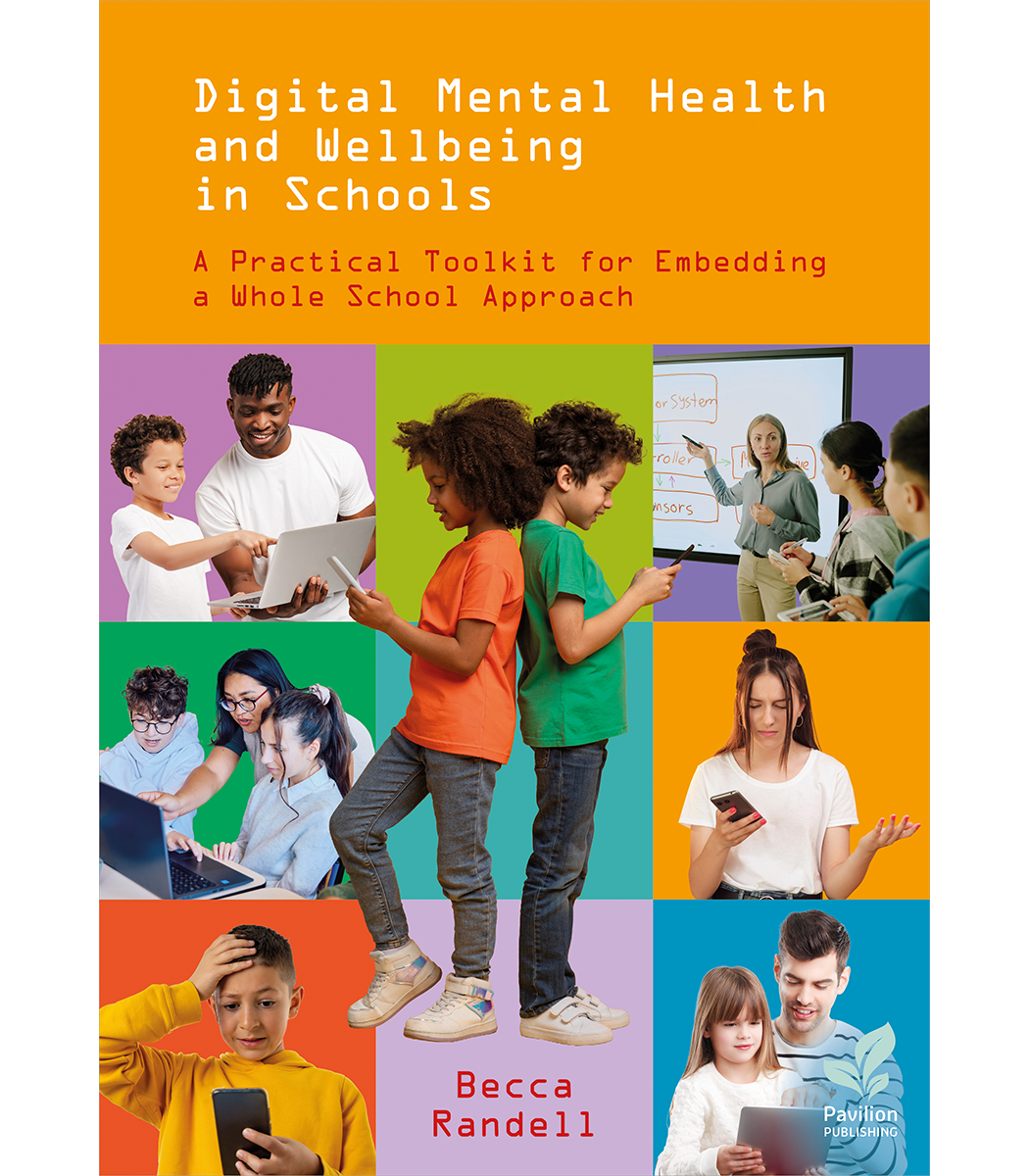
Digital Mental Health and Wellbeing in Schools is a practical toolkit for schools. It equips educators with knowledge, skills, strategies and ready-to-use resources. Together, these tools create safer, healthier digital environments for pupils, parents and school staff.
As technology becomes increasingly embedded in education and everyday life, schools must play a vital role in supporting their pupils, parents and staff’s digital mental health and wellbeing. In doing so, they encourage pupils to develop healthy digital habits while protecting themselves from online risks. This comprehensive toolkit adopts a whole school approach, helping educational settings integrate digital mental health and wellbeing into the curriculum. In practice, this integration is achieved through leadership, governance, safeguarding and by embedding it into the school culture and ethos.
What does the toolkit include?
This toolkit is designed for teachers, school leaders, governors, designated safeguarding leads (DSLs), pastoral staff, mental health support teams and other professionals working within schools. It provides clear, step-by-step guidance alongside a wealth of practical resources that can be implemented immediately. These include policy frameworks, audit tools, checklists, surveys, role descriptions, classroom activities, charters, quizzes and posters. Incorporating these materials will support both strategic planning and day-to-day practice.
At its core, the toolkit focuses on developing effective leadership, governance, safeguarding and curriculum approaches to digital wellbeing. It also explores parent and carer engagement, digital literacy, digital inclusion, wellbeing and targeted support for vulnerable pupils. As a result, digital wellbeing can be effectively embedded across the entire school community.
Aligned with current UK safeguarding guidance and best practice, Digital Mental Health and Wellbeing in Schools supports schools in other essential ways. It also helps strengthen PSHE provision, promote positive mental health and demonstrate a robust whole school approach to digital wellbeing. While grounded in the UK education context, the principles, frameworks and practical strategies remain relevant to education settings internationally.
Author Becca Randell is a specialist in digital mental health and wellbeing. Her expertise helps support children and young people to thrive in an increasingly digital world. As such, this essential resource provides education professionals with the tools and confidence to foster safe, inclusive and mentally healthy digital cultures. Pupils, staff, parents and school leaders will all benefit from these tools. Becca is also the author of A–Z Guide to Children and Young People’s Digital Mental Health, by Pavilion Publishing.
