
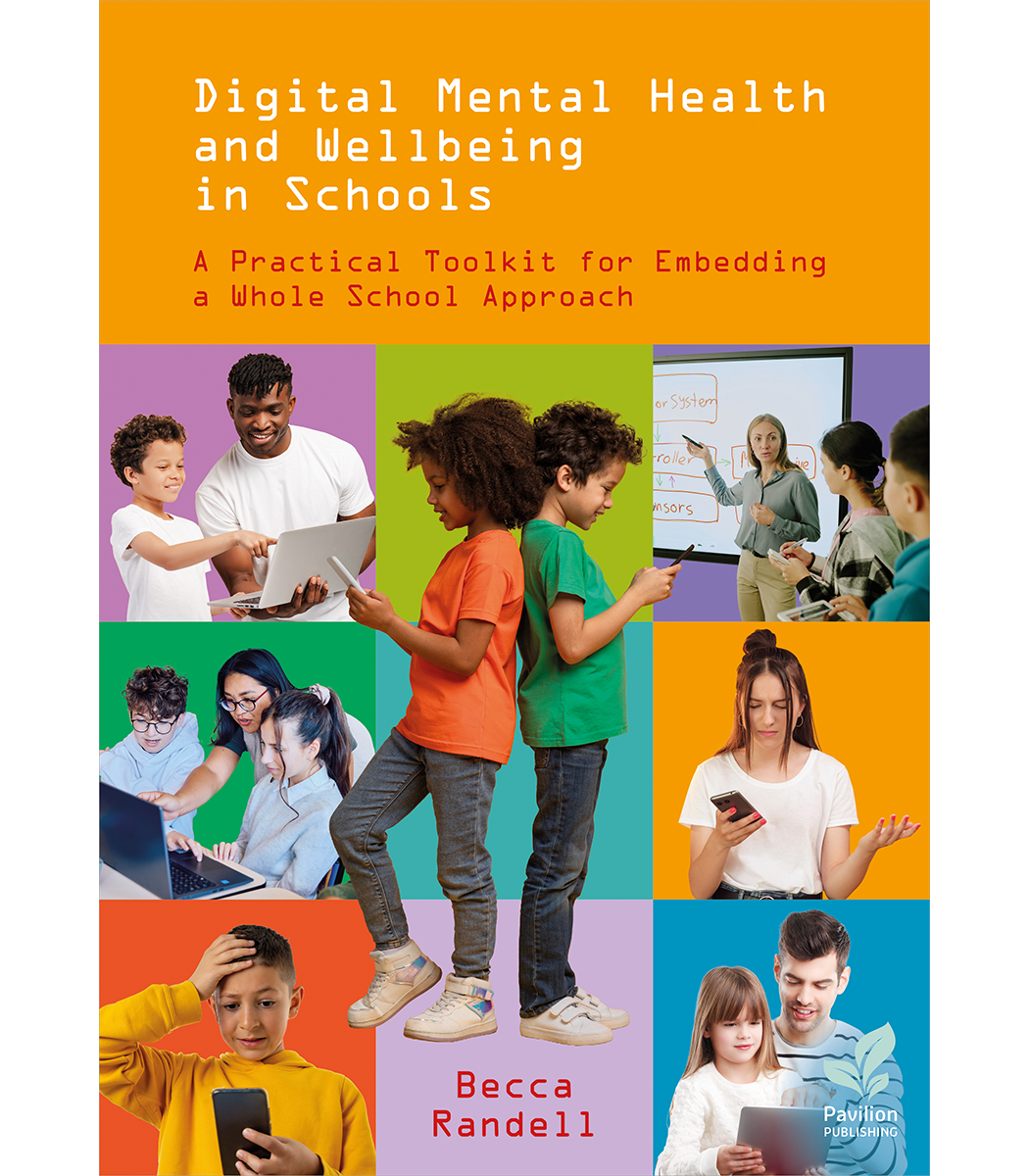
Description
Digital Mental Health and Wellbeing in Schools is a practical toolkit for schools. It equips educators with knowledge, skills, strategies and ready-to-use resources. Together, these tools create safer, healthier digital environments for pupils, parents and school staff.
As technology becomes increasingly embedded in education and everyday life, schools must play a vital role in supporting their pupils, parents and staff’s digital mental health and wellbeing. In doing so, they encourage pupils to develop healthy digital habits while protecting themselves from online risks. This comprehensive toolkit adopts a whole school approach, helping educational settings integrate digital mental health and wellbeing into the curriculum. In practice, this integration is achieved through leadership, governance, safeguarding and by embedding it into the school culture and ethos.
What does the toolkit include?
This toolkit is designed for teachers, school leaders, governors, designated safeguarding leads (DSLs), pastoral staff, mental health support teams and other professionals working within schools. It provides clear, step-by-step guidance alongside a wealth of practical resources that can be implemented immediately. These include policy frameworks, audit tools, checklists, surveys, role descriptions, classroom activities, charters, quizzes and posters. Incorporating these materials will support both strategic planning and day-to-day practice.
At its core, the toolkit focuses on developing effective leadership, governance, safeguarding and curriculum approaches to digital wellbeing. It also explores parent and carer engagement, digital literacy, digital inclusion, wellbeing and targeted support for vulnerable pupils. As a result, digital wellbeing can be effectively embedded across the entire school community.
Aligned with current UK safeguarding guidance and best practice, Digital Mental Health and Wellbeing in Schools supports schools in other essential ways. It also helps strengthen PSHE provision, promote positive mental health and demonstrate a robust whole school approach to digital wellbeing. While grounded in the UK education context, the principles, frameworks and practical strategies remain relevant to education settings internationally.
Author Becca Randell is a specialist in digital mental health and wellbeing. Her expertise helps support children and young people to thrive in an increasingly digital world. As such, this essential resource provides education professionals with the tools and confidence to foster safe, inclusive and mentally healthy digital cultures. Pupils, staff, parents and school leaders will all benefit from these tools. Becca is also the author of A–Z Guide to Children and Young People’s Digital Mental Health, by Pavilion Publishing.





Tony McCabe, Head Teacher, St Joseph’s Roman Catholic High School –
Young people today do not choose whether digital technology is part of their lives; they choose how well they navigate it. Our responsibility as educators is to ensure they have the knowledge and resilience to enjoy its benefits while staying safe from its dangers and I welcome this practical toolkit as a brilliant place to start.
Dr Maryann Ferreux, Chair Digital and AI, Royal College of Physicians of Edinburgh and NHS Non-Executive Director at Kent Community Health Foundation Trust –
Supporting children’s mental health in a digital world requires more than simply telling them how to stay safe online. It means creating the right environments, equipping adults with the knowledge and tools to help, and ensuring every child is included. I particularly value this toolkit’s focus on turning evidence into practical action, helping schools embed digital wellbeing into everyday practice. For anyone working with children and young people, I would highly recommend this book as a practical resource to support meaningful change and help every child thrive in an increasingly digital world.
Sue Mullin – Associate Director: Children’s Mental Health, NHS Kent and Medway –
Digital wellbeing has become a critical component of children’s mental health and educational success. This book provides schools and system leaders with a practical roadmap for embedding digital mental health within a whole-school approach, supporting prevention, early intervention and the creation of healthier digital cultures. Grounded in evidence and focused on implementation, it is an invaluable resource for schools, Mental Health Support Teams and commissioners seeking to improve outcomes for children and young people in an increasingly digital world.
Tanya Procter – Commissioner for Health and Wellbeing in Schools –
This practical toolkit is based on what we know works in supporting schools with a whole school approach to mental health and wellbeing. Digital safety and wellbeing is a concern for all schools and this recourse offers guidance, tips and certainty and in fast changing environment. It will support educators to be clear and will enable children how to navigate the digital world safely.
Mary John, Associate Professor of Psychology, University of Surrey –
As digital technologies become ever more central to young people’s lives, schools need practical and effective ways to promote healthy digital habits while safeguarding wellbeing. Grounded in evidence and designed for practice, this toolkit provides schools with the guidance and resources needed to embed digital mental health and wellbeing across the whole school community, creating safer, more inclusive and mentally healthy environments for pupils, staff and families.
Professor Hatim Abdulhussein – CEO Health Innovation Kent Surrey Sussex and Hon Professor Innovation and AI, Surrey University –
Health Innovation Networks exist to accelerate the adoption of evidence-based innovation that improves health outcomes and reduces inequalities. Digital Mental Health and Wellbeing for Schools exemplifies this approach by providing schools with a practical, evidence-informed framework that transforms policy into meaningful action. Its focus on prevention, digital inclusion, workforce wellbeing and co-designed resources demonstrates how education and health can work together to support the mental wellbeing of children and young people. This is a timely and valuable resource that will help educational settings embed sustainable, scalable approaches to digital wellbeing while strengthening collaboration across education, health and care.
Hannah Vickery, CEO The Charlie Waller Trust –
Digital wellbeing is a shared responsibility across the whole school community. These resources provide practical, evidence-informed ways to meaningfully embed a positive culture around digital wellbeing within your school or college. The importance of placing pupil voice at the heart of that work, is crucial to ensure our good intentions, actually have the impacts we hope – supporting youth mental health, inclusion and healthy relationships with technology.
Fiona Collier, Chair National Association of Governance Advisory Services (NAGAS) –
The resources offer a thought-provoking contribution to the growing conversation around digital wellbeing in schools and colleges, highlighting a range of issues and possible approaches for leaders and governing bodies to reflect upon within their own context.
Professor Robin Banerjee, Pro Vice Chancellor, University of Sussex –
This valuable resource draws upon the latest research to illuminate the power of working across the whole school and college community to promote mental health and wellbeing in our digital age. Becca Randell’s extensive experience and expertise shine through in this volume, which is packed with user-friendly tips and strategies that will help staff work effectively with young people, parents and carers, and the wider community, as well as with each other!
Laura Whixton, Programme Manager (Mental Health Support Teams) NHS England –
As schools continue to navigate the opportunities and challenges presented by an increasingly digital world, this book provides a timely and practical framework for embedding digital mental health within a whole-school approach. It recognises that supporting children’s mental health is no longer separate from supporting their digital lives, and offers evidence-informed guidance that is accessible to leaders, staff and mental health professionals alike.
This resource aligns closely with the work of Mental Health Support Teams, complementing their role in promoting prevention, early intervention and system-wide change. Rather than focusing solely on individual interventions, it helps schools build sustainable cultures that promote resilience, healthy digital habits and emotionally safe learning environments.
For school leaders, designated senior mental health leads, MHST practitioners and education professionals, this is an invaluable resource. It bridges research, policy and practice, providing practical strategies that can be implemented across the whole school community. At a time when digital wellbeing has become integral to children’s mental health, this book offers a clear vision for how education and health can work together to improve outcomes for all young people.