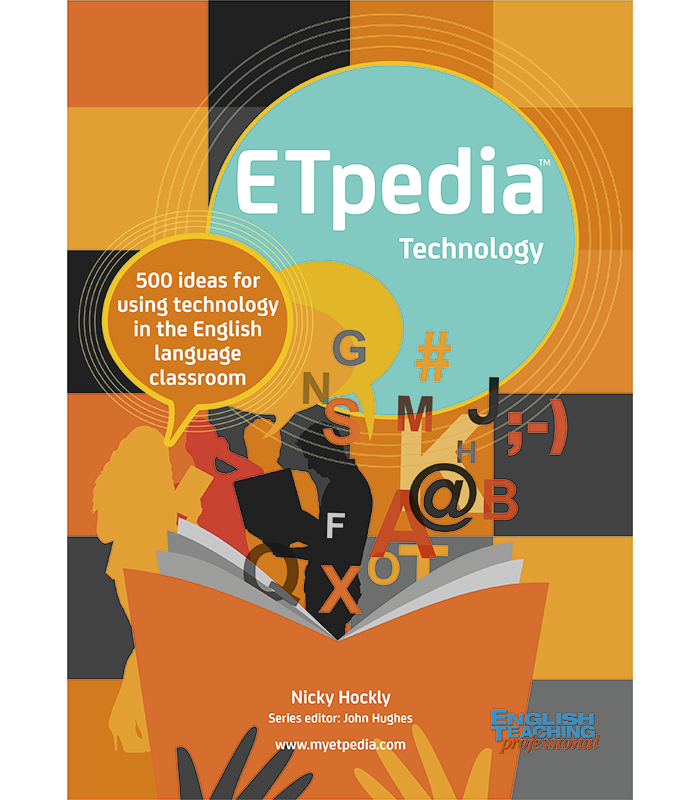
Technology is becoming an ever more popular and useful tool in the ELT classroom. Whether you are already an avid user of technology or you are inexperienced but want to explore more, then ETpedia Technology is the resource you need. It suggests ways to use text-based tools, multimedia, smartphones and more, as well as providing easy-to-use activities and more general advice for using technology in the classroom. It also covers some of the important discussions around using technology, such as the safety of young learners and the question of plagiarism. This resource can be used whatever your current teaching context, whether you are teaching in face-to-face lessons, online or a mix of the two, and can be adapted for whatever technology and resources you have available.
ETpedia Technology is part of the ETpedia series. Each book uses units of 10 to create an easy-to-use yet comprehensive resource book for the ELT classroom. The series includes the original ETpedia, providing 1000 ideas for English language teachers, as well as more specific resources which each provide 500 ideas on a particular topic. Topics include young learners, exams, grammar, management and materials writing.
You can take a look at a sample chapter from ETpedia Technologyhere.
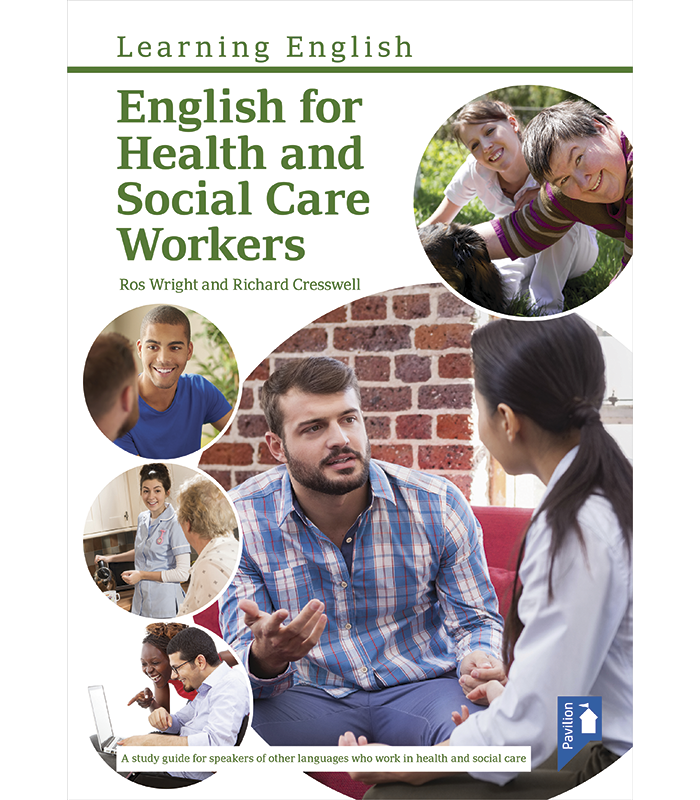
This self-study guide enables health and social care workers to improve their spoken communication, vocabulary, grammar and report writing skills and to deliver the appropriate levels of care.
With English for Health and Social Care Workers, care providers and employers and workers who do not have English as a first language can be sure of raising their standards of English language skills.
Health and social care workers will gain a better working knowledge of medical terms, different medications and equipment, terms used by service users and policies and procedures used in the care environment.
Former care minister, Norman Lamb said “For people to get the care they want they need to be able to communicate with their care workers. Employers are responsible for recruiting staff that can competently speak and read English but communication will be a key part of the new Care Certificate.”
Psychological resilience could be defined as an individual’s ability to successfully adapt to life in the face of adverse conditions. Resilient people don’t dwell on failures – they acknowledge the situation, find strength to embrace emotional difficulties and move on.
This flexible training pack is designed to be used in one-to-one sessions as well as for group work. It teaches The Resilience Coaching Model, a non-directive approach whereby the facilitator encourages the learner(s) in the proactive self-management of resilience.
Using this proactive approach, learners will be able to:
• make a conscious decision to shape a resilient lifestyle
• assume responsibility for the quality of their life
• make changes to enhance their resilience
• understand the difference between what they can change and what they cannot and focus their energies wisely
• develop a resilient lifestyle which will allow them to revitalize and re-energise themselves so that they can continue to thrive in the face of the demands of life.
It has long been known that people with learning disabilities have poorer health than the¬ general population, but the extent of these differences becomes striking when considering the evidence of reduced life expectancy. In 2013 the Confidential Inquiry into the Premature Deaths of People with Learning Disabilities reported that men typically die 13 years younger and women 20 years younger than the general population. In 42% of cases the death was considered premature. Enhance your understanding of how supporting the physical health of individuals with learning disabilities can improve overall well-being and lifespan.
The reasons for this lower life expectancy are varied but what we do know is this group are two and a half times more likely to have multiple health needs than other people, and often have difficulties accessing health services or receiving appropriate treatment from clinicians.
As well as looking at the challenges of accessing healthcare and navigating care pathways, this -handbook presents a practical guide to the most common conditions and health needs, with chapters written by experts in those conditions and their relationship to learning disabilities. A range of issues are covered, including mental health, cancer, epilepsy, respiratory and swallowing problems, and poor sight and hearing.
The book aims to increase awareness and knowledge of how these conditions and issues present themselves, as well as how they can be prevented in the first place, and best practice in assessment and treatment. It will therefore be a valuable resource for families, support workers and health professionals.
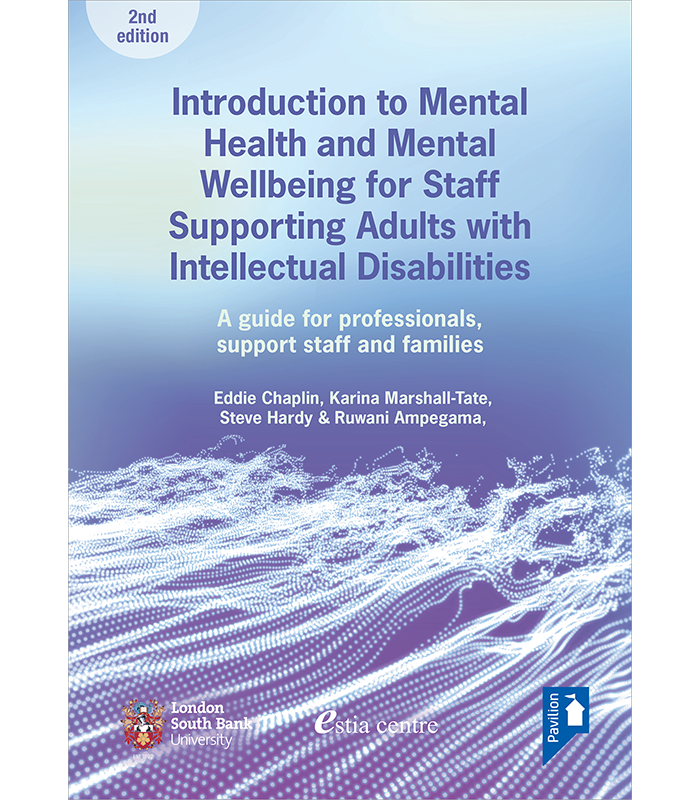
The book Introduction to Mental Health and Mental Wellbeing for Staff Supporting Adults with Intellectual Disabilities, aims to increase awareness and knowledge of how these conditions and issues present themselves, as well as how they can be prevented in the first place, and best practice in assessment and treatment. It will therefore be a valuable resource for families, support workers and health professionals.
It has long been known that people with learning disabilities have poorer health than the general population, but the extent of these differences becomes striking when considering the evidence of reduced life expectancy. In 2013 the Confidential Inquiry into the Premature Deaths of People with Learning Disabilities reported that men typically die 13 years younger and women 20 years younger than the general population. In 42% of cases, the death was considered premature.
The reasons for this lower life expectancy are varied but what we do know is this group are two and a half times more likely to have multiple health needs than other people, and often have difficulties accessing health services or receiving appropriate treatment from clinicians.
As well as looking at the challenges of accessing healthcare and navigating care pathways, this handbook presents a practical guide to the most common conditions and health needs, with chapters written by experts in those conditions and their relationship to learning disabilities. A range of issues are covered, including mental health, cancer, epilepsy, respiratory and swallowing problems, and poor sight and hearing.
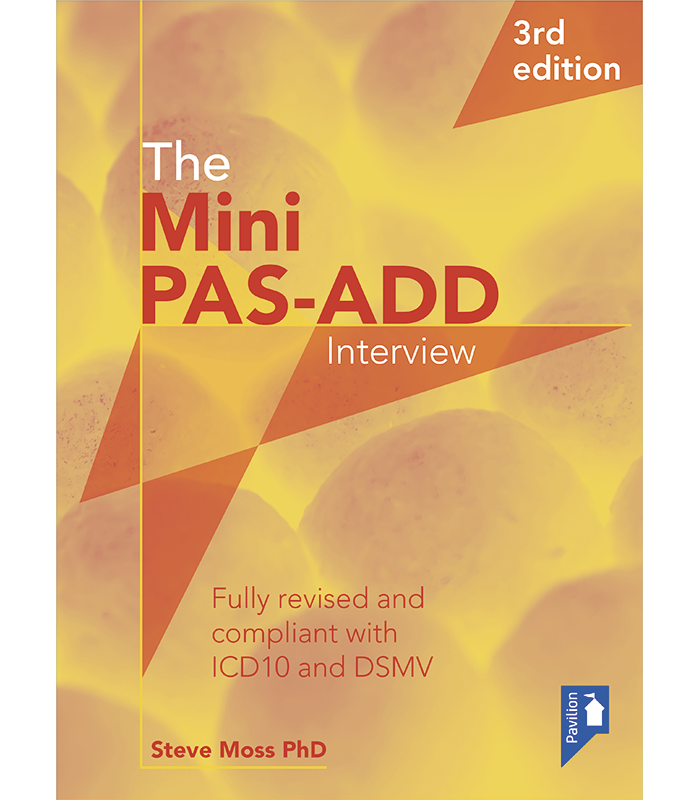
The PAS-ADD system is a family of assessments that has gained worldwide recognition for its contribution to improving the mental health assessment of people with intellectual disability (ID). Although the initial impetus for developing the system was for the particular needs of people with ID, the PAS-ADD assessments are equally valid for the general population. They are particularly valuable in situations where the person has more limited language skills. They are also excellent for use in research projects demanding high quality data on symptoms.
The Mini PAS-ADD was initially developed in recognition of the fact that many health and social service professionals have detailed knowledge of the client, but may not have a formal background in psychiatry or psychology. The Mini PAS-ADD provides a clinical glossary that includes examples of each symptom at various levels of severity. This glossary enables highly reliable estimates of symptoms to be made. The interview also has questions to guide the interviewer in asking about the symptoms.
Newly revised and fully updated to be compliant with both ICD-10 and DSM-5, the Mini PAS-ADD covers a range of common mental health problems. There are sections on anxiety, depression, bipolar disorder, obsessive-compulsive disorder, and psychosis, as well as a screen for autism spectrum disorder. In addition, the Mini PAS-ADD includes a small constellation of symptoms that were identified in the original field trials as indicating the presence of an organic disorder.
The Mini PAS-ADD is ideal for collecting crucial symptom information that subsequently becomes part of a wider case formulation, which may include, for example, information about the causes, associated behaviour problems and historical development of a disorder etc.
In the 15 years between the development of the 1st version and this 3rd edition, the Mini PAS-ADD has become widely used around the world and has been translated into a variety of languages. During this period, the author trained several thousand people in the use of the PAS-ADD system, and the experience gained through this has led to the development of this current edition. One of the largest changes between the current and previous versions is the questioning. This version provides questions that are carefully worded to elicit the information that is required in order to distinguish between the different levels of severity. This should make interviewing easier to conduct, and even more reliable.
The Moss Psychiatric Assessment Schedules (Moss-PAS) are the successors to this well-known PAS-ADD system. Click here to purchase the updated system.
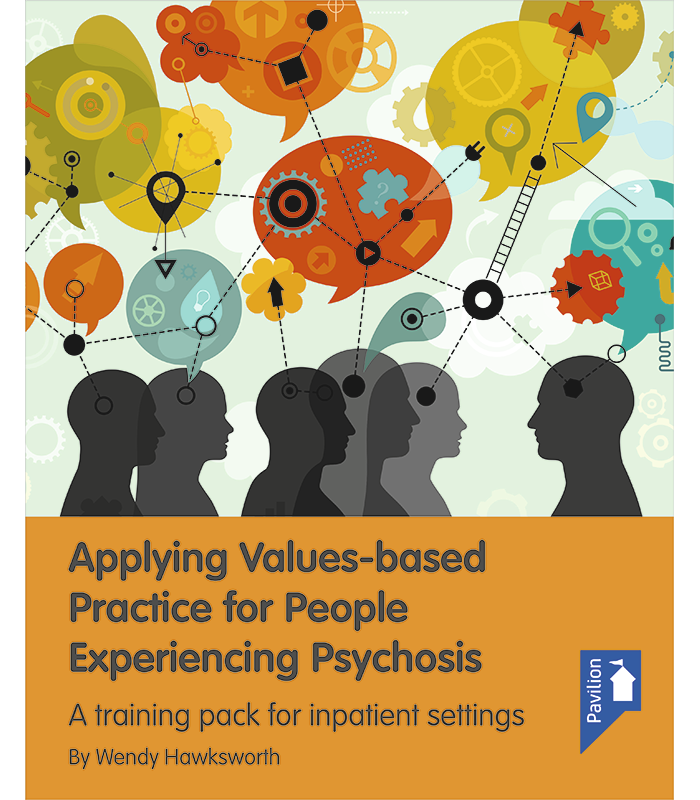
Discover a professional training course focused on applying values-based principles to better understand psychosis and improve patient care. In the environment of inpatient mental health units, a patient’s actions are often understood through reference to their illness; if they disagree with staff they lack insight or are aggressive, if they seek independence they are uncooperative and non-compliant, if they wish to be alone they are seen as withdrawn.
This contemporary and unique training course teaches workers within inpatient settings how to apply the principles of values-based practice when supporting people, especially those experiencing psychosis. Working from a values-based perspective supports workers in choosing clinical decisions that are dynamic and person-centred, with a focus on good processes rather than the ‘right way’ of providing care.
The training course will be valuable for all clinical staff who work with people whose perceptions of reality are different to what is considered socially acceptable. The course includes foundation information, exercises and practice scenarios and further references. Although focused on psychosis, it is equally relevant to any situation where value differences occur and cause conflict.
This pack provides all the information needed run to a training course according to your organisation’s particular needs, and includes detailed trainer’s notes and guidance, a range of useful handouts and a PowerPoint presentation, which are available to download online or on a CD-ROM. Also included is a copy of Applying Person-centred Care in Mental Health: A guide to values-based practice, which provides detailed analysis of the values-based principles and their relationship to evidence-based practice.
‘This training pack provides a much needed framework that is both supportive and flexible, enabling those who study its contents to progress in their learning and skills development, in both a flexible but gently guided manner. This pack builds on previous work by adding a practical and person-centred approach to an area of complex and multifaceted care, by both supporting the student through the learning process and ensuring there is a dynamic space given to the voice and the values of people experiencing psychosis.’
Kim Woodbridge-Dodd, co-author of Whose Values with K.W.M. Fulford, specialist in mental health leadership, strategy and service transformation and former head of mental health, Cambridgeshire County Council.
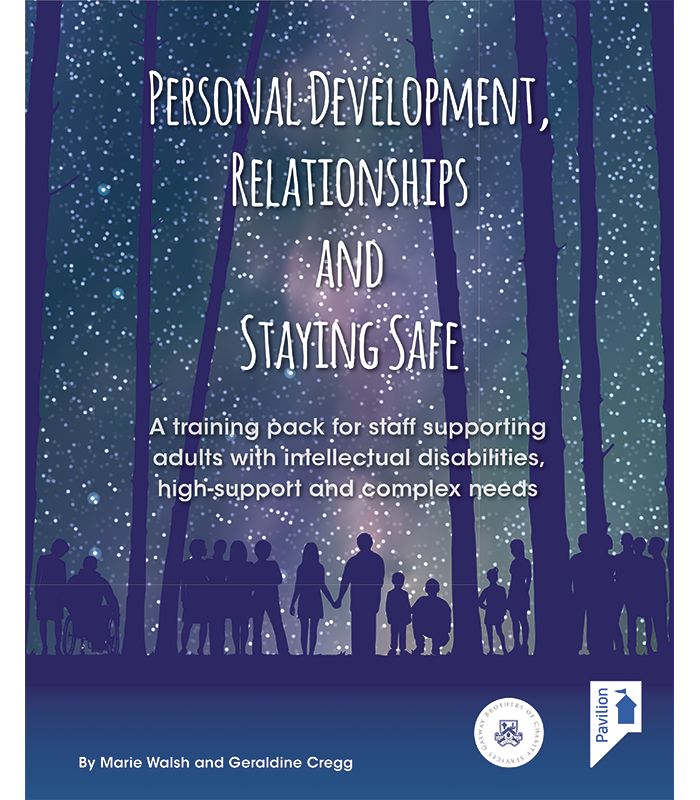
In light of The Ryan Report (2009) this comprehensive training pack will provide staff with the knowledge and practical skills to ensure the safety and personal development of individuals with intellectual disabilities, high support and complex needs.
Personal Development, Relationships and Staying Safe: A training pack for staff supporting adults with intellectual disabilities, high support and complex needs will provide frontline caregivers the skills and knowledge to teach and inform their service users about a variety of complex and sensitive issues around developing their own identity, forming relationships and staying safe in the context of physical and sexual abuse.
The aims of this training course are to increase staff awareness, understanding and knowledge of the topic of staying safe, the promotion of personal development and relationships specifically for persons with high support and complex needs i.e. people with a severe to profound level of intellectual disability. As well as this, the course can be used to provide staff with practical skills to help individuals who use intellectual disability services to learn about safety, personal development and relationships.
Free UK Postage on all orders over £20 in UK - sign up to our newsletter for 10% off your first order. Dismiss
We use cookies on our website. One group is essential for our business and another provides third party services. Click OK to accept all cookies, Opt-out to refuse services cookies, or visit our Cookie Policy.