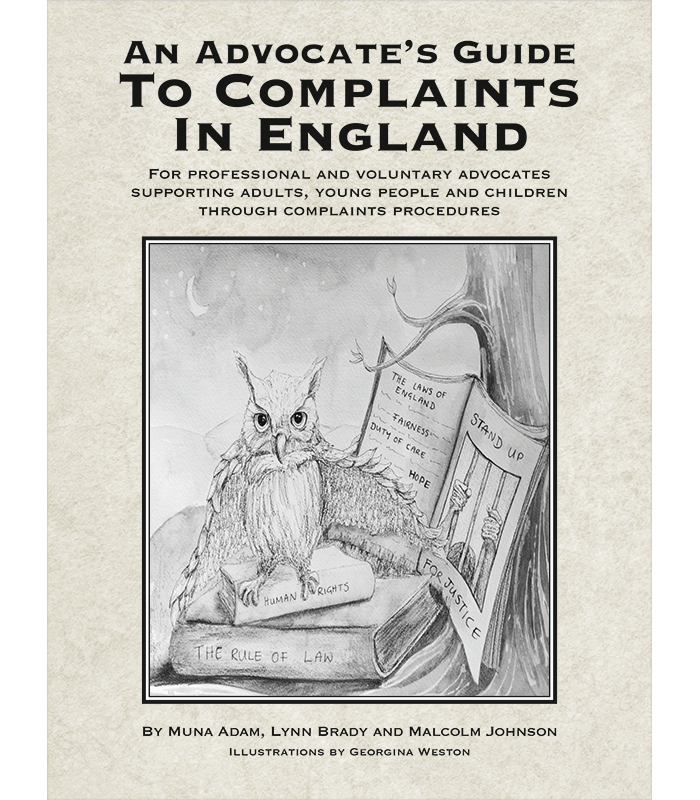
An Advocate’s Guide to Complaints in England is a concise and informative handbook provides accessible advice with a minimum of legal jargon and can be used as a reference book for all those who undertake advocacy work with adults, young people and children, either in a professional or voluntary capacity.
The book describes the different types of advocacy provided to complainants and the role and tasks of the advocate, explaining the various sources of guidance for advocates who present or assist with complaints. It describes the process of how a complaint is initially made and follows through the various stages of the procedure, advising on how best to achieve a positive outcome.
The first three chapters describe the advocacy world; explaining how it fits with the legal system, and answer the general questions commonly asked by advocates who are dealing with difficult cases. The rest of the chapters go into detail about the respective complaints procedures of various organisations and areas, such as healthcare, social care, education, housing, prison, children’s services and the police. Where possible examples of cases that have progressed to higher bodies, such as Ombudsmen or courts, are included to give examples of the type of complaints that are successful. At the end of each chapter there is a helpful ‘Key points’ section.
The aim is that the advocate will be able to ‘dip into’ these chapters for advice as and when needed and use the book as a comprehensive route map for the main complaints systems in England. This should be particularly helpful for advocates dealing with complaints that may cross between different institutions, such as social care and mental health.
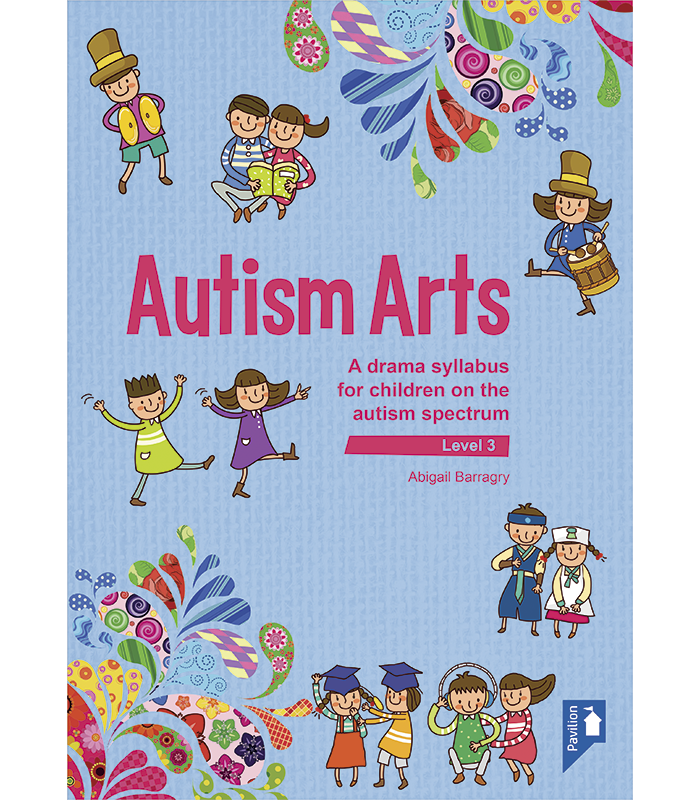
Autism Arts Level 3 follows the way creative arts and drama-therapy are increasingly used to help people with special educational needs. In particular it allows participants to explore, reflect and develop when linguistic ability or intellectual functioning restricts their self-expression.
Autism Arts Level 3: is for use by facilitators with and without drama experience, and encourages autistic children to learn, interact and develop. Through storytelling, group activities and arts and crafts, students can improve their social skills, self-expression, vocal and physical skills, and imagination.
During the course, children are encouraged to take part in fun and imaginative activities, including singing, dancing, making sock puppets, and acting in the interactive stories Sandy’s Jungle Adventure and The Land of Smilealot!
The Autism Arts Level 3 syllabus covers three levels. Each level is one year long and comprises three terms with 12 lessons per term. Level 3 draws on the previous learning to encourage students to develop an integrated sense of self. The content is aimed at children and young people from five to fifteen.
Additionally, this book includes CD-rom with supplementary material.
The additional two manuals make up a drama syllabus to help autistic children develop their communication skills, life skills and self-confidence.
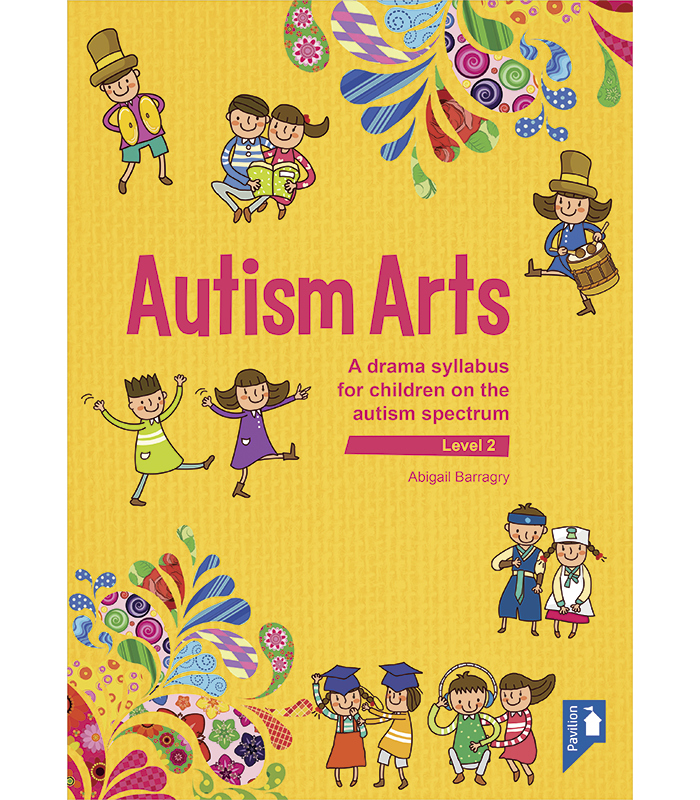
Autism Arts Level 2 addresses the fact that creative arts and drama-therapy are increasingly used to help people with special educational needs to explore, reflect and develop when linguistic ability or intellectual functioning restricts their self-expression.
The Autism Arts Level 2 is a drama syllabus for use by facilitators with and without drama experience, and autistic children to learn, interact and develop. Through storytelling, group activities and arts and crafts, students can improve their social skills, self-expression, vocal and physical skills, and imagination.
During the course, children are encouraged to take part in fun and imaginative activities, including singing, dancing, making sock puppets, and acting in the interactive stories Sandy’s Jungle Adventure and The Land of Smilealot!
The Autism Arts Level 2 syllabus covers three levels. Each is level is one year long and comprises three terms with 12 lessons per term. Level 2 focuses on the voice and imagination. The content is aimed at children and young people from five to fifteen.
Includes CD-rom with supplementary material.
The additional two manuals make up a drama syllabus to help autistic children develop their communication skills, life skills and self-confidence.
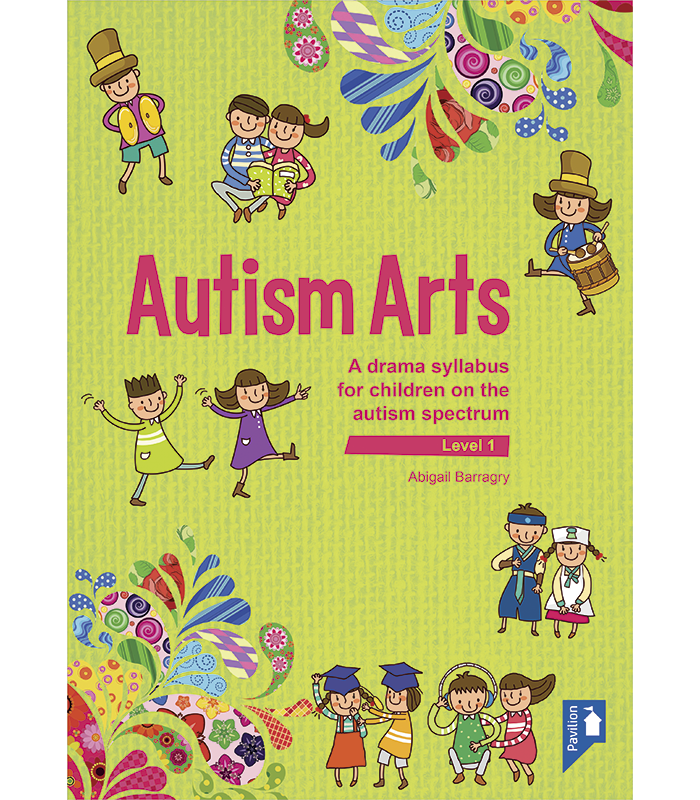
Autism Arts Level 1 reflects the increasing use of creative arts and drama-therapy to help autistic children to explore children’s development and reflect when linguistic ability or intellectual functioning restricts their self-expression.
This drama syllabus, for use by facilitators with and without drama experience, encourages autistic children to learn, interact and develop. Through storytelling, group activities and arts and crafts, students can improve their social skills, self-expression, vocal and physical skills, and imagination.
During the course, children are encouraged to take part in fun and imaginative activities, including singing, dancing, making sock puppets, and acting in the interactive stories Sandy’s Jungle Adventure and The Land of Smilealot!
The syllabus covers three levels. Each level is one year long and comprises three terms with 12 lessons per term. Level 1 focuses on the body and sensory experience. The content is aimed at children and young people from five to fifteen.
Includes CD-rom with supplementary material.
These manuals make up a drama syllabus to help autistic children develop their communication skills, life skills and self-confidence.
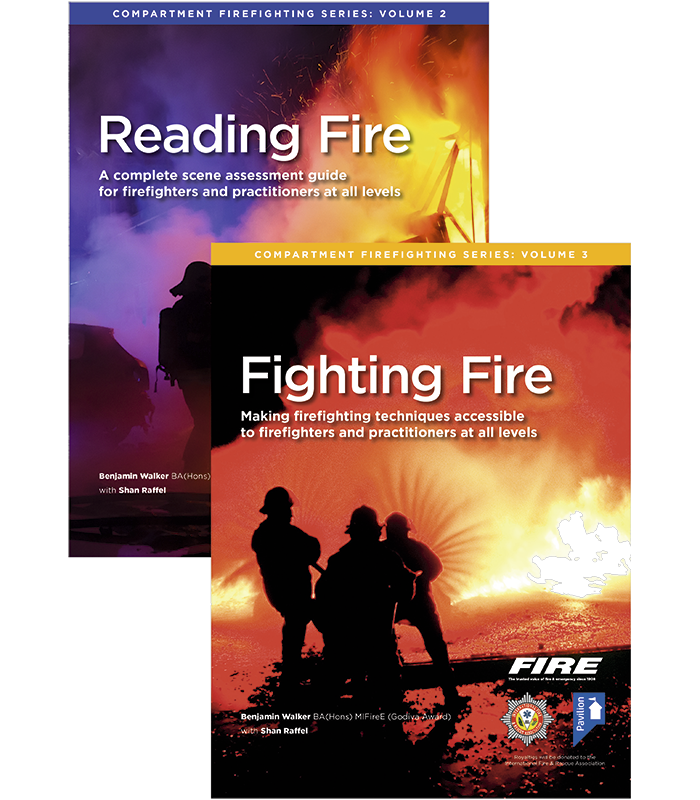
Get 20% off when you buy both volumes 2 & 3 of the Compartment Firefighting Series.
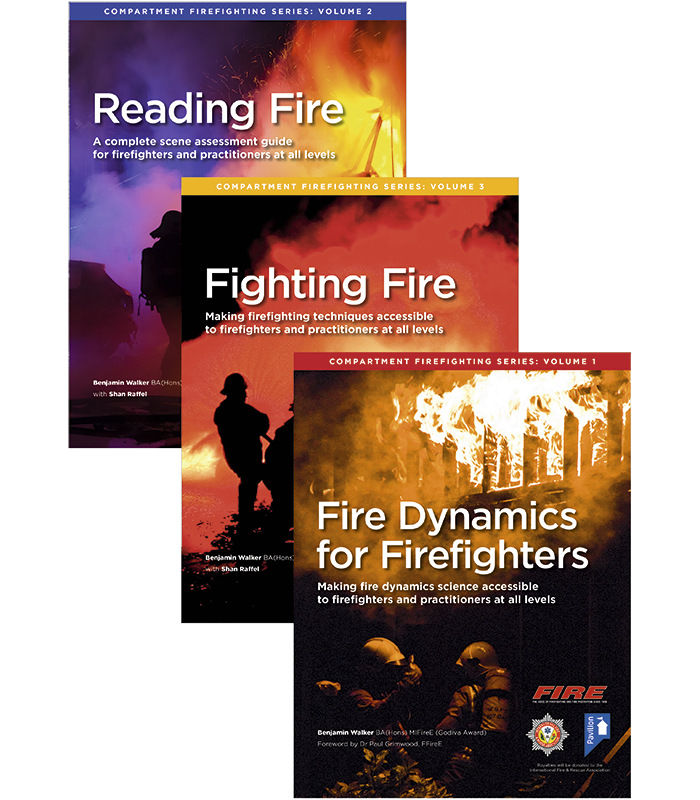
These twin volumes cover everything you need to know to make the safest and most efficient decisions at the scene of an incident.
Volume 2, Reading Fire, focuses on the information that can be collected upon arrival at an incident. The book takes the reader step-by-step through each critical area of the ‘BE-SAHF’ model of assessment, from building, construction and environmental factors, to understanding and reading smoke, airflow, heat and flames. It explores each of these in depth, alongside detailed discussions of the ‘clues’ that need to be deciphered before making a diagnosis and formulating an effective tactical plan.
Volume 3, Fighting Fire, uses this information to consider the most appropriate tools and techniques at your disposal. It examines the selection of appropriate tactics for the stages of fire development and burning profiles as well as a detailed comparison of techniques, including Tactical Ventilation, Transitional Attack, Water Application and Nozzle Techniques. It also concludes with consideration of the STAR Model of Decision Making and an evaluation of Basic Incident Command Principles.
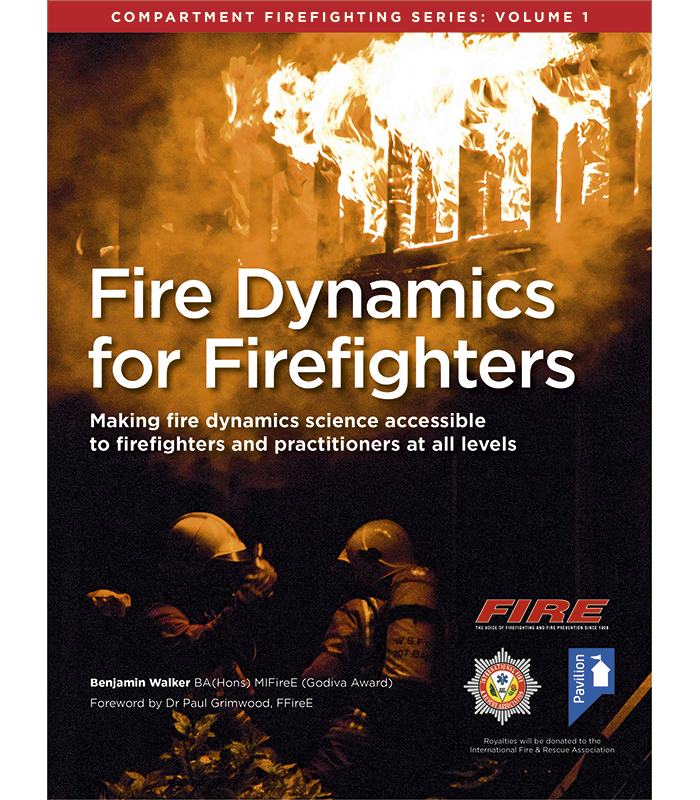
Volume 1, Fire Dynamics for Firefighters, simplifies the science of fire dynamics for all frontline and trainee firefighters. It aims to empower firefighters with crucial knowledge around how fires start, spread and develop that will keep themselves and others safe. This allows them to make life saving decisions quickly, based upon the science of fire dynamics.
Volume 2, Reading Fire, focuses on the information that can be collected upon arrival at an incident. The book takes the reader step-by-step through each critical area of the ‘BE-SAHF’ model of assessment, from building, construction and environmental factors, to understanding and reading smoke, airflow, heat and flames. It explores each of these in depth, alongside detailed discussions of the ‘clues’ that need to be deciphered before making a diagnosis and formulating an effective tactical plan.
Volume 3, Fighting Fire, uses this information to consider the most appropriate tools and techniques at your disposal. It examines the selection of appropriate tactics for the stages of fire development and burning profiles as well as a detailed comparison of techniques, including Tactical Ventilation, Transitional Attack, Water Application and Nozzle Techniques. It also concludes with consideration of the STAR Model of Decision Making and an evaluation of Basic Incident Command Principles.
Fighting Fire: Making firefighting techniques accessible to firefighters and practitioners at all levels looks at the tools at your disposal and the best techniques to use based on your scene assessment. Whereas Reading Fire considered what was going on at an incident, this twin volume of Fighting Fire uses this knowledge to focus on the how.
It examines the selection of appropriate tactics for the stages of fire development and burning profiles as well as a detailed comparison of techniques, including Tactical Ventilation, Transitional Attack, Water Application and Nozzle Techniques. It also concludes with consideration of the STAR Model of Decision Making and an evaluation of Basic Incident Command Principles.
Upon arriving at an incident, the pre-planning stage is critical. When overlooked, it can result in tragic situations, but completing a full scene assessment can significantly lower the overall risks. Reading Fire: a complete scene assessment guide for practitioners at all levels links the science of fire dynamics to the information that can be gathered upon arrival at the incident. The book takes the reader step-by-step through each critical area of the ‘BE-SAHF’ model of assessment, from building, construction and environmental factors, to understanding and reading smoke, airflow, heat and flames. It explores each of these in depth, alongside detailed discussions of the ‘clues’ that need to be deciphered before making a diagnosis and formulating an effective tactical plan.
This second volume in the Compartment Firefighting Series, like Fire Dynamics for Firefighters, provides clear and practical advice to practitioners at all levels.
Volume 3, Fighting Fire: Making firefighting techniques accessible to firefighters and practitioners at all levels, considers the practical steps, based upon the information learnt from a scene assessment. You can buy Reading Fire and Fighting Fire together to save 20% here.
Fire Dynamics for Firefighters the first book in the Compartment Firefighting Series. It simplifies the science of fire dynamics for all frontline and trainee firefighters. It aims to empower firefighters with crucial knowledge around how fires start, spread and develop that will keep themselves and others safe. This allows them to make life saving decisions quickly, based upon the science of fire dynamics.
This flexible self-study book is also a valuable resource to support firefighters in keeping up with their professional development and training.
Neil Gibbins QFSM FIFireE says of the book: “This original and practical book challenges some of the thinking from the last decade and covers the imperative topics that all firefighters need to be fluent in, including the importance of flow rates and the impact of building construction on fire behaviour. Benjamin’s thought provoking use of case studies really brings the reality of the consequences home. This book will add to the tools available to firefighters as they deal with these situations on a daily basis.”
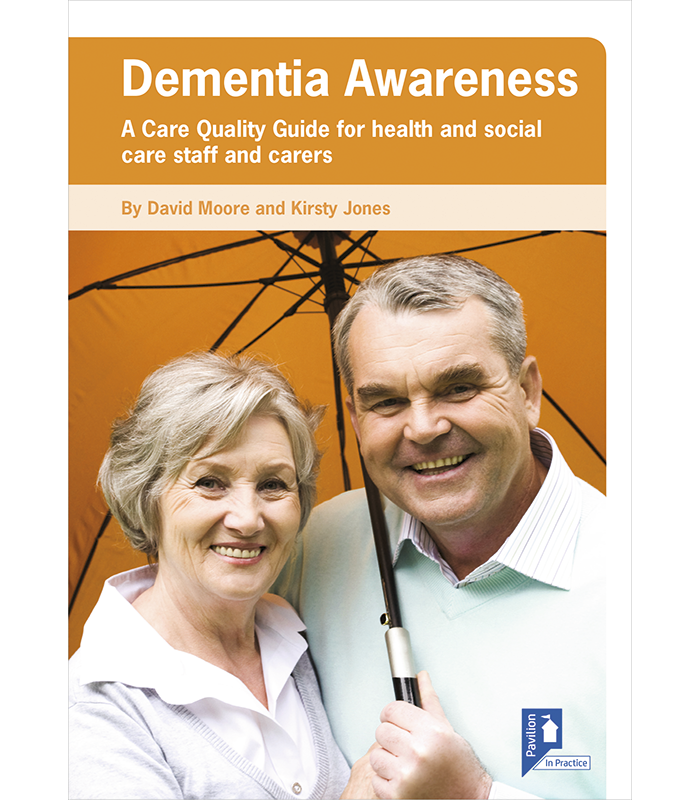
If you are new to working with this client group, or are in a new role, you can use this guide to quickly develop the knowledge you need, and where appropriate, work towards a relevant qualification.
If you are a more experienced worker, you can use the guide to refresh your learning, meet the Health and Care Professions Council (HCPC) standards for Continuous Professional Development (CPD).
If you are a manager, you can use the guide with staff in the context of supervision and CPD, and to contribute towards meeting Care Quality Commission (CQC)and HCPC standards.
This guide also provides underpinning knowledge for Qualifications and Credit Framework QCF unit DEM 201: Dementia awareness, and the thinking and practice activities can contribute to evidence of learning.
The guide also includes a short, illuminating film, Understanding the Experience of Dementia, in which people with dementia and their carers talk about their experiences of living with dementia, which can help staff and carers understand how people with dementia can be supported in a positive and meaningful way. Members of the HOPE group and their carers talk about living with dementia and the supports they have valued.
David Moore is a senior lecturer for the Association for Dementia Studies at the University of Worcester and fellow author Kirsty Jones is a training and development officer for the adults’ services training department at West Sussex County Council.
Free UK Postage on all orders over £20 in UK - sign up to our newsletter for 10% off your first order. Dismiss
We use cookies on our website. One group is essential for our business and another provides third party services. Click OK to accept all cookies, Opt-out to refuse services cookies, or visit our Cookie Policy.