Women in ELT

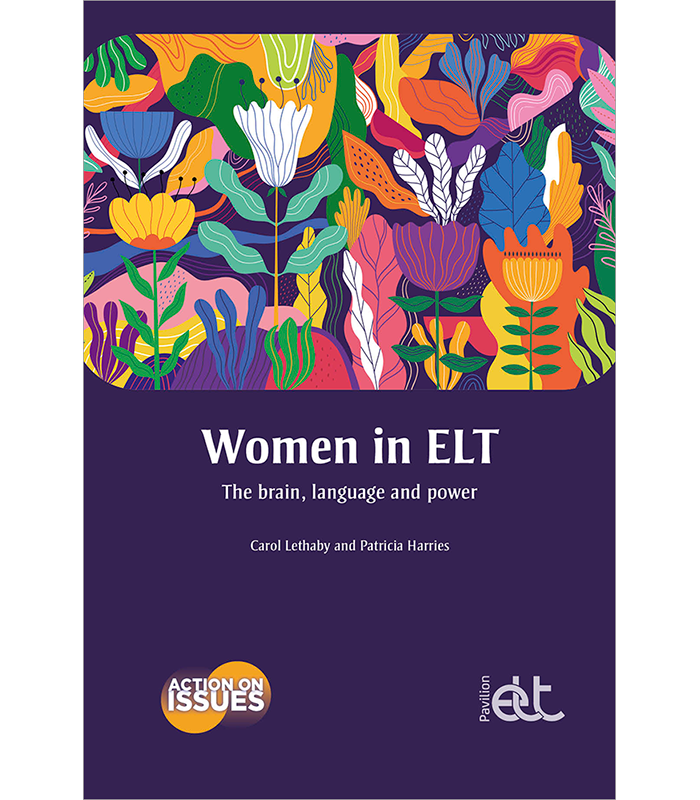
Women in ELT: The brain, language and power - Cover Image

“[Women in ELT] is a book you must have on your bookshelf… Lethaby and Harris have given us an invaluable resource that deserves not just to be read, but to be discussed, shared, and more importantly, acted upon.” – Aleksanda Popovski, IATEFL Voices 2025

Launching the Action on Issues series, Women in ELT explores how and why sexism and gendering is so prevalent in English language teaching, and offers practical ways to combat it. Gender inequality has far-reaching historical roots across much of society, and the story of women’s status and position in ELT is an intrinsic part of this complex history. In this thought-provoking book, Carol Lethaby and Patricia Harries explore how gender inequality applies to ELT, arguing that by looking at the origins of the patriarchal system and making connections between the history of the English language and gender inequality within the ELT industry, we can shine a light on the reasons for the existence of this far from simple problem.

Part 1 provides an accessible, evidence-based exploration of the history, theory, neuroscience and current circumstances that make sexism and gendering so prevalent. Part 2 develops these themes further, giving examples and applications to English language teaching and learning. The book then offers practical ways for teachers and teacher educators to face these issues in their own contexts – both within the classroom, and in the wider ELT industry. As well as drawing on their own experiences, the authors have interviewed several prominent ELT professionals.

There are no easy answers; but Women in ELT provides accessible evidence-based research and discussion alongside practical ideas and strategies for making a difference.

“Women in ELT is a useful and timely read. It would make a great choice for teacher trainers or academic managers to make considered and informed decisions and provides teachers with the background knowledge and practical ideas to make informed decisions in the classroom.” – Fari Greenaway, Modern English Teacher, Vol 34, Issue 5, September/October 2025

“Women in ELT is an important book, both identifying key problems and proposing a range of practical ways of addressing them.” – Jane Sunderland, Women in ELT, ELT Journal, Volume 80, Issue 1, January 2026, Pages 179–181, https://doi.org/10.1093/elt/ccaf047

About the series

The Action on Issues series will seek to amplify voices and expose complexities by providing information about topics that may be hidden from sight, and by giving a voice to people and groups who may be marginalised or disenfranchised. Each book will offer teachers practical ways to challenge the status quo both in their own classrooms and throughout the ELT profession.

Carol Lethaby and Patricia Harries are also co-authors of An Introduction to Evidence-Based Teaching in the English Language Classroom from Pavilion ELT.
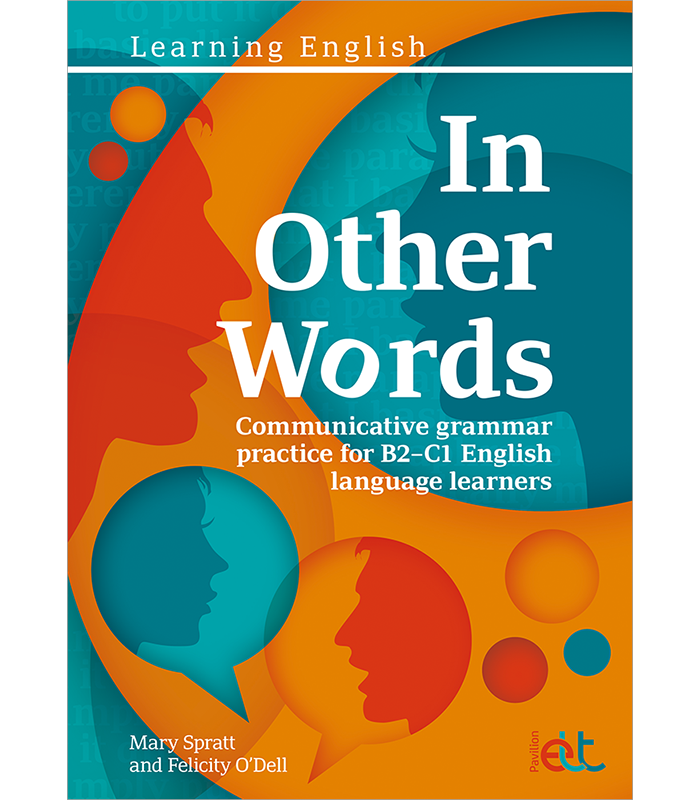
In Other Words

In Other Words Cover

In Other Words: Comprehensive grammar practice for B2–C1 English language learners is an easy to use communicative grammar practice book. Together with accompanying online listening materials, the book can be used both for self-study and as supplementary material for the classroom (whether face-to-face or online). It puts grammar in familiar contexts, provides guidance on its use, and then gives multiple opportunities for free and communicative use, mainly through speaking.

The book targets grammar known to be problematic at B2 and C1 level. It ranges from working on standard essential grammar such as tenses or modals to areas such as register, the features of spoken language and academic writing. The book aims to make working on grammar an enjoyable learning experience. It also aims to help learners to convert knowledge of grammar into use and the development of flexibility of expression.

Divided into 70 double-page spread lessons, each with a single grammar focus, In Other Words allows both the teacher and the learner to take a dip in approach. This allows all users to orient themselves quickly in the materials. The short but effective format of each lesson means they can fit in well within the time constraints of lessons, and work alongside any learners’ course of study. It provides communicative and exam practice in key areas of grammar if needed, whilst also providing both the teacher and the learner with ample opportunity to tailor their grammatical focus according to their needs.

By using In Other Words, learners will become more:
  • Confident in the use of common grammatical areas, building on consolidated practice in both closed-ended and communicative activities,
  • Able to use language more flexibly – a key distinguishing feature of learners at this level
  • Motivated to focus on typical B2–C1 grammar through relevant and interactive activities,
  • Familiar with common exam tasks, and the role grammar plays in the performance of them.
Example

Using Wisdom Stories in Language Teacher Education

Using Wisdom Stories in Language Teacher Education

The value of using stories in in language education is well-documented, but in Using Wisdom Stories in Language Teacher Education Alan Maley explores how one particular kind of story can be a useful resource for teacher training and teacher development.

Wisdom Stories present narratives which, on the surface level at least, often appear absurd, paradoxical, illogical and nonsensical. They are open to multiple interpretations and are often allegorical, which makes them extremely valuable for sparking discussion and debate. These Wisdom Stories often come from a number of traditional sources from cultures and countries across the world. This includes Zen stories, Sufi stories, Prankster stories such as Anansi stories of West Africa or the Xieng Mieng stories of Laos, fables, Folk stories and, more recently, Urban Myths. They also come from personal anecdotes, poetry, certain categories of jokes, flash fiction and more.

These stories often provoke discussion and debate on issues which touch on life in general. However, they can also illuminate pedagogical and other classroom issues. In this book, Alan Maley shares a wide variety of Wisdom Stories and explores how they can be deployed in teacher training and development. This includes traditional Wisdom Stories alongside stories from published accounts on teaching and stories from ELT colleagues. These Wisdom Stories and the accompanying framework and ideas aim to provoke discussion and exploration and challenge teachers and trainee teachers to think about their own teaching practice.

Using Wisdom Stories in Language Teacher Education is part of the Teaching English series.

Teaching Young Language Learners Through Stories

Teaching Young Language Learners Through Stories
Stories and literature have an important role to play in the second language classroom, and Teaching Young Language Learners Through Stories provides a theoretical and practical approach to incorporating them in your teaching.

Many teachers use stories in their teaching. That might be younger learners listening to stories or older children reading fiction or extracts for themselves. Working with stories and literature enables the teacher to expose learners to English in ways which are engaging, resonating and meaningful, and which stimulate the imagination and creativity. Stories can appeal to all age groups, and through work which is multimodal can support learning of all proficiencies. Teaching Young Language Learners Through Stories provides theoretical support alongside practical activities to explain why and how teachers can use stories.

Each chapter explores how different genres of literature can contribute to second language development, alongside practical examples. These genres include picturebooks, graded readers, graphic novels fairytales, novels and short stories. Within each chapter, the theoretical approach is first explored in more depth. It considers the characteristics of young language learners, how they learn, and how stories can provide an alternative to working with a textbook while still addressing required syllabus content and learning objectives. Then, practical examples guide the reader in using these different genres in their own teaching practice.

Whilst the book primarily offers guidance and relevant suggestions for students aged 6-13, each chapter also considers how the principles can be used with older learners and adults.

By using this title, teachers will:

  • understand the theoretical support (from the fields of second language acquisition and general education) and the links between theory and practice for using stories and fiction in the second language classroom;
  • learn practical ways in which they can make fuller use of stories and fiction;
  • become able to create their own tasks and explain how these tasks contribute to second language development in their learners.

This book is part of the popular Teaching English series, which bring methodology and practical ideas to your classroom.

Understanding Teenagers Bundle from Chris Roland

ELT Chris Roland Bundle

Don’t miss this fantastic ‘Understanding Teenagers Bundle from Chris Roland’ that provides practical support for teaching teenagers, both in the classroom and online!

Understanding Teenagers in the ELT Classroom and Understanding Teenage Language Learners Online are complementary practical handbooks full of lesson ideas, exercises and tips for teaching English to teenage students, whether online or in person. These books go much further than simply telling you what to do and how to do it. they also look at the why. They explain the deeper rationale for decisions we might make, as well as exploring the underlying principles and factors that can make or break a lesson. Have you sat at home thinking over why one of your classes is not going the way that you want? Or perhaps you’ve seen a really good teaching idea at a conference and are wondering how to make it work in your own class? These practical handbooks provide reflections and ideas to help you, along with examples from the author’s own experience.

Elementary Communication Games 2.0

Elementary Communication Games 2.0

Elementary Communication Games 2.0 is the first title in the new generation of the Communication Games series. The idea behind this new generation is to be a go-to resource of communication games and activities, providing a wide variety of activities for communicative and interactive practice to help teachers get the most out of their learners in speaking tasks, and is designed to help them put the fun back into learning in meaningful and motivational ways. Earlier editions of the series have been best sellers globally and have already been translated into 12 languages. The new series takes on board feedback from these earlier generations and modern viewpoints, global issues and topical discussions, and current teaching practices into account, and adds an additional 20% of new games. It also explores how these games and activities can be used in both face-to-face classrooms and online, which often poses different challenges. Organised into 50 activities with varying time frames according to level and type of activity, each book in the Communication Games 2.0 series consists of comprehensive teacher’s notes with aims, language summaries and detailed procedure for each game or activity for both teaching face to face in class and live online; pages of photocopiable materials for each game or activity; and photocopiable rules sheets for the learners.

Elementary Communication Games 2.0 has been specially written for beginners and elementary language learners at CEFR A1–A2 level – the tasks have been designed in such a way that only a very limited knowledge of the language is necessary to complete them. They can also be used with higher-level learners as revision or error correction of (a) particular structure(s) or (a) specific topic(s), or used as part of preparation for an oral exam such as Trinity GESE (Graded Examinations in Spoken English), grades 1–5. The games and activities are not designed to any one specific syllabus: teachers are free to select appropriate games to fit in with their own syllabus or extend topics from their coursebook, or indeed practice structures that have emerged from the learners’ own language input.

Each game or activity is interactive and involves cooperation rather than competition – they all have a non-linguistic aim, such as matching, drawing, ordering, collecting, sharing information, in order to successfully complete the task. They have been carefully designed to involve intensive practice of a certain set of functions, structures and lexis, like giving personal information, using simple past or recapping food vocabulary, whilst bringing real-world tasks into the lesson. Each game or activity can be located via a structural and a functional index so that teachers can quickly identify their linguistic focus. They also have the added benefits of building good group dynamics through class cooperation and enjoyment, and inspiring learners’ creativity and invention, thereby giving learners a sense of achievement and a greater second-language identity.

Each game and activity is written within a specific functional area and limited to one or two grammatical structures, a clearly defined lexical field and key vocabulary. They can be used with beginners right from the very first lesson. The games are arranged in approximate order of difficulty, following a traditional structural progression, although teachers may, of course, use the games and activities in any order, following their own syllabuses. If you are new to teaching, Communication Games 2.0 will support you on your way with realistic communicative, language practice. If you’re an experienced teacher, it will remind you of games and activities you haven’t used in a while and offer you fresh new ideas or topics to increase your repertoire.

Elementary Communication Games 2.0 is part of the Communication Games series, alongside Intermediate Communication Games 2.0 and Advanced Communication Games 2.0Jill Hadfield is also the co-author of Live Online Teaching

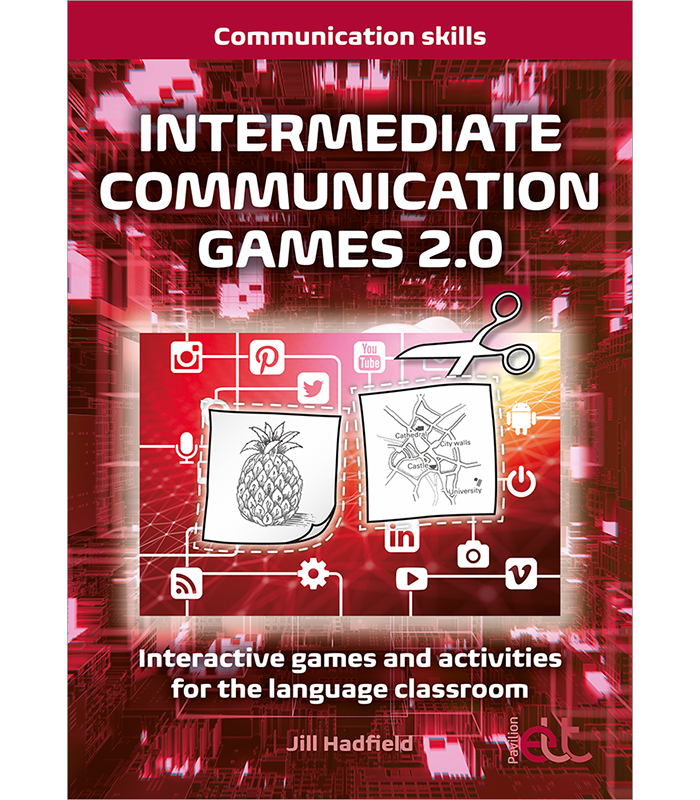
Intermediate Communication Games 2.0

Intermediate Communication Games 2.0 - Book Cover

The Communication Games 2.0 series is a collection of resources for English language teachers, and Intermediate Communication Games 2.0 is designed for language learners at CEFR B1–B2 level. Earlier editions of the series have been best sellers globally and have already been translated into 12 languages. Taking on board feedback from these earlier generations and modern viewpoints, global issues and topical discussions, and current teaching practices into account – including the dramatic rise of teaching online and hybrid lessons – the new generation of the series has emerged. The idea behind this new generation is to be a go-to resource of communication games and activities, providing a wide variety of activities for communicative and interactive practice during lesson time with the teacher as a guide, facilitator and linguistic coach, for both the live online, hybrid and face-to-face classrooms of today and in the teaching of tomorrow.

Organised into 50 activities with varying time frames according to level and type of activity, each book in the Communication Games 2.0 series consists of comprehensive teacher’s notes with aims, language summaries and detailed procedure for each game or activity for both teaching face to face in class and live online; pages of photocopiable materials for each game or activity; and photocopiable rules sheets for the learners.

Each game or activity in Intermediate Communication Games 2.0 is interactive and involves cooperation rather than competition – they all have a non-linguistic aim, such as matching, drawing, ordering, collecting, sharing information, in order to successfully complete the task. They have been carefully designed to involve intensive practice of a certain set of functions, structures and lexis, like giving personal information, using simple past or recapping food vocabulary, whilst bringing real-world tasks into the lesson. Each game or activity can be located via a structural and a functional index so that teachers can quickly identify their linguistic focus. The games and activities have the added benefits of building good group dynamics through class cooperation and enjoyment, and inspiring learners’ creativity and invention, thereby giving learners a sense of achievement and a greater second-language identity.

Intermediate Communication Games 2.0 has been specially written for intermediate language learners at CEFR B1–B2 level. The tasks have been designed in such a way that there is a range of difficulty, with some overlap between the more difficult games towards the end of Elementary Communication Games 2.0 , and the easier games in Advanced Communication Games 2.0. Though as every teacher knows, games and task-based activities can be adapted up or down – a more difficult game or activity may be a stimulating communication challenge for lower-level learners, requiring them to stretch the little language they have to the limit to complete the task successfully, while a relatively easy game that focuses on a particular structure may be useful even for advanced language learners as revision or error correction. In general, the games and activities found in Intermediate Communication Games 2.0 have been written to fit within the functions and structures that most language learners will encounter in CEFR B1 and B2 course, or might come across in the speaking paper of exams such as B1 Preliminary (formerly known as Cambridge English: Preliminary (PET)) and B2 First (formerly known as Cambridge English: First (FCE) or within Trinity GESE (Graded Examinations in Spoken English) grades 6–8. Each one is designed to practise (a) specific structure(s) within a (set of) functional area(s). They are not arranged in any particular order of difficulty: it is up to the teacher to select appropriate games to fit in with their own syllabus, or indeed practise structures that have emerged from the learners’ own language input.

If you are new to teaching, Communication Games 2.0 will support you on your way with realistic communicative, language practice. If you’re an experienced teacher, it will remind you of games and activities you haven’t used in a while and offer you fresh new ideas or topics to increase your repertoire.

Intermediate Communication Games 2.0 is part of the Communication Games series, alongside Elementary Communication Games 2.0 and Advanced Communication Games 2.0Jill Hadfield is also the co-author of Live Online Teaching

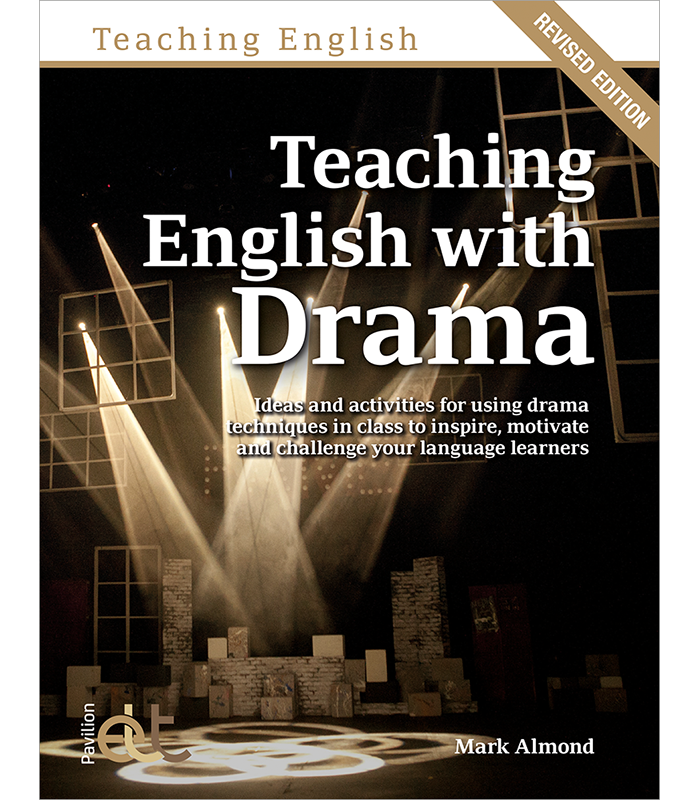
Teaching English with Drama

Teaching English with Drama Cover

Teaching English with Drama shows teachers how to teach language learners using drama, plays and theatre techniques. It aims to push the boundaries of the language classroom, challenging the language learners’ ability to speak English outside the classroom effectively. It offers fun and creative activities that will motivate and engage all types of learners. This means their confidence speaking and participating in class will improve, and they will develop the skill set to operate more effectively in English in real life.

Teaching English with Drama not only gives a rationale for using drama but explains how to use it effectively. It then encourages teachers to reflect on their learning with the view to developing best practice. This revised edition has updated activities to reflect the world of today and prepare your learners for future scenarios. There are now professional development sections at the end of each chapter to help you reflect on your learning and analyse the impact of the activities, along with recommended reading related to the topic of the chapter. These tasks are also suitable for teacher training or continuing professional development sessions.

What is involved?

Taking on a character and getting into a role can help learners to feel less self-conscious. It can therefore also give them more confidence. Teaching English with Drama involves real communication and emotion. Language learners will have to think on their feet and use their natural instincts as in real-life situations. Using drama puts more responsibility and accountability on the learner rather than the teacher, so the teacher will notice the learners starting to support one another and problem solve – all invaluable language skills, that they may not get the opportunity to develop in conventional classes. This book also gives a pragmatic context for listening by using language in operation.

Alongside explaining the benefits of acting skills for language learning, this book provides a step-by-step guide to putting on a play. Covering a wide range of drama techniques and topics, it also shows teachers how to plan class work, choose appropriate texts, modify dialogue and lines for different abilities, stage manage and combine all these devices to improve language appreciation and learning. It is packed full of tried and tested suggestions on how best to use classic plays, stories, songs and games. It also includes fun, motivating and creative activities around name-learning games and physical warm-ups; building group dynamics and trustwork; pronunciation and voice development; fluency, spontaneity and creativity.

So, if teachers are looking for inspiration for using drama with their language learners, and ways to challenge them with realistic language scenarios, this is the place to start.

Teaching English with Drama is part of the Teaching English series. Mark Almond is also the author of Putting the Human Centre Stage, by Pavilion ELT.

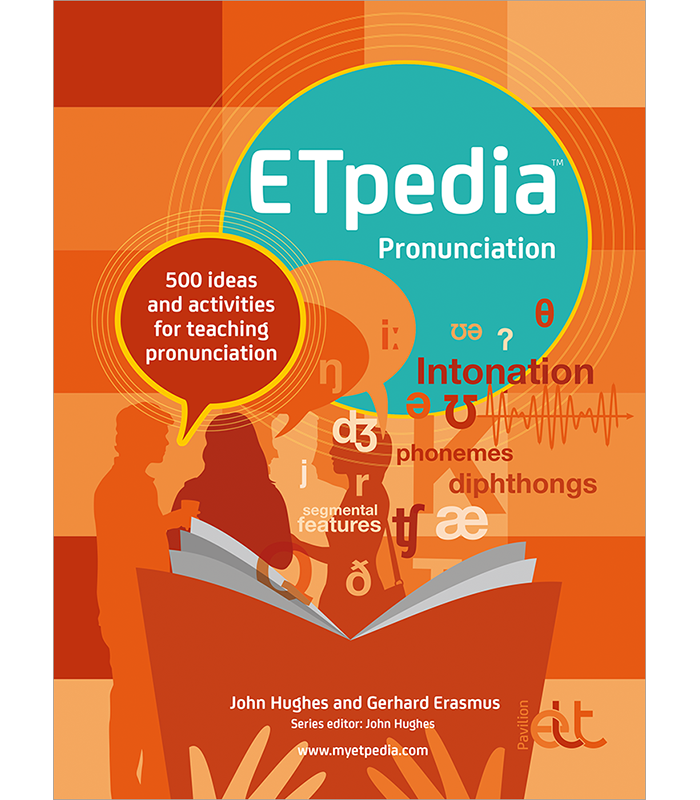
ETpedia Pronunciation

ETpedia Pronunciation Cover

ETpedia Pronunciation is the go-to book for teaching pronunciation. It provides all the key terms and techniques in easy-to-understand terms, and equips teachers with a huge range of creative ideas and activities for pronunciation lessons, whether they are being conducted in the classroom or online. Whether you are a newly qualified teacher looking for a one-stop resource or a more experienced teacher looking to expand your skills and integrate pronunciation more actively into their lessons, ETpedia Pronunciation offers 500 tips and ideas to help! With the dramatic rise in live online teaching, the book also includes a special feature on how to teach pronunciation online and make maximum use of the technology available.

Organised into 50 units each containing 10 ideas, this spiral-bound book is easy to dip in and out of. It will save you planning time, provide inspiration, and help you motivate students. It will even anticipate problems students might have with different aspects of pronunciation. Each unit provides you with 10 tips, ideas or activities related to theory and practice in the classroom as well as suggestions for homework and self-study tasks. In the Appendix you will also find photocopiable handouts with additional classroom activities. These can be used exactly as they are, or adapted and developed to suit your own context. Throughout the book you will also find quotes from experienced teachers, sharing their views, ideas and experiences on teaching pronunciation.

Inside, you’ll find sections focusing on different areas such as:

  • the basic pronunciation toolkit
  • knowledge and practical activities
  • integrating pronunciation into lessons effectively
  • online teaching and technology
The ETpedia series

The ETpedia series is a collection of resources for English language teachers, offering thousands of tips, ideas, and practical activities. Each title offers 500 ideas on a particular topic, which teachers can dip in and out of as needed to find practical ideas and advice to take straight into the classroom. ETpedia Pronunciation is the twelfth title in the series, and particularly complements ETpedia Vocabulary and ETpedia Grammar


Reviews

“The key strengths of Hughes and Erasmus’s publication are giving teachers an accessible overview of the theory, methodology and main questions regarding pronunciation: showing how to approach pronunciation to develop students’ receptive (listening) and productive (speaking) skills; offering a wide range of activities on core pronunciation features such as word stress, sentence stress, individual sounds, connected speech and intonation; and having teachers reflect on their teaching.” – Ana P Biazon Rocha, Modern English Teacher (32.3, May/June 2023).

“I’ve benefitted tremendously from the refresher course I felt like I received from reading through ETpedia Pronunciation. It was able to remind me of a few activities I hadn’t used in a while and also introduced a lot of new ones, whilst also enabling me to take a load off my planning and preparation plate with the photocopiable resources in the appendix. Whether just starting out and learning more about pronunciation and phonology, or if in need of a few tips to freshen up the toolkit, teachers at any stage of their career will find ETpedia Pronunciation to be an excellent resource.” – Jonathan Yates, English Australia Journal (39.2, September 2023).

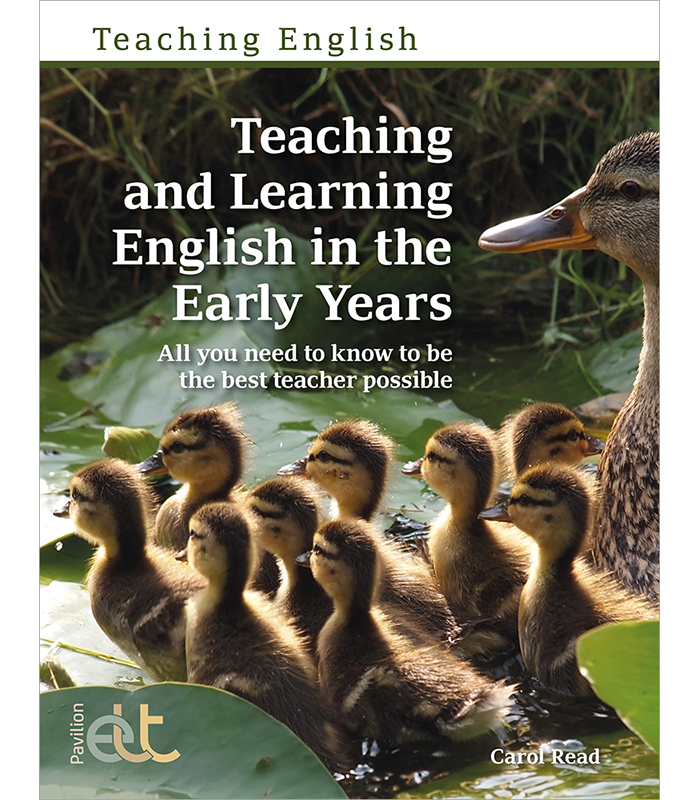
Teaching and Learning English in the Early Years

Teaching and Learning English in the Early Years

Teaching and Learning English in the Early Years offers teachers an extensive repertoire of creative ideas and techniques to work with in the classroom. The A–Z format provides a memorable and easily-referenced manual for teachers, with a large variety of low-preparation, practical teaching ideas. Each one links clearly to a language point with easy-to-follow teaching notes. Each also links to a section providing further reflection and teacher development.

What does the book cover?

The 26 chapters go from A to Z, each reflecting key areas in early years language teaching. They offer a combination of theoretical insight, methodological guidelines, and practical ideas for the classroom. There are chapters on classroom activities, plus key educational and developmental areas and areas of current topical interest. The range and combination of the chapters aims to broaden teachers’ understanding of what is involved in effective early years language teaching. It aims to raise their awareness of how to maximise children’s language learning in the context of their overall development.

Just like The Creative Teacher’s Compendium, each chapter starts with a quotation that is pertinent to the topic or theme. A concise and accessible introductory discussion then follows. This highlights relevant background theory and key methodological considerations, and sets the scene for the suggested practical applications which follow. Guidance is also in place to help teachers develop an understanding of how to differentiate their approach with younger and older pre-school children.

At the end of each chapter, a professional development section includes questions for reflection as well as ideas to try out and share with other colleagues. The Glossary at the end defines any unfamiliar teaching terms. It provides a useful reference for child development and language teaching terminology that is used regularly throughout the book. This supports the professional development of early years language teachers in understanding and using the vocabulary of their profession.

Teaching and Learning English in the Early Years is part of the Teaching English series, which offers practical and accessible methodology across a wide range of different topics.

Reviews

Teaching and Learning English in the Early Years: All you need to know to be the best teacher possible is a compelling book that draws from Carol Read’s years of experience teaching young learners. Teacher educators, teachers, and trainees will greatly benefit from reading the book which is rooted in a substantial body of research and activities that have been implemented and tested in the classroom. Her work favours the role of teachers as educators and promotes the teaching of well-rounded children…

“Apart from being an informational resource, Teaching and Learning English in the Early Years is rich in practical activities that have proven to be successful in a preschool environment. Core to Read’s framework for integrating global skills in ELT with children is the use of diverse activities that would promote young learners’ development of their own agency, assume responsibility, find their own voice, and take action.”  – This review by Ana Cecilia Cad was featured in IATEFL YLTSIG’s newsletter TEYLT Worldwide. Find out more about becoming a member of IATEFL YLTSIG here.