ETpedia Business English

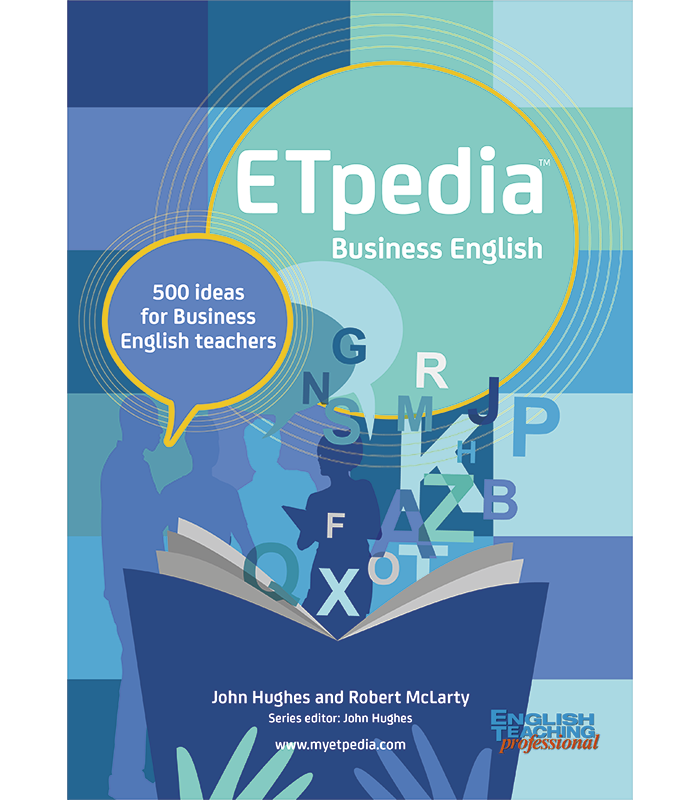
Cover of the book - ETpedia Business English - 500 ideas for Business English teachers

ETpedia Business English is every Business English teacher’s complete encyclopaedia. Whether you are training to become a Business English teacher or a more experienced BE teacher, this complete and comprehensive guide will save you time and make life easier. It collates teaching resources, ideas and tips into one simple-to-use reference book. Designed for different teachers at different stages of their career, it supports preparation, planning and professional development.

The simple layout of 50 units makes it easy to find what you are looking for. This then allows you to use the resource according to your need, interest or level of experience.

ETpedia Business English is the second title in the ETpedia series. It was also the winner of the 2016 David Riley Award for Innovation in Business and ESP, an award that recognises creativity and excellence in ELT. The adjudicator of the award said:

‘The decision to award ETpedia Business English the prize was a unanimous one. By bringing together a collection of ideas, tips, tools and techniques for the business English teacher, it looks set to become the one-stop handbook, invaluable not only for new teachers but also for experienced teachers who can dip into it whenever they are looking for fresh inspiration. Congratulations to everyone involved.’
ETpedia

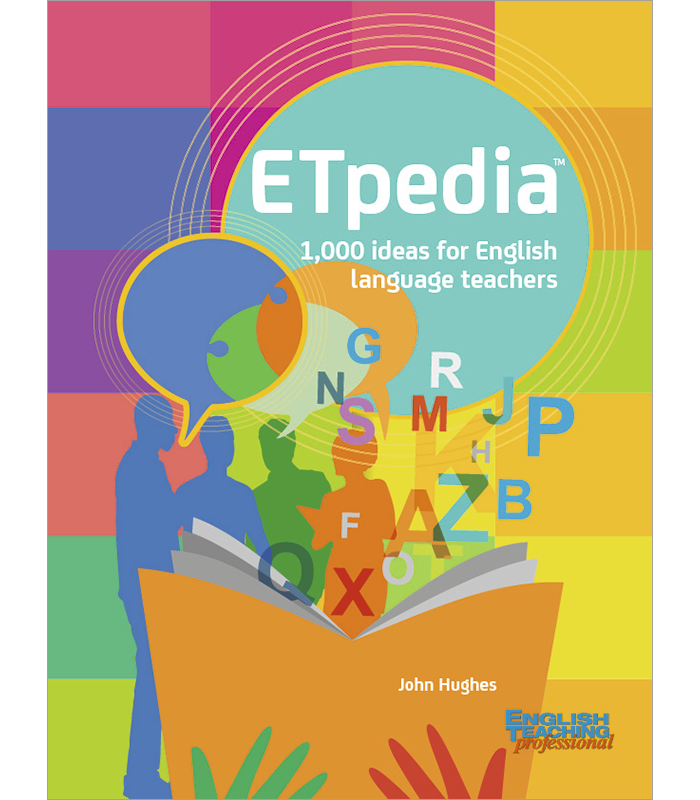
Cover of the book - ETpedia - 1,000 ideas for English language teachers

ETpedia is an essential resource if you teach English as a second or foreign language. It provides you with 1,000 creative tips, techniques, questions, thoughts and ideas on common teaching and classroom issues. It is therefore the perfect guide for both novice teachers and those in the early years of their careers. A flexible and adaptable resource, it can be dipped into or read cover to cover.

Each section covers a different aspect of teaching, covering preparation and planning, classroom management, lesson topics, speaking, listening, reading, writing, grammar, vocabulary, pronunciation, teaching contexts, and further development. Within each section, the content is divided into lists of 10 tips or pointers on a specific topic, so you can easily find what you need.

The layout and wide margins provide you with space for writing notes about how the materials were used or adapted. In addition, it includes an appendix full of practical photocopiable worksheets for you to use in your classroom.

ETpedia can be used with all levels and ages and for one-to-one, online or classroom teaching. It is the first title in the ETpedia series, which all offer practical and creative ideas across a wide range of topics and contexts.


Reviews:

‘I feel that the quantity and quality of ideas in ETpedia is especially good, with great ideas for teachers of all levels of experience.’
Ben Beaumont, TESOL Qualifications Manager, Trinity College London

‘Language Teachers will find this book a valuable resource for planning their classes. The author provides ideas for introducing a topic, as well as activities and exercises to practice skills. An appendix with photocopiable worksheets is included’.
Business Spotlight, July-August 2015

Best Practices for Blended Learning

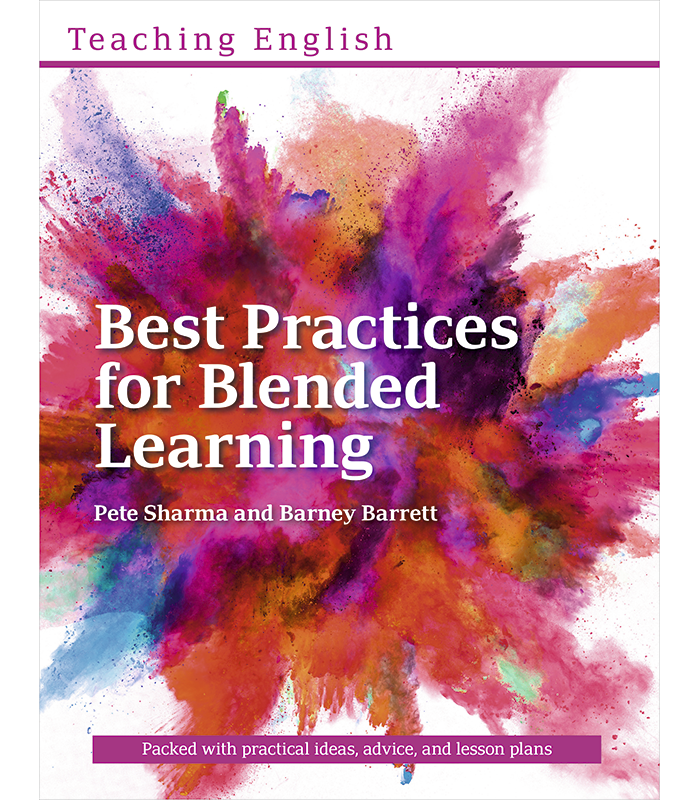
Cover of the book - Teaching English Best Practices for Blended Learning

Best Practices for Blended Learning in language education. Learn how to choose platforms and integrate online and classroom teaching effectively. Supporting language teachers and school managers in developing and running blended courses.

Authors Pete Sharma and Barney Barrett bring their years of experience to this ever-evolving and highly-complex field.  They offer systematic guidance on the various technologies available to language teachers.  They also introduce a framework to help you choose which of the many learning platforms available is suitable for your context and goals.

The handbook also contains a wealth of practical teaching ideas which blend traditional classroom input with online activities.

If you are a language teacher or teacher trainer looking to blend your classes, this resource offers the information and support that you need. It is also ideal if you are an academic manager looking to improve learning outcomes in your institution.

This title is part of Pavilion ELT’s Teaching English series.

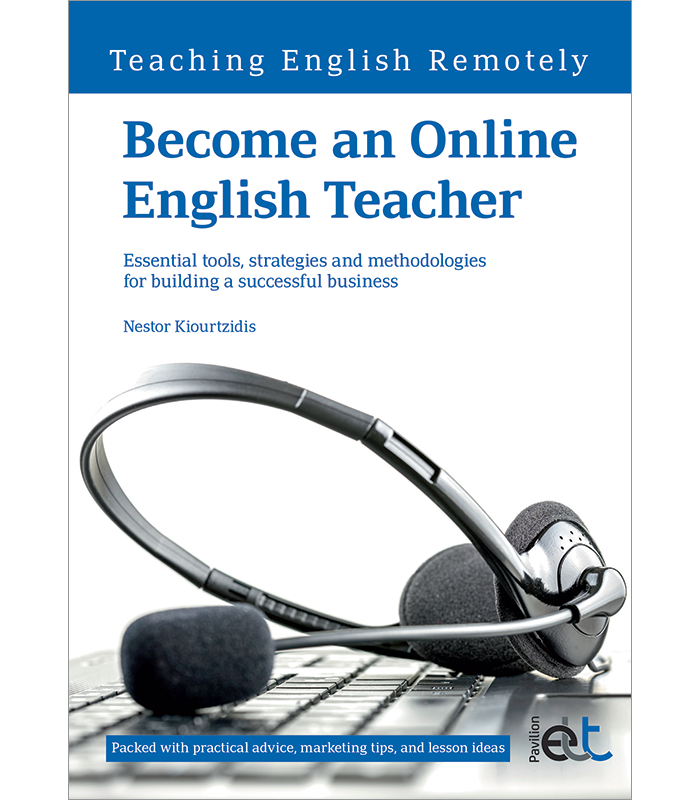
Become an Online English Teacher

Cover of the book - Become an Online English Teacher

Become an Online English Teacher offers new and experienced online teachers a fantastic range of practical information including:

  • online tools and applications
  • tactics for finding students online
  • actionable steps on how to set up a blog for your service
  • tested ways to promote your blog
  • recommended procedures for enrolling new students
  • efficient methods for processing online payments
  • practical lesson ideas and resources.

If you’ve been thinking about building your own online teaching business, this compact but insightful book will help you through the basics of what you need, from general set up through to marketing yourself as an online teacher of English.

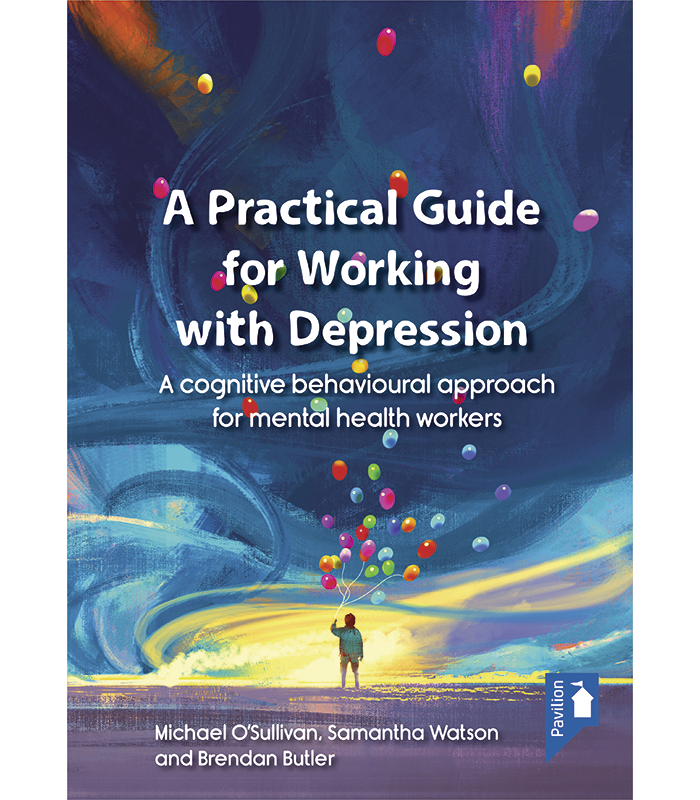
A Practical Guide for Working with Depression

Cover of the book - A Practical Guide for Working with Depression - A cognitive behavioural approach for mental health workers

A Practical Guide for Working with Depression: a Cognitive Behavioural Approach for Mental Health Workers provides mental health workers in all public, private and voluntary sectors with information on the nature of depression based on a number of theories from Cognitive Behavioural Therapy, which is the predominant model used in public services.

This guide aims to improve the awareness and skill level of workers using psychological therapies with their clients.

Each section will provide learning outcomes linked to units from the level 3 Health and Social Care Diploma (formerly NVQ3) in the Qualifications and Credit Framework

The information in each chapter will act as pathway through depression from understanding the condition to working directly with it, to finally planning for recovery.

The manual covers:

  • Communication and listening techniques to assess goals, client motivation levels and to encourage positive change
  • The causes and presentation of clinical depression and how to apply this knowledge
  • Techniques to help clients understand their depression
  • Beck’s triad of negative thoughts and how to recognise negative thought patterns
  • Understanding the links between thoughts, emotions, physiology and behaviour in depression
  • How to use ‘activity scheduling’ to develop behavioural plans to improve mood and reverse negative vicious cycles.

If you already own this title, you can download the accompanying materials here.

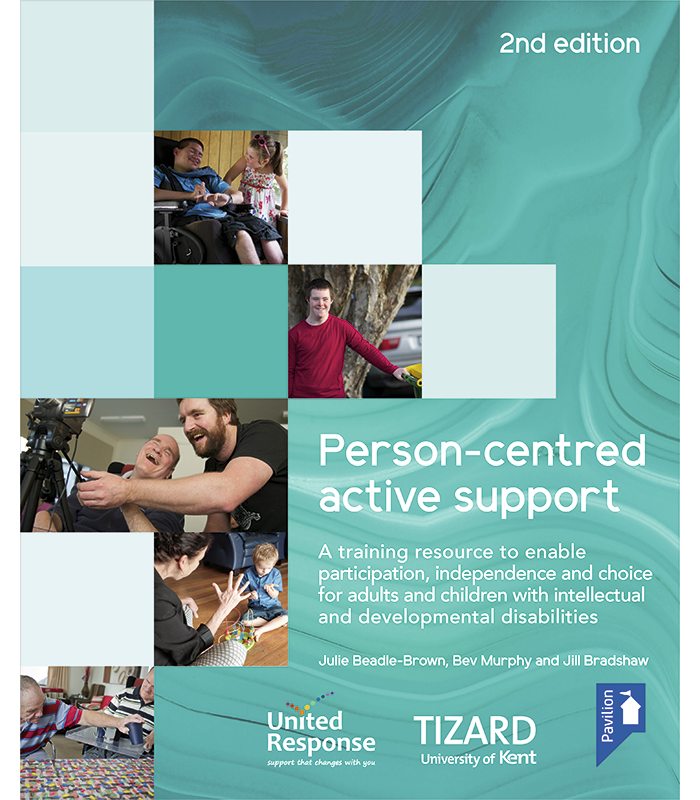
Person-centred Active Support Training Pack (2nd Edition)

Cover of the book - Person-centred Active Support Training Pack (2nd Edition) - A training resource to enable participation, independence and choice for adults and children

The principles of active support are based on a sound evidence base from behaviour and learning theory and are explored in Person-centred Active Support Training Pack (2nd Edition). And as such are what we know works best for everyone who needs support to be independent, exercise choice and control and be a contributing part of their local community.

This training resource reflects the changes in the social care and learning disability context in the UK as well as in many other countries, and the valuable experience the authors have gained from 13 years of using the resources for training in many different settings.

Although initially developed for use with people with severe and profound intellectual disabilities, Active Support has much wider application and over the past 5 years the authors have additionally worked with those supporting children and young people (including in schools), children and adults across the autism spectrum, mental health needs, and physical and sensory impairments. The newly filmed video pieces and case examples that underpin the new resource demonstrate these wider applications.

This resource is designed for those who wish to lead face-to-face group-based training, which is still the recommended option for delivering training in person-centred active support to support teams.
The resource includes:

  • PowerPoint presentations for the training
  • Suggestions for how to deliver the training, including exercises and activities
  • Additional videos and photos which can be used to tailor the presentation to different audiences
  • A summary learner’s workbook with key points from each element of the training and space to complete the exercises during the sessions

Please note, when you purchase this training pack you will receive a free copy of the accompanying Self-study Guide which forms the script for the training. Take a look at the guide here: Person Centred Active Support Self Study Guide 2nd Edition

Assessment and Management of Risk in Child Care and Child Protection

Cover of the book - Assessment and Management of Risk in Child and Child Care Protection - Mike Titterton and Helen Smart

Assessment and Management of Risk in Child Care and Child Protection guides staff through the risk assessment and management process related to child care and child protection.

The most pressing concern a professional faces when working with vulnerable children is making decisions concerning risk. The theory behind this training contests the negative understandings of risk found in professional practice, policy and research, and proposes positive concepts that embrace risk enablement. It seeks to promote principles based on the rights of people at risk of harm to make choices about risk and risk taking.

This essential training resource is a step-by-step guide to delivering a risk assessment and management programme for children. Assessment and Management of Risk in Child Care and Child Protection comprises four modules and each is based on a specific stage of the risk assessment and management process. The modules are broken down into easily manageable training sessions which include case studies, exercises and handouts to support the presentation material and training notes.

The pack contains:
CD-Rom containing trainer’s notes, handouts, ringbinder with colour laminated dividers.

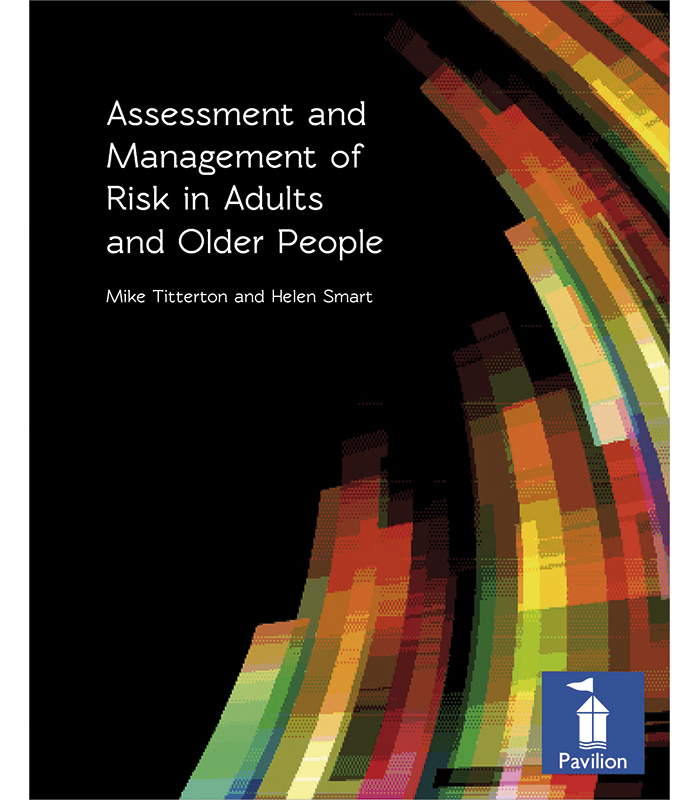
Assessment and Management of Risk in Adults and Older People

Cover of the book - Assessment and Management of Risk in Adults and Older People - Mike Titterton and Helen Smart

Assessment and Management of Risk in Adults and Older People will help trainers working with care professionals to effectively deal with risk decisions concerning the safeguarding and welfare of adults and older people, guiding them through the risk assessment and management process.

The most pressing concern a professional faces when working with individuals judged to be vulnerable in some way is that of making decisions concerning risk. Professionals are increasingly called upon to justify and account for the judgements that they make concerning the safeguarding and welfare of adults and older people.

The theory behind the training contests the negative understandings of risk found in professional practice, policy and research, and proposes positive concepts that embrace risk enablement. It seeks to promote principles based on the rights of people at risk of harm to make choices about risk and risk taking.

This essential training resource is a step-by-step guide to delivering a risk assessment and management programme for adults and older people.

Assessment and Management of Risk in Adults and Older People comprises four modules, each based on a specific stage of the risk assessment and management process. The modules are broken down into easily manageable training sessions which include case studies, exercises and handouts to support the presentation material and training notes.

The packs contains:

  • CD-Rom containing trainer’s notes
  • Handouts
  • Ringbinder with colour laminated dividers

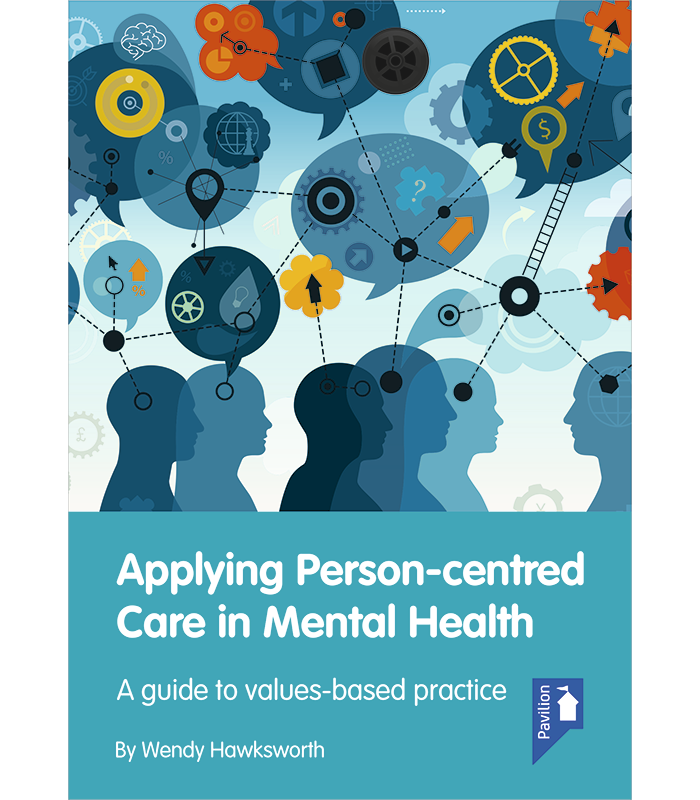
Applying Person-centred Care in Mental Health

Cover of the book - Applying Person-centred Care in Mental Health - A guide to values-based practice

Applying Person-centred Care in Mental Health focuses on the environment of inpatient mental health units. Here, a patient’s actions are often understood through reference to their illness; if they disagree with staff they lack insight or are aggressive, if they seek independence they are uncooperative and non-compliant, if they wish to be alone they are seen as withdrawn. Improve clinical practice with insights on applying person-centred care, focusing on empathy, respect, and recognising individual patient values.

Imagine being this patient, faced with situations where you are told your reality is not right, that you are a different person to who you think you are and that you have a mental disorder and need treatment, even though you do not think so. Imagine the impact this clash of values could have on you, where your values are routinely undermined, ignored, or subsumed within a medical paradigm.

This contemporary and unique guide will be valuable for all staff working with people with a mental illness. Its focus is on inpatient units, however it also applies to staff working in the community. The guide provides a broad understanding of values-based practice and how to work with people’s values from a person-centred perspective.

Developed by K.W.M. Fulford, values-based practice ensures that the person, as a patient, has their perspective acknowledged and considered in any decisions or actions taken. This book utilises a 10 principle decision-making framework to guide and enable clinicians to reflect on their engagement and clinical decisions. Using exercises and practice scenarios, values used in clinical practice, how they present in different situations and how they influence decision making are examined. It will assist you to critique and monitor your practice in order to maintain best care according to the patient’s perspective.

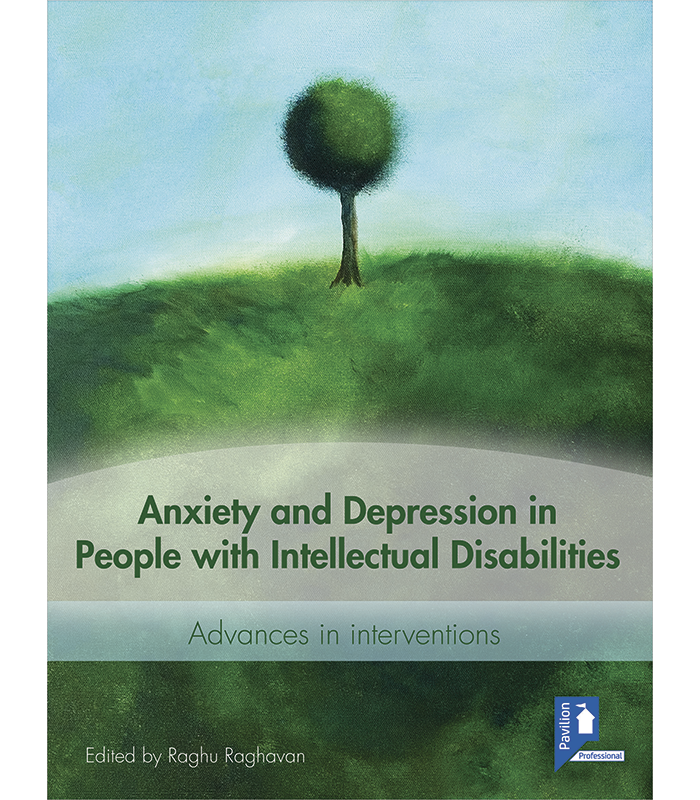
Anxiety and Depression in People with Intellectual Disabilities

Cover of the book - Anxiety and Depression in People with Intellectual Disabilities - Advantages in investigations

Anxiety and Depression in People with Intellectual Disabilities draws on the experience of a wide range of authors to present a rich and informative exploration of the nature, manifestation and presentation of anxiety and depression in individuals with intellectual disabilities and discusses the challenges and obstacles facing those who work with them.

Alongside user perspectives and information for supporting families, it also discusses a range of approaches to working with this population, including case formulations, psychopharmacological interventions, cognitive therapy, psychodynamic approaches and solution-focused therapy.