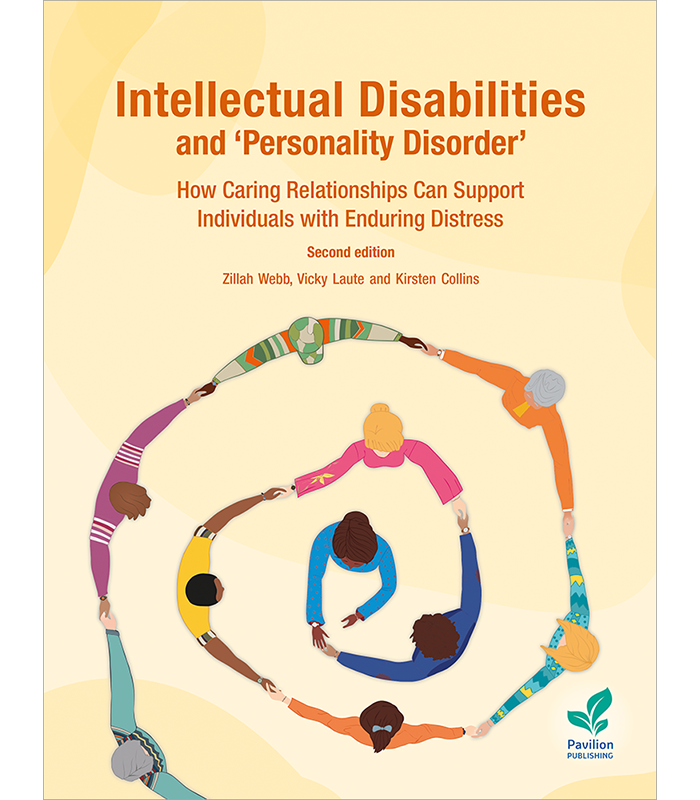
Some individuals with intellectual disabilities experience pervasive patterns of feeling and thinking that affect the way in which the relate to others and understand themselves – sometimes so overwhelmingly so, that they find it difficult to navigate the daily challenges of life. These complex issues can leave staff feeling confused and believing that they do not possess the necessary skills. This fully updated handbook provides a framework for understanding and addressing the issues that can arise when supporting individuals with an intellectual disability, whose mental health needs and behaviours present a challenge to services. It aims to empower staff to use and develop their skills to give the right support at the right time so individuals can thrive to their potential.
This second edition includes new content to reflect developments over the last decade towards trauma-informed care, the neurodiversitymovement and considering the term ‘personality disorder’. Section one focuses on diagnosis, psychologically-informed approaches, how to provide positive support and facilitate collaborative working relationships between teams and services. Section two provides practical, proven strategies for addressing specific issues such as self harm, emotional distress and regulating impulses, and for promoting wellbeing for staff and those they care for.
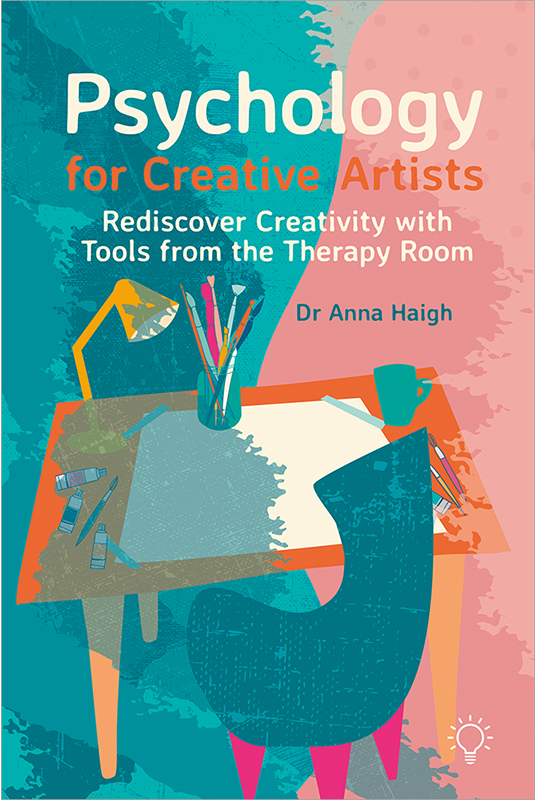
Most creative artists encounter ‘dry spells’; similarly, many of us feel there is a creative project inside us that never quite gets out. Either way, wherever there is a block, there is an opportunity for enquiry and exploration. If all creativity is generated by the mind, then psychologyis uniquely placed to speak to the creative process. Using a psychological lens to explore this subject in fine detail, Psychology for Creative Artists considers questions such as how to develop as a creative being, how context shapes our response to our own and others’ work, and how psychological blocks can prevent action.
Drawing on her personal experience as both a psychologist and a creative artist, Dr Anna Haigh looks at the powerful role of emotions and inspiration, and employs tools drawn from her clinical work to take readers on an enlightening and interactive journey through ways in which they can discover, deepen and sustain a more creative life.
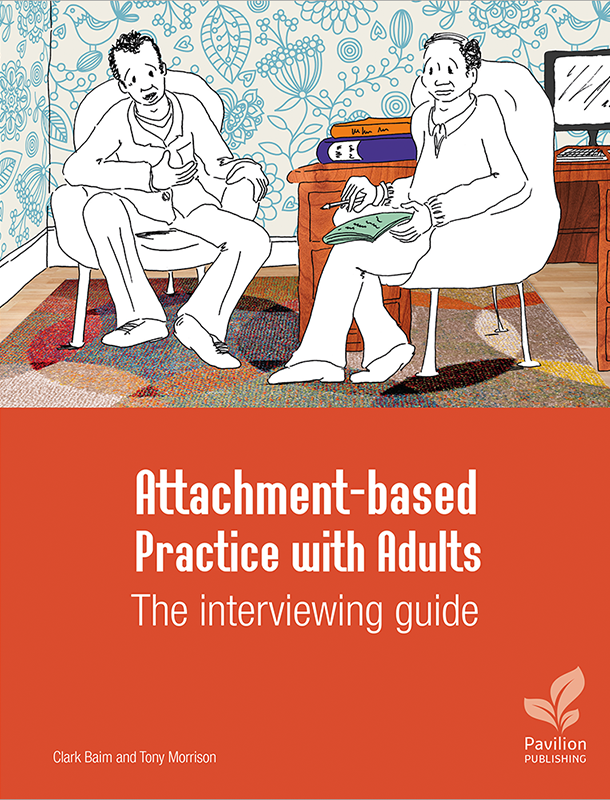
Integrated within the first edition of Attachment-based Practice with Adults but bound and sold separately for the second edition, The Interviewing Guide lets readers see how the three core attachment strategies – distancing (‘A’), preoccupied (‘C’) and balanced (‘B’), influenced by procedural, sensory, semantic, episodic and integrative memory systems – are typically expressed in verbal and non-verbal communication. Reproducible discourse marker sheets allow readers to keep a log of interviews to become more familiar with patterns of discourse and their underlying functions.
Attachment theory is a framework for understanding human behaviour that helps us identify the nature and source of an individual or group’s responses to anxiety, change, threat or danger, and can be used across a range of therapeutic interventions.
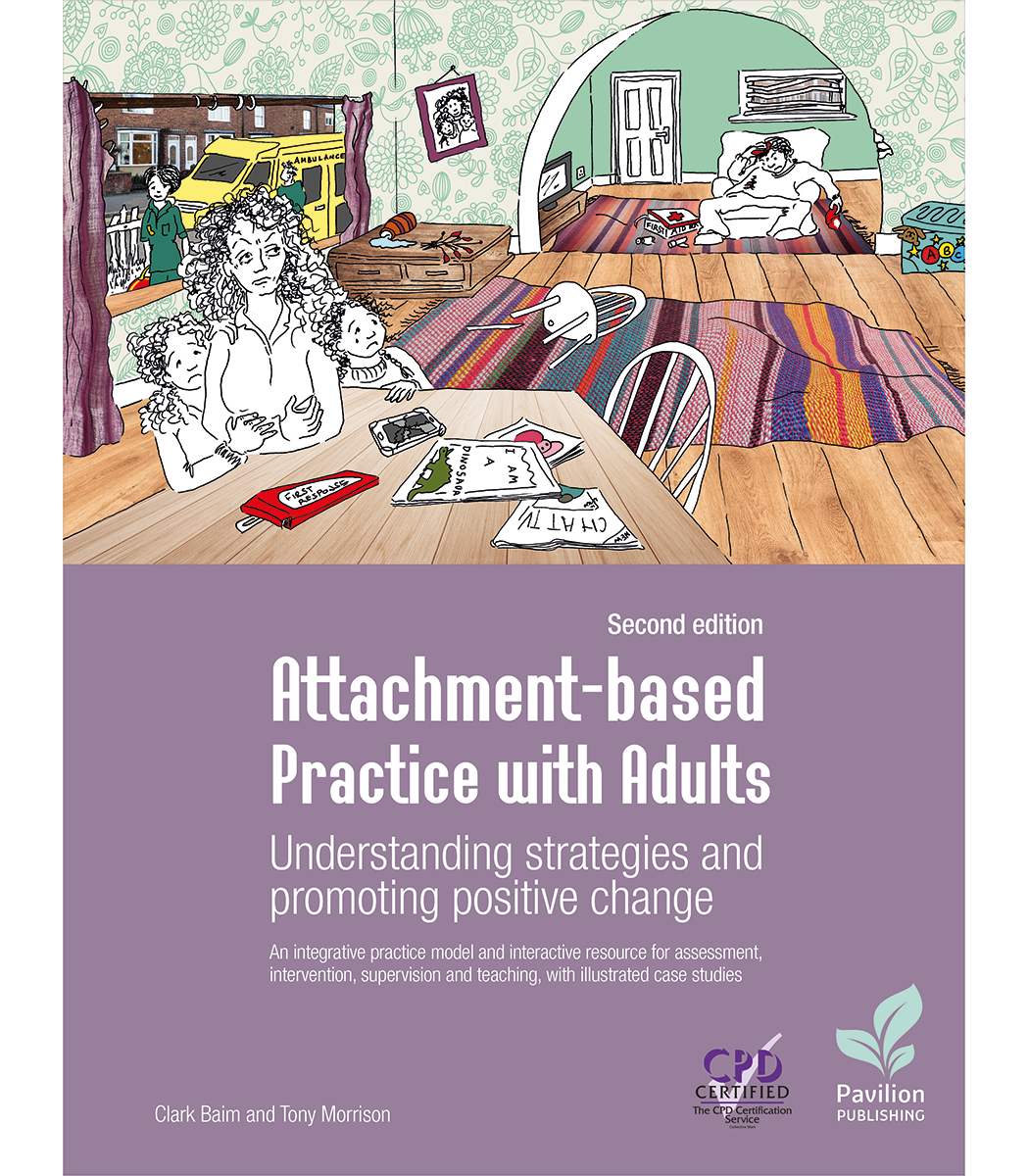
This is the new edition Attachment-based Practice with Adults: Understanding strategies and promoting positive change, 2nd edition, of a bestselling guide to understanding and responding to troubled adults, building on attachment theory and a series of case studies to create an integrative, safe and effective approach to relating to individuals and enabling positive change. Integrating audio, visual and written information around five characters and their stories, the guide shows how to make sense of, talk with and relate to individuals whose past relationships have caused them difficulties.
Attachment theory has become central to understanding not only childhood development and how people survive and grow, but also the capacity of partners, parents and carers to offer safe and consistent care.
Here is also Attachment-based Practice with Children, Adolescents and Families. Which is A practical guide to understanding and responding to troubled young people, building on attachment theory and a series of case studies to create a holistic, integrative, safe and effective approach to helping individuals and families.
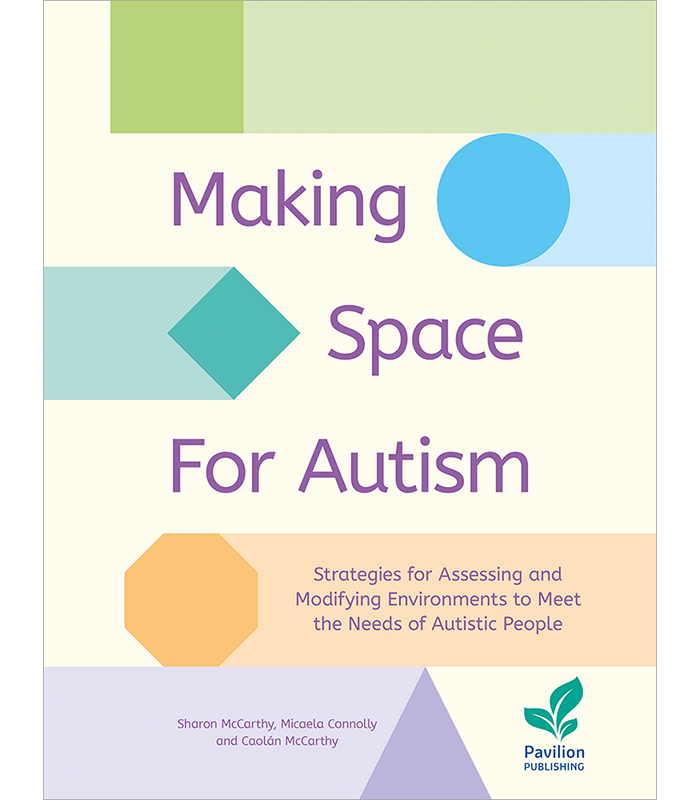
Making Space for Autism has been written as a collaboration between autistic and non-autistic professionals, the authors break down each environmental element (physical, sensory, emotional, communicative and social) by chapter and include tools, resources, and a checklist as reference points to equip the reader with a framework from which to begin. This accessible, strengths-focused approach to supporting autistic people across different areas of their life reflects a paradigm shift from one where autism is treated as a deficit or impairment to one of strength, acceptance and autonomy.
Historically, there has been an expectation that autistic children and adults should conform their behaviour to social norms, with strategies and interventions centred around navigating spaces and situations with minimal damage. This person-centred environmental assessment and modification programme moves away from this, with the aim to provide information and tools for assessing and reflecting on features of the autistic person’s environment to best support their comfort, autonomy and agency.
For customers who wish to access the online resources, these can be found at:
Free UK Postage on all orders over £20 in UK - sign up to our newsletter for 10% off your first order. Dismiss
We use cookies on our website. One group is essential for our business and another provides third party services. Click OK to accept all cookies, Opt-out to refuse services cookies, or visit our Cookie Policy.