Explore how social supports, recovery champions and mutual aid help overcome setbacks and solutions in addiction recovery, fostering growth and lasting change.
Strength, Support, Setbacks and Solutions is a follow-up to Addiction Recovery: A movement for social change and personal growth in the UK (2012: Pavilion). It tests a number of the hypotheses and models of recovery outlined in the earlier publication by presenting and examining a range of accounts from those in recovery from alcohol or illicit drug addiction.
The handbook re-familiarises the reader with the concept of recovery and its origins, recovery capital, contagion and recovery champions, before examining stories told by those in recovery about how they managed to achieve it and what it did for their lives. It goes on to examine the unique experiences of addiction professionals who are in recovery and who face the decision of disclosing their recovery status at both a personal and professional level.
Focusing on a developmental pathway model, this handbook expands the notion that recovery is a gradual journey of growth and identity change mediated by social supports. It also acknowledges the significant role that mutual aid, social networks and recovery champions play in a person’s recovery journey.
TakingControl: A practical guide and tool for advance care planning provides a brief description of the legal framework for health care decision making. Many people faced with long-term or degenerative health conditions find that they do not know how to ask the important questions or make the decisions about the care or treatment options they are given by professionals. Consequently, they either receive treatment they do not want or they cannot get the care they would like to have.
Advance care decisions and advance care planning enable people to record information about the care or treatment they would like to receive in the future. They can help you make sure people know about your wishes by talking about them. By writing your advance statement down, you can help to make things clear to your family, carers, health care professionals and anybody else involved in your care. An advance care statement can cover any aspect of your future health or social care. This could include how you want any religious or spiritual beliefs to be reflected in your care, how you like to do things, for example if you prefer a shower instead of a bath, or if you like to sleep with the light on, or concerns about practical issues, for example who will look after your dog if you become ill.
Taking Control: A practical guide and tool for advance care planning provides a brief description of the legal framework for health care decision making, gives guidance on how to ask for information to help with care decisions, and outlines a suggested framework for the documentation of advanced care planning.
Taking Control of My Health is a training manual and CD-rom, it will equip a wide range of facilitators with the guidance & tools required to deliver a programme. for people with learning disabilities, that will enable them to express emotions, network with their peers and create opportunities to promote self-understanding.
The piloting of this material showed that understanding of complex health conditions in itself is too complex for a number of people with learning disabilities, but focusing on the effects of the health condition and how people react has increased confidence and self-esteem.
The course is designed for people who have mild to moderate learning disabilities and are able to communicate verbally, and is based around the use of the Kolb (1984) experiential learning cycle.
This enables people with learning disabilities to gain a better understanding of their health through learning from interactive and participatory sessions.
It provides the framework that will guide the facilitator by creating opportunities such as role play, active participation, exercises, games, homework and action plans, which are all forms of experiential learning.
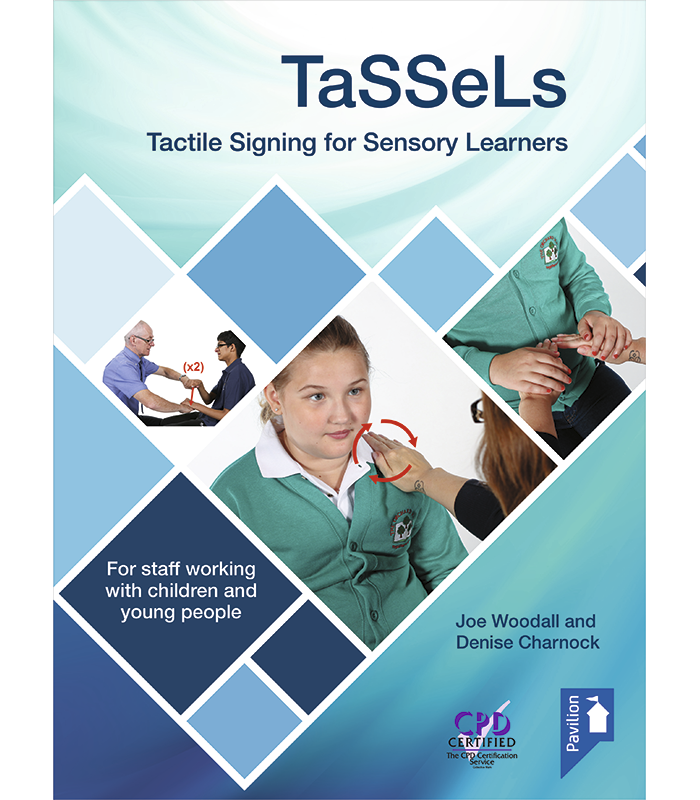
For those with profound and complex learning disabilities, traditional approaches to communication and learning need to be creatively adapted to ensure they meet individual needs. Touch is a vital method of communication for those with profound learning difficulties, who can often also have visual and/or hearing impairments. The TaSSeLs system utilises touch to promote meaningful interaction by communicating what is going to happen next and preparing learners for changes. This allows them to be involved in their own routine and offers comfort, nurture and respect.
In this second edition of the TaSSeLs training pack, techniques have been refined, improved and added to, based upon the invaluable feedback of users. It provides all the necessary resources and information to help someone learn to use the system with children and young people aged from 0-19 years, including background information, key principles and explanations of the three different methods of delivering the signs. These methods are hand-under-hand (preferred method), hand-under-hand (adapted method) and the on-body method. The training pack includes new strategies that will increase the ease of signing, as well as increase the interaction between learner and adult.
The training pack offers practical visual aids in order to ensure the training is as easy and clear to deliver as possible. The index includes detailed descriptions of the signs, with 176 colour photographs to illustrate. The pack includes resources available online which offer guidance on creating prompt cards, as well as specialist software so these can be personalised to suit the learner’s needs.
Testimonials
‘As a teacher of children with profound and multiple learning difficulties (PMLD) the use of TaSSeLs has been invaluable in the classroom. It has given staff and parents a very meaningful, appropriate and effective way of communicating with children who were previously unsure of their surroundings or what was happening to them.’
Laura Valentine, Head of Early Years, The Orchard School
‘I have introduced TaSSeLs with a number of my clients, ranging from ages 2½ to 19 years old. One of my most successful users is Harrison. Harrison has a diagnosis of spastic quadreplegia, developmental delay, cortical visual impairment and epilepsy. He was 2½ years old when I met him and was a very unsettled little boy who startled at any unexpected sound or movement… Harrison’s startle reflex would set off frequent seizures and he was unable to focus on anything for more than a few brief seconds. TaSSeLs was the first thing I introduced and it has been used consistently by his team for the past two years. Harrison is now a cheerful little boy who loves annoying, loud, silly noises, tickles and action rhymes.’
Natalie R. Morris, Lead Speech & Language Therapist, Director, Integrated Therapy Solutions
Training
It is strongly recommended that those who wish to use the materials in a professional capacity receive training from the TaSSeLs team.
The Developing and Supporting Effective Staff Supervision training pack focuses on training supervisors to deliver one-to-one supervision. Its flexible structure enables trainers to design their own bespoke training programmes.
Through group and pair work, participants are actively encouraged to examine and explore their own practice and work together to extend their thinking and improve their skills as supervisors. This pack goes beyond merely teaching theory and actively encourages professional reflection and development.
The training sessions cover: the 4x4x4 model of supervision, the supervision cycle, the impact of emotions, working positively with anxiety, developing and reviewing the supervision agreement and relationship, the blocked cycle, improving practice, and more.
Professionals within the social care sector are required to undertake Continuous Professional Development (CPD) by the Health and Care Professions Council (HCPC). Those who use this resource will be able to gain CPD points.
Developing and Supporting Effective Staff Supervision draws on the core concepts in Tony Morrison’s Staff Supervision in Social Care (Pavilion, 2005) and demonstrates how they can be used to train staff to deliver sound and effective supervision that makes a real difference to service users.
This reader accompanies the training pack of the same name and is for use by experienced trainers who are well grounded in supervision practice and theory. The reader gives further detail on supervision theory and provides a good source of preparatory material.
While the reader aims to draw out the main building blocks of the supervision model outlined in Staff Supervision in Social Care (Pavilion, 2005), as well as the more recent developments of this the approach, it is not meant to be a ‘dumbing down’ or an over-simplification of the issues. The underpinning belief throughout the reader is that working with human relationships is complex and demanding and cannot be packaged neatly into a one-size-fits-all prescribed way of responding.
The supervision model and accompanying tools have always been designed to enable practitioners to respond to the individual nature of the issues they are working with and create the a reflective space for exploring challenging issues and ideas, using the knowledge generated through the process to inform both front line practice and the strategic direction of the organisation.
The joy of Morrison’s approach has always been the way in which it takes complex ideas, makes them accessible to a wide audience and alongside this gives people tools to help them in their day-to-day practice. This publication aims to continue this approach by reminding readers of core aspects of the model which, if implemented, will provide the foundations for an approach to supervision that makes a real difference to those using social care and health services.
Professionals within the social care sector are required to undertake Continuous Professional Development (CPD) by the Health and Care Professions Council (HCPC). Those who use this resource will be able to gain CPD points.
In Delicious Conversations, Phoebe Caldwell offers us her personal insights into how we can experience intimacy with those on the autistic spectrum, based on years of experience working in the field. The book deals not only with ways of working in a professional context but also takes a more general look at the nature of affective communication and how we can learn to ‘read’ other people by recognising our subconscious reactions to their body language.
Autism is a condition characterised by aloneness, separation and inward focus. Through her compelling reflections Caldwell shows us that by tuning in to our partners’ body language we can not only communicate with people with autism but also share an emotional connection, helping to combat the isolating nature of autistic spectrum conditions.
Caldwell offers practical advice for ways that we can tap into our intuitive minds and share an intimate connection with our communication partners, building a dialogue that does not rely on speech but makes use of all of our senses. Using examples from her own experience Caldwell emphasises that these techniques can help to alleviate the distress that may be at the route of stereotypic behaviours, by communicating with people on their own terms and in their own ‘language’.
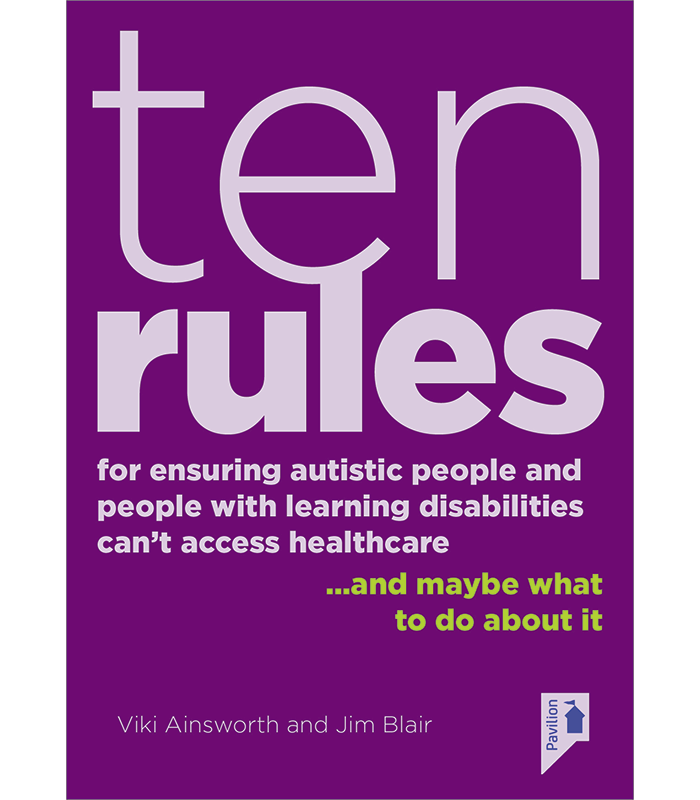
Ten Rules for Ensuring Autistic People and People with Learning Disabilities Can’t Access Healthcare…and maybe what to do about it aims to inspire a serious conversation about the difficulties facing people with learning disabilities and those on the autism spectrum when they need to access healthcare. It is a sad fact that people with learning disabilities will die, on average, between 13 and 17 years younger than others, and this is in no small part down to the challenges of accessing the same care and treatment the rest of us take for granted.
Positive change will come, however, by improving practitioners’ understanding of the people they treat and helping them to communicate more effectively with them and their carers and families. Each ‘rule’ in this booklet speaks powerfully with the ‘voice’ of the individual on the receiving end of healthcare practice. Together, the ten rules challenge our existing practice and will help you to offer assessment, treatment and support that can really make a difference.
Jim Blair will be speaking about “Past, Present and Future of learning disability nursing with and for people who have learning disabilities and their families” at Learning Disability Today London 2019.
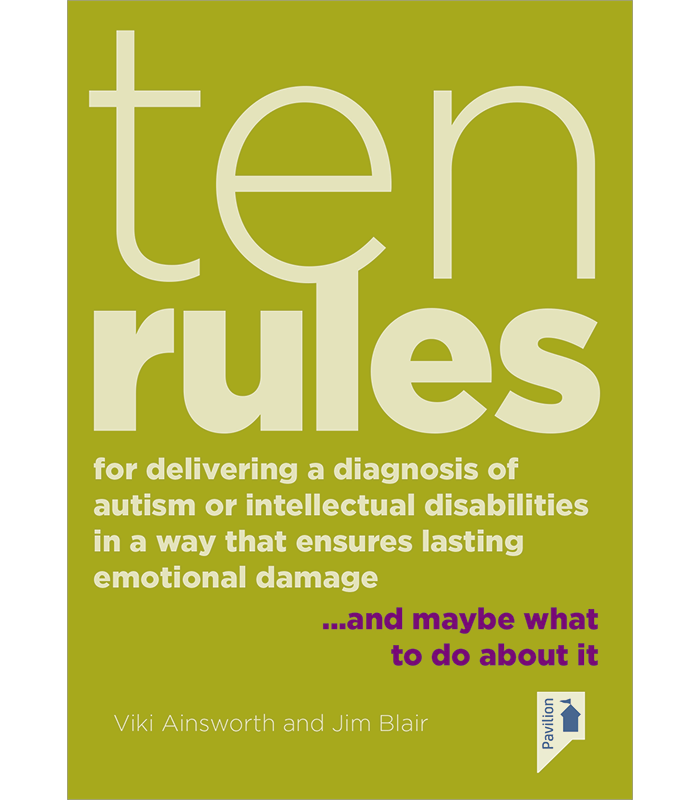
Diagnosis of learning disabilities or autism can happen at any point in an individual’s life. While this should mean freedom to move forward with information to access all that’s needed to live a fulfilling and rewarding life, the huge obstacles that exist in reality can make a diagnosis a cause for dismay. Furthermore, the way in which the diagnosis is delivered is often done without thought or preparation and consequently ensures lasting emotional trauma to the individuals involved and their loved ones.
The aim of this thought-provoking booklet is to directly challenge the method and moment a diagnosis is given, so that it can become the defining opportunity to set individuals and their families off on a positive, hopeful path rather than a negative, diminished one. Each ‘rule’ speaks powerfully with the voice of the individual or family on the receiving end of diagnosis. Together, the 10 rules provide a useful starting point for discussion and a catalyst for action. Each is followed by suggestions for positive practices. The booklet also contains additional background information on good practice, together with references and sources of further information.
The booklet has been written for anyone involved in providing diagnoses and follow-up support to autistic people, those with learning disabilities and their families, together with allied professionals, carers and student in relevant disciplines. It can be used for a wide range of purposes, including staff induction, learning disability and autismawareness training, individual professional development and reflection, and team discussions about the quality of practice and services provided.
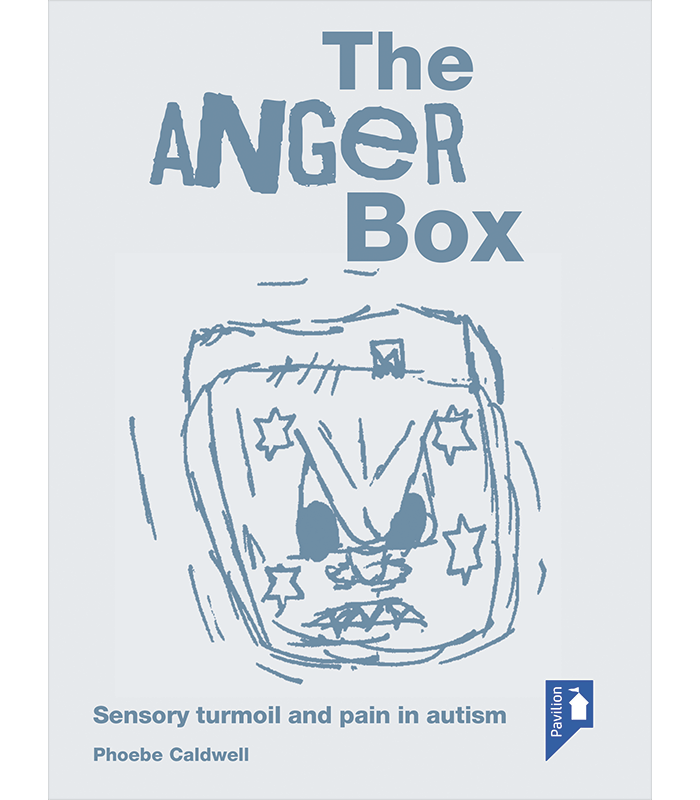
The Anger Box explores and attempts to understand the sensory issues experienced by those on the autistic spectrum and their neurobiological roots to find ways of alleviating the distress that can characterise adults and children on the autistic spectrum.
The Anger Box: Sensory turmoil and pain in autism is a book of ideas that spans a wide field of research and draws upon her own wealth of experience, the experiences of people on the autistic spectrum and new scientific research. Phoebe presents a fascinating and engaging exploration of life with autism, richly textured, vibrant and above all informative.
‘Ground breaking stuff!! For me – and I’m sure a lot of other voiceless people will be benefiting from your new perspectives. Breaking the autistic silent scream. Thanks again.’ – Woman with autism.
Available as an ebook
This title is also available in the following format from another retailer:
.mobi
Not sure which ebook format you need? View our ebook FAQs.
We use cookies on our website. One group is essential for our business and another provides third party services. Click OK to accept all cookies, Opt-out to refuse services cookies, or visit our Cookie Policy.